Aalten has a large number of farms with their own names. In the 1967 address book of the municipality of Aalten, about 480 are mentioned. Almost all of these names are unique. To avoid confusion, it was logical to give a farm a name that did not yet exist. However, one finds, for example, the Oude Loo and the Nieuwe Loo, Groot Kampe and Klein Kampe, even ‘t Paske, Groot Paske, Klein Paske and Nieuw Paske. These are often farms that previously formed a single homestead but were split into parts during division among children. Names with “Olde” or “Oude” then point to the original house.
When one examines those names, an interesting discovery is made. They can be divided into different groups. For instance, there is a group of names from which one can deduce what the vegetation around the yard used to be like and in what kind of environment the farm was established. Another group points to the trade that was practiced there in the past alongside agriculture and livestock farming. Many farmers, and especially the small-scale ones, had enough time to do something on the side to earn a bit extra, which was often necessary.
The practice of giving names to farms is very old. In the verpondingskohier (tax register) of 1647/50, the persons who had to pay the ‘verponding’ (a land tax) are recorded under Aalten, as well as under Bredevoort. But under the rural districts, the names of the farms are mentioned, followed by the names of the residents. Thus, we have a list of homesteads that existed at that time. Many of the current names already appear in it.
From various archives of churches, monasteries, and the like, an even earlier list, from before 1500, can be compiled. For example, it appears that the Kurtebeke in de Heurne was already mentioned in 1200. Before 1500, we find, among others, the Ahof (Huis de Pol), the Honhof (Nonhof), Buclo (Bokkel), Marchwardinck (Markerink), Welinch, Hengevelt, Ruwenhove, ten Westendorpe, de Boegel (now Smees), Lohues, Lichtwerdinck (Ligterink), Meijnencamp, Snoeijenbuijsch, and many others. In total, 72 farm names are known from that period.
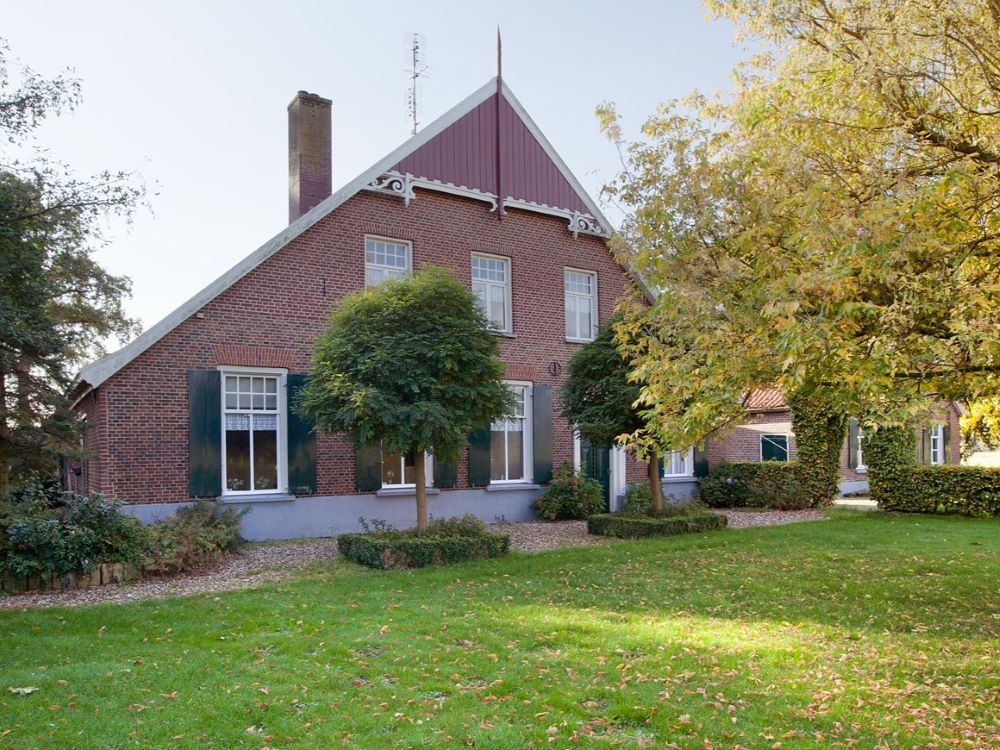
One must possess a very great imagination to be able to picture what the Aalten landscape looked like centuries ago. Nine-tenths of the land consisted of heath, forest, and swamp. The cultivable area was small and was only used for growing vegetables and a few cereal crops. Most farms were small: ‘stedekes’. Division of the common lands, artificial fertilizer, and better drainage put an end to the ‘prange’ and ‘marode’ (hardship and misery) of the farmer.
Farms named after the surrounding vegetation
Names that speak for themselves are: Heidekamp, Heidelust, Heidehof and Heideman. The Neeth (den Heet): heath. By ‘t Veld, one understood wasteland, mainly the heathland; see also Veldhuis. ‘t Boske, den Bosch, Bosvliet, Giezenbosch, Boschhoeve, Oosterbosch, Paskerbosch, Scholtenbosch and the Boskerslag (a piece of forest that was withdrawn from the common land), ‘t Loo, ‘t Loohuis, Looman, the Oude and Nieuwe Loo.
The following names require an explanation: Bokkel, called Buclo in 1284, beech forest. The Walfort was previously called the Waldenvort, a ford (through the Slinge) near the Wald (the forest). Similarly, Walvoort on the Haart, with a ford through the Keizersbeek.
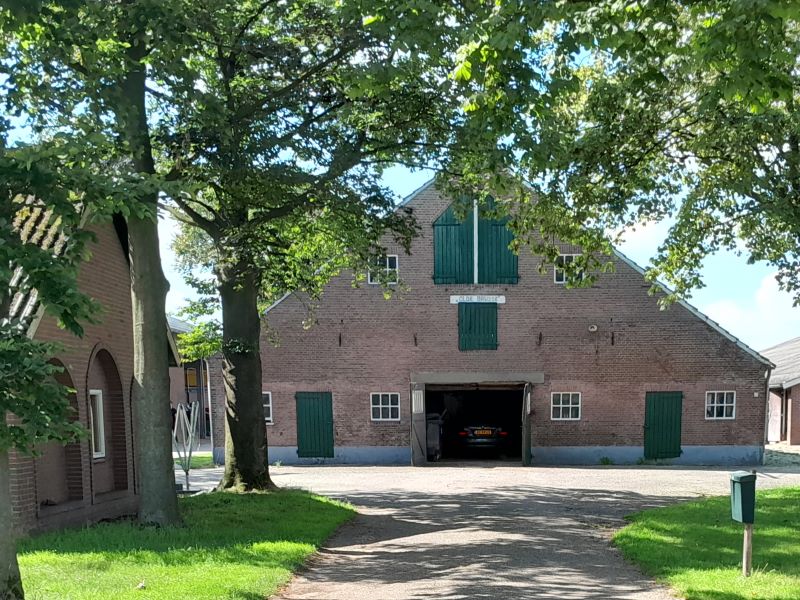
The name Voorst (from forestis) was used for a forest in which hunting was not allowed; it was the private hunting ground of the king or the lord. The site of the Snoeijenbos was cleared in the forest. Brusse is formed from: Brusch, brushwood, ‘t Hagt and the Heegt: forest of low wood, perhaps consisting of hawthorn bushes.
The Slehegge may recall the blackthorn, ‘t Heggeltje: a small ‘hagt’. The Hakstege was located on a narrow path (stege) through the ‘hagt’. The Rieste owes its name to the brushwood (rijshout). The Heisterkamp was established on a site where much brushwood grew.
In 1386, the name Varenvelde appears, and later also the Verrevelt, which is now the Vervelde. The Veernhof also originated in a field full of ferns. The Tente owes its name to the ‘tente’, the common tansy. The Greute recalls the ‘gruit’, the bog myrtle, with which beer was fermented and which grew on marshy ground, as did the reed, which is found in the name the Riete. Waste uncultivated land, ‘vage’, is found in Vaags.
Farms named after animals
The Kiefte (Lapwing), the Kikvorsch (Frog), Welpshof (Whimbrel), Nachtegaal (Nightingale), Koekoek (Cuckoo), Vossebult, Vosheurne, Gantvoort, named after the goose. The former Grevink was named after the badger, the ‘greving’, which is so good at digging burrows.
Farms located on an elevation
One should not have a grand conception of these heights. An elevation of half a meter was already called a ‘bult’, a ‘horst’, or a ‘heuvel’. These heights offered no protection whatsoever against the damp environment. The houses were very damp.
Names like De Bulte, Bultink and De Heuvel speak for themselves. De Brink (brinc) was a grass-covered elevation. De Bree (from bride) is considered a field on the ‘es’ (open field). Drenthel (originally Drenthelo): forest on an elevation. Haartman and Haartelink: a ‘haart’ is a high-lying heathland. Hengeveld (heng, slope), Hillen (hil, hill), Hoopman, the Klinke (hilly heathland with puddles and pools here and there).
De Horst (an elevation covered with low wood), Leemhorst, Seinhorst, Stokhorst and Winkelhorst. Leeland (lee, hill, also a place of judgment), the Limbarg (loam mountain?). De Pol: a small sand hill that stood out like an island above the surroundings. Pikpolle (pec, poverty): a meager hut on a ‘pol’.
Tammel (in 1384 Tanbulen): pine forest on a ‘bult’? Hondorp: village, mound, elevation the size of a ‘hont’, a unit of area. The Westendorp also points to an elevation. Wierkamp: ‘wier’, ‘wierde’, elevation protruding above a wet environment.
Farms located in or near a swamp
The largest part of the municipality of Aalten used to be swamp. Only the Bocholt–Vragender ridge protruded above the marshes. These ‘broeken’ (marshlands) were created because the small rivers the Slinge, the Zilverbeekje, and the Keizersbeek could not sufficiently drain the water. That is why so many farms have a swamp name, such as Goorhuis, Goorman, Goorzicht, Moorveld, the Stroete (marshy wasteland), Veenemaat, Groot and Klein Veenhuis, ‘t Veentje, Wijnveen (‘winne’ farm, farm in the peat), Hagenbroek (a marshland with hawthorn bushes), Kortenbroek (a marshland with short grass and therefore infertile land), the Woerd (woert, low-lying land).
Bolandsweide (bol, soft, marshy, mud). The Nonhof (in 1281 den Honhof) and the Hennepe (in 1284 Honepe), both names formed from “hoen” and “huun”. Luiten, popularly Luten, was low-lying poor land, ‘lute’, while Maris represented much the same: swamp. Glieuwe: ‘gliede’, black shiny soil, peat. Somsenhuus: ‘somp’, marshy land. Pietenpol (in 1640 Pytenpoel): ‘pitte’, pit, hollow, thus a pool in a low place, De Put (hollow, pool. ‘t Slaa: ‘slade’, heath pool, swamp. Te Sligte (in 1384 Schlichte): flat swamp. Mager: poor, meager land. The Navis possessed a damp meadow; ‘nate’, wet and ‘vis’, Wisch, ‘wiese’, meadow. Near Amerongen, the medieval residential tower the Matewisch still stands.
Camp names
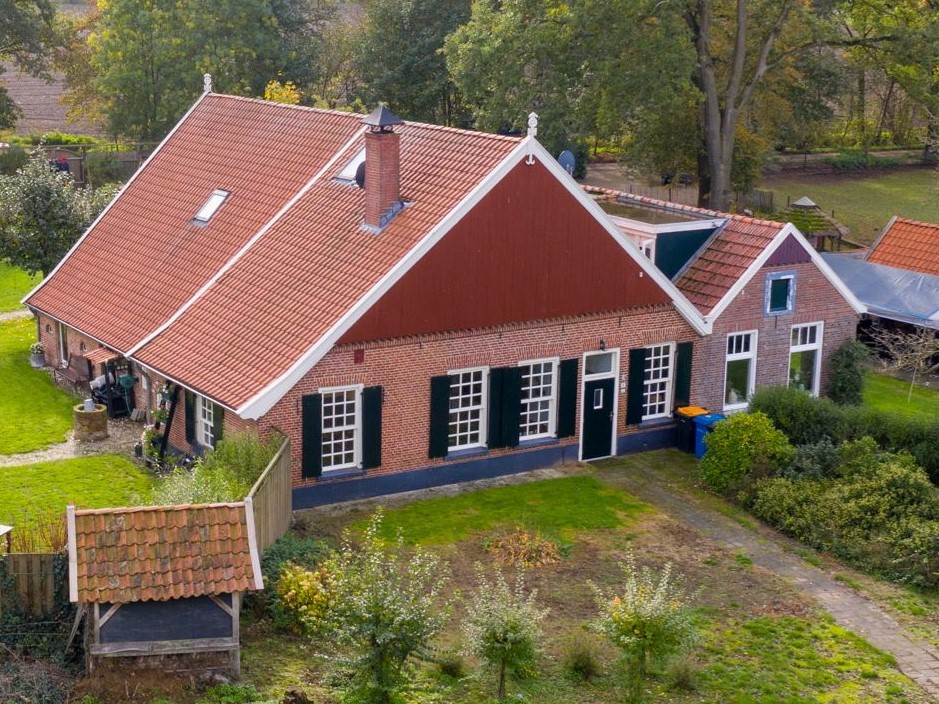
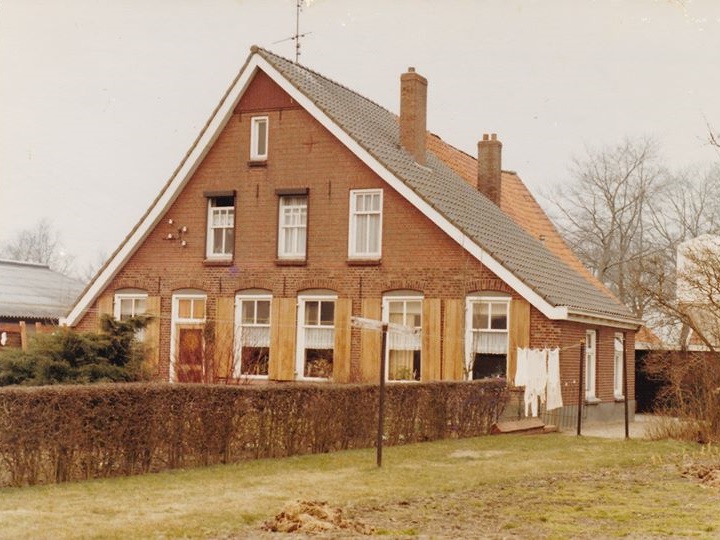
A number of names end in -kamp. Originally, the ‘kampen’ were small pieces of land that had been cleared of brushwood and trees in the forests, thus reclaimed forest. Later, the word ‘kamp’ acquired the meaning of field.
De Kamp, Grote and Kleine Kampe, Barnekamp (a site created by burning down forest), Boomkamp, Graaskamp, Haverkamp, Heidekamp, Heisterkamp, Langenkamp, Leemkamp, Maatkamp, Middelkamp, Nieuwkamp, Schuttenkamp (a farm that lay somewhat hidden, concealed in the land?), Stapelkamp (a place where a ‘stapel’, a jurisdictional post stood, thus a place of judgment), Tolkamp, Wierkamp. Furthermore, also the names Oud, Nieuw and Klein Kempink, Kemper and Overkempink.
Reclamation names
Only a few names recall the reclamation of wastelands. Nijland, Nijveld, Nijhof, Nieuwkamp, Nieuwe Weide. The Bijvanck, what was ‘caught’ or taken additionally. Te Brake also points to reclamation, the ‘breaking’ of the wasteland. Ruwhof: ‘rude’, ‘rode’, reclaimed land.
Farms that recall passes, gates, tolls, etc.
A ‘pas’ is a passage in a ‘landweer’ (defensive earthwork), a wooded bank. The resident of the nearby farm had to ‘oppassen’ (watch out), supervise the persons entering. Such a farm sometimes bore the name “Pasop”. Along the Romienendiek, for example, lie the Paske, the Pasop and the Paskerhut: the residents had to keep an eye on the persons who entered the ‘marke’ (common land) through the Wolboom and the Zwarte Veen. On the border with the Varsseveld area near the Varsseveldseweg, there is also a Pas. On the Varsseveld side, the Loerdijk and the Kijkuit are located here. The ‘marken’ were well protected.
‘t Pashuus, the Nieuwe Pas, Oude and Nieuwe Pasop, Nieuw, Groot and Klein Paske. The Fort must also be included in this group: ‘furt’, a passage through a ‘landweer’. The residents of Straks (strang, strict) and Ongena were certainly uncomfortable masters for the incoming strangers!
Among those who also had to take the ‘marke’ under their care was the resident of the Markerink, formerly called March-ward-inck. A ‘werde’ was a watch post, a place where one had to supervise the intruding unsavory elements. A similar activity was expected of the Ligterink, which in 1435 was called Licht-werd-inck: the watching apparently felt rather light there. The duty of keeping watch also lay with the Kuier and the Kuierman: ‘koeren’, ‘kuren’ meant “looking out”.
Did the ‘schutte’, who had to seize (schutten) the livestock from another ‘marke’ that had intruded into their own ‘marke’, live on the Schuttenkamp, and did such a person also live on the Man-schot-weide? Recalling the tolls are Slotboom, the Stokkert, ‘t Bonte Hek, Klaphekke, ‘t Tolhuis, Tolkamp and Tolder (toll collector).
Memories of the church
De Pater, ‘t Klooster (named after the Schaer monastery), Kerkhof (a farm of the church), Kerkkamp, Neerhof (den Heerhof, inhabited by the monks), De Kloeze, hermit, perhaps also Klaus. Kosters custerie: the proceeds of this property were for the sexton.
Small dwellings
Small dwellings were given the name of ‘hutte’: de Hutte, Bazenhutte, Bramer Hutte, Brassenhutte, Bruggenhutte, Jacobshutte, Paskerhut, Wendelenhutte, Stronkshutte. Sometimes a small dwelling was partitioned off in a barn, a ‘schoppe’: the Schoppert, Drenthelschoppe, Freriksschure, Kortenschoppe, Reinders Schoppe, Schurink, Slaa Schoppe. A ‘spieker’ (grain storage) was also sometimes furnished as a dwelling: Brussen Spieker, Drenthel Spieker, Spiekershof, ‘t Ni-je Spieker. Koskamp (from ‘kotkaap’, ‘cote’, hut).
Farms where a side business was practiced
Beestman (herdsman), the Scheper (shepherd), Sweenen (swineherd), Fukker (breeder), Peerdeboer (horse farmer), ‘t Villeken (where dead animals were skinned and the hides were tanned), Baten (‘beten’, the tanning of hides). The Brasse (brewery), Pakkebier (‘backe’, also brewery), Schenk (public house, tavern) and Slikkertap (a tap in the ‘slik’, swamp).
Brethouwer (should we interpret ‘bret’ here in the sense of board, thus someone who made boards?), the Klumper and Klompenhouwer (‘houwen’ is chopping or carving), Kolstee (place where charcoal was burned), Kuiper (cooper), Draaijer (turner), Kappers, Kleuver (recalling the chopping and splitting of wood), the Smid and ‘t Smees (formerly Smedeserve). Papiermolen, the Olde Mölle, ‘t Olde Mulder, the Görter (groat-maker, hulling miller), Te Roele (in 1640 ten Rule – ‘rullen’, hulling of grain, hulling mill).
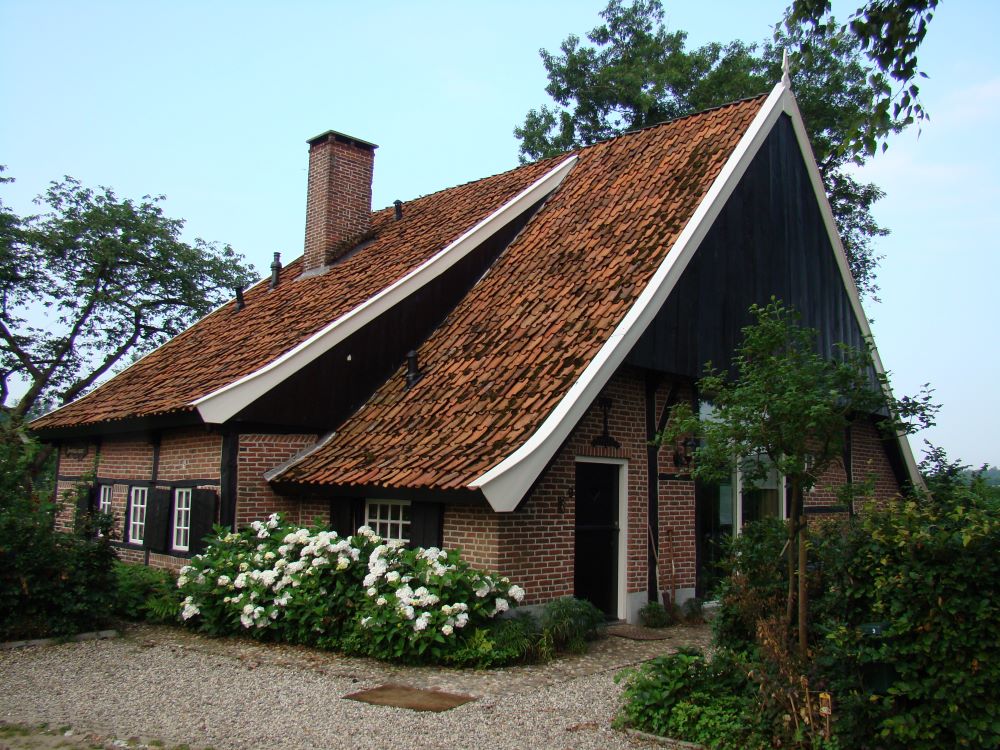
Den Blauwen (blue-dyeing of linen), the Wever (weaver), Bouwhuis Wever, Weversborg, the Pellewever (weaver who wove finer goods, such as damask and table linen), Schreurs, Snieder and Snijdershuis (tailors). Kremer (peddler) and Klodde (ragman). Speelman (someone who cheered up the parties with a musical instrument) and the Piepert (piper, flute player). Krieger (inhabited by a soldier? In 1640, a soldaetencamp also occurred in Barlo).
Farm names ending in -ink etc.
About forty farm names end in -ink. These largely point to the possession, to the estate of a certain person. They are mainly composed of a personal name + -ink. Lists of proper names that occurred in the Middle Ages have been compiled from all possible archival documents, and based on these lists, a number of farm names can be explained.
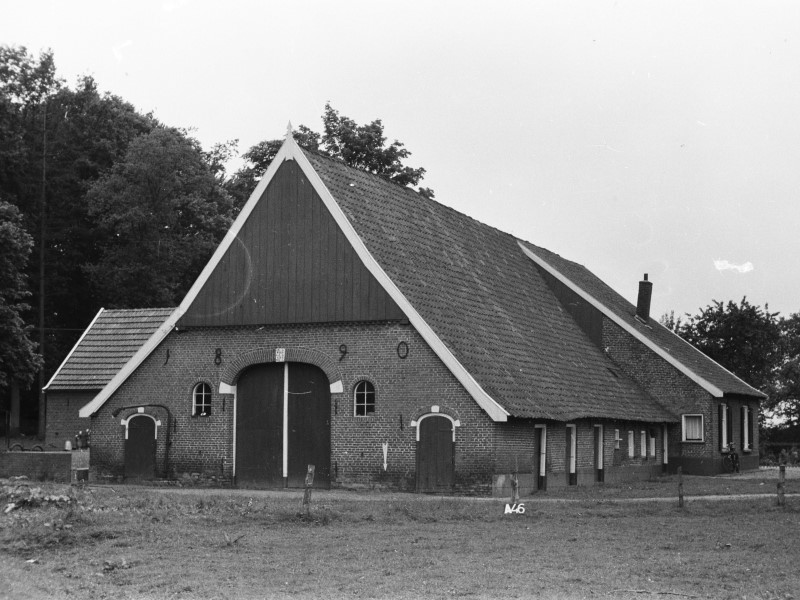
These are, for example, Ansink (from Anso), Beusink and Bussink (from Buse), Bulsink (from Bule), Beunk (in 1640 Bo-ynck-mate), Buunkmate (Bonninckmate) and Bunink (1248 Bonninck), all three from Bono. Perhaps Bongen is also derived from Bono), Bijnen (1284 Benninck, from Benno), Deunk (in 1366 Dudinc? from Dudo), Elferink (from Alfhard), Eppink (Eppo), Mekkink (Menko), Pennings (Pinno), Pöppink (Poppo), Wensink (Wenzo), Wesselink (Wezilo), Wikkerink (Wikko), Obeling and Oberink (Obo), Lurvink (Lurvo), Rensink (Rinzo), Lensink (Landso), Siebelink (Siebo), Swietink and Swijtink (Swid), Welink (Willo), Wennink (Wanno). Oonk must also be included here; 1366 Odino (Odo), Gussinklo: forest on the estate of Godso.
Hoenink, Huinink and Hunink were located in a ‘hoen’, a ‘huun’, a swamp. Another explanation that we must take into account, according to the CBG Center for Family History, is that names like Hoenink and Huinink go back to the Germanic personal name Huno.
However, there are a number of names that cannot be traced back to personal names. They clearly refer to something else. These are: Bekink (located near a brook), Bultink (located on a ‘bult’), Doornink (located in or near a thorn forest), Eekink (located on a site with oaks), Essink (located on an ‘Es’), Heijink (located on the heath), Kempink (located near or in a ‘kamp’), Haartelink (located on a ‘Haart’). Rengelink can indicate a “rinc”, which was a place of judgment. On the Borninckhof, the Haartse Wetering originates, so there are springs there. On the former Richterink, the judge held his proceedings.
There was a time when the meaning of the suffix -ink was no longer understood. People then began to form names with “stedeke” and “goet”. Thus we find, for example, Heijnengoet, Goossenstedeke, etc. In later usage, the words ‘stedeken’ and ‘goet’ were omitted. Freriksgoet became Freriks, Rutgerstedeken became Rutgers. Here again many farm names formed from personal names: Freers, Freriks, Bullens (from Bullo), Ebbers (from Ebbo), Goosen (Goosen, Goos), Heinen (Hein), Lammers (Lammo), Lievers (Lieven), Lindert (Lindert), Lubbers (Lubbert), Reinders (Reinder), Rutgers (Rutger), Wiggers and Wiechers (from Wigger), Wubbels (from Wubbel), Wolters (Wolter) and Rikkert (Rico).
Names ending in -huis (-huus in the dialect) are Bartshuis, Devenhuus, Dorushuus, Japikshuus, Kobushuus, Matthijsenhuus, Luuksenhuus (popular name for Lucas). Farms with only a proper name: Maas (popular name of Thomas), Thijs (Matthew), Jonen (John), Liezen (Elizabeth), Wendelenhutte (Wendelin), Karsjes (Christina), Koop (Jacob).
Special mention
In addition to the farms classified in the groups above, there are a few others that deserve special mention: the Tuunte was surrounded by a ‘tuun’, a woven fence, as were the Vreman and the Vreveld. The Zigtvrede had some preferential rights in the annual distribution of the ‘marke’ lands. One of these farms was called Seegvreden in 1640, named after the ‘seege’, the goat. The Hegge was surrounded by a hedge. The Sonderen also had rights; a part of the common land could be used for private use. That part was separated (afgezonderd) from the ‘marke’. The Meijnen was also part of the common ‘marke’.
The Haverland and the Haverkamp had the duty to supply oats (haver) to the lord or church, etc. On the Hemelmaat, justice was administered; a ‘hegemael’, a ‘heimael’, was a space surrounded by a hedge where a ‘mael’, a court session, was held. The Akkermaat owes its name to a meadow that could be mown in one day, and the Maandag to the piece of land that could be plowed in one day with the shared livestock. A former name would therefore have been: Mendag. The Hogewind should actually have been called the Hogewend, because this was the high end of the land where the plow was turned (gewend).
The Grotenhuis provides information about the size of the house and the Nieuwenhuis (in 1640 Nijenhuis) points to a then newly built dwelling, just like Nijboer. The Lankhof and Scheel indicate the shape of the land: long and crooked. The Korten (in 1640 Kortenstedeken) had only a short piece of land. The Heurne had the shape of a horn, a tapering piece of land, as did the Timp and the Timpert. Sad was the state of the Prange, the Marode and the Drommelder, which three names can all be translated as misery.
The Smol was “small and insignificant”. Could the Huikert have been a hay meadow or is it a distortion of the popular name Huik for Hugo? The Botervat: butter meadow? The Westendorp, the Oosterbosch, the Oosterhoeve and the Oosterman derive their names from the cardinal directions towards which they are oriented. Agriculture is indicated by: Bouwlust, Bouwhuis and the Bovelt (building field). Is the Hillo (Heiligelo?) a memory of paganism or was it a ‘lo’ on a ‘hil’ (hill)? The Leste Stuver was formerly an inn near Bredevoort where traveling people could squander their last penny.
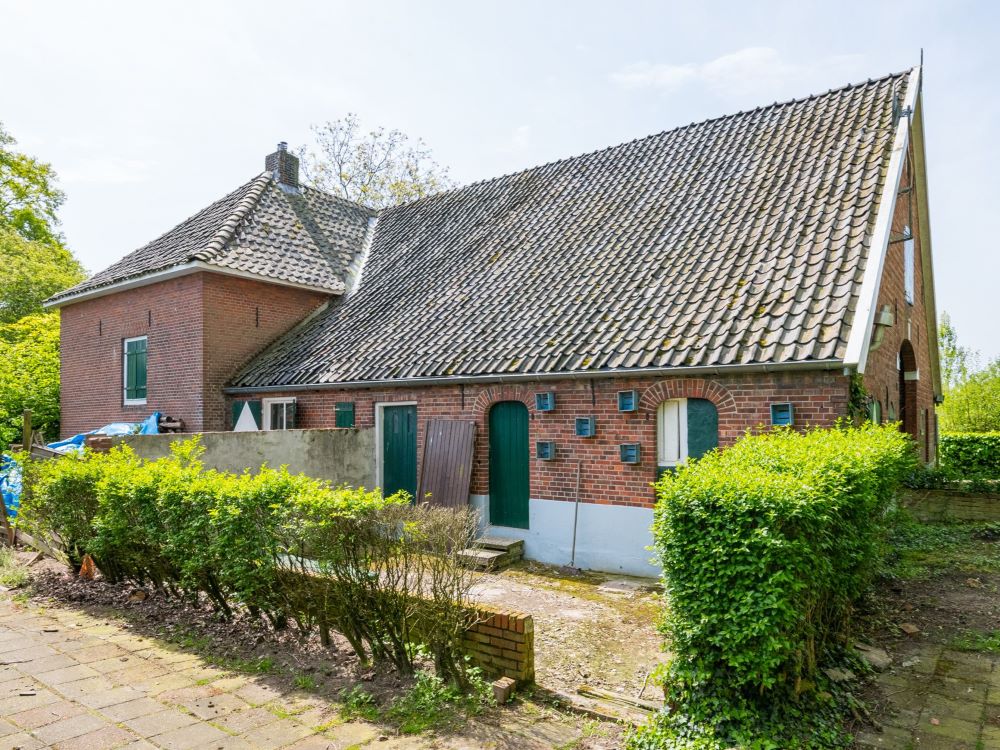
Imaginative persons certainly lived at Avondrood, Morgenrood, Bestevaer (‘grandfather’), Driekleur, Midden in ‘t Land, Nooitgedacht and the Vlijt. And the creators of the names Meihof and Meihuis certainly had an eye for the beautiful green and the colorful flowers in the month of May.
Source
- Boerkoel, G.A.W., The names of the Aalten farms, published in the Oostgelders Tijdschrift voor Genealogie en Boerderijonderzoek (1984, no. 2, p. 1), edited and supplemented by Remco Neerhof (Oud Aalten). Some farm names occur multiple times in the municipality of Aalten; the added hyperlink in those cases usually refers to the oldest known farm.
- See also: Farm and Field Names in Aalten.