Category: Aalten

  • Warenhuis Geling

    Warenhuis Geling

    Landstraat 5, Aalten
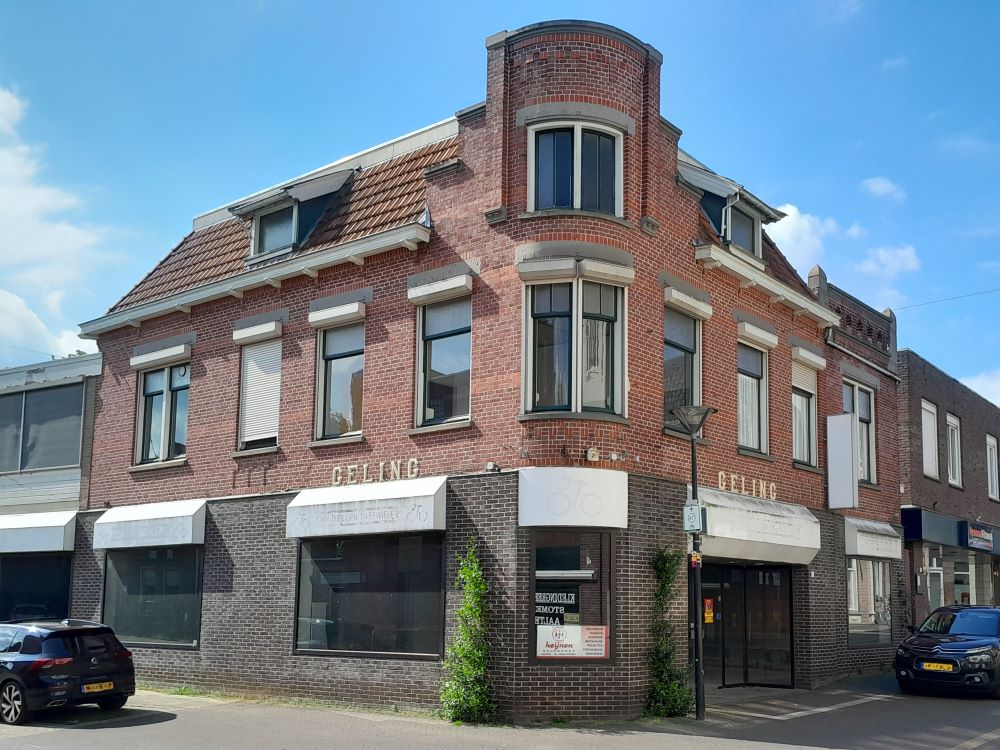
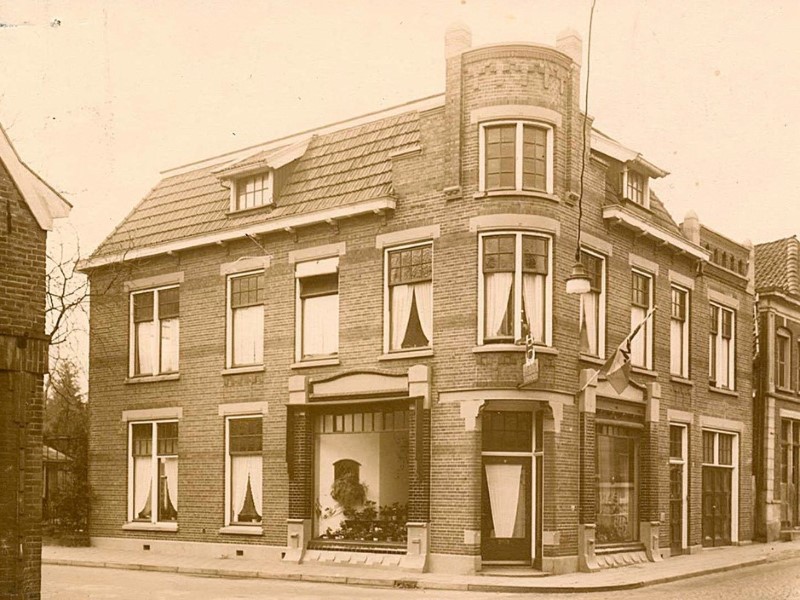
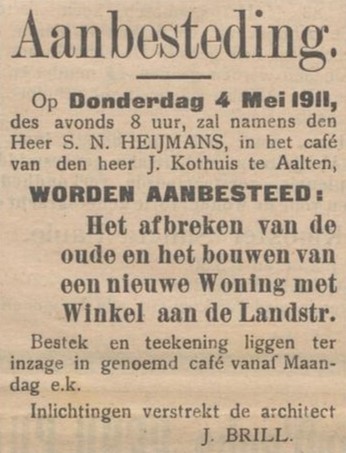
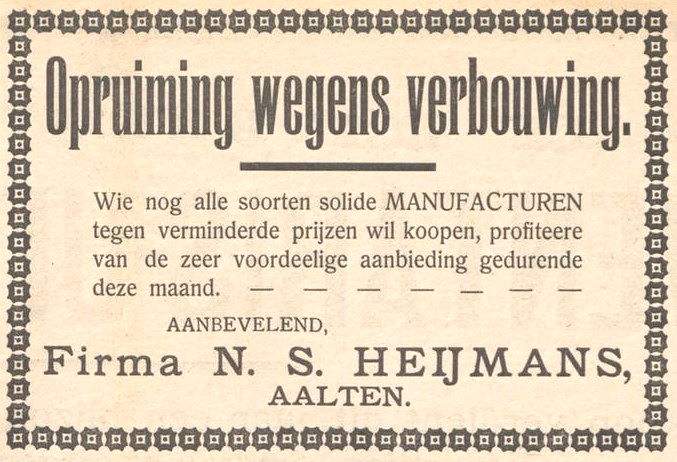
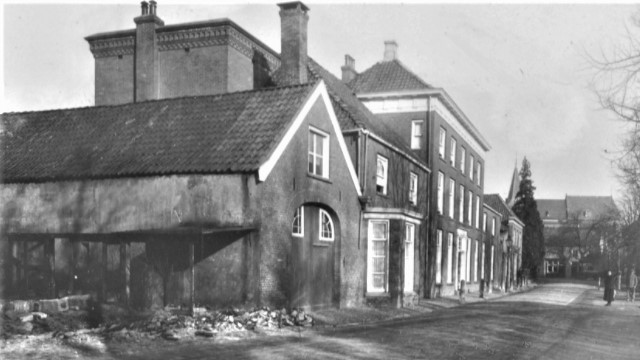
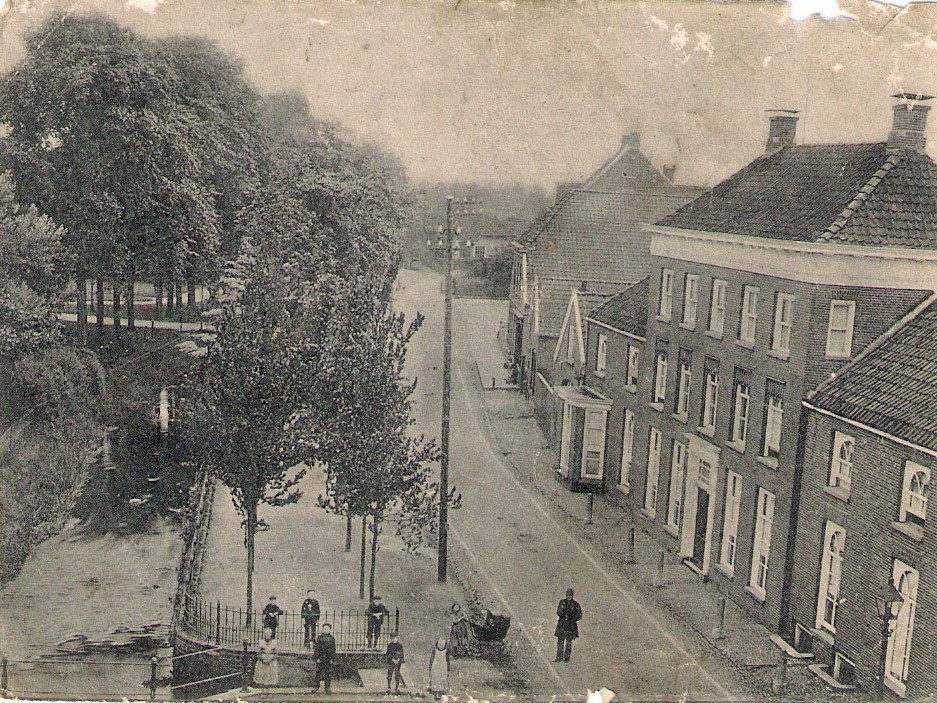
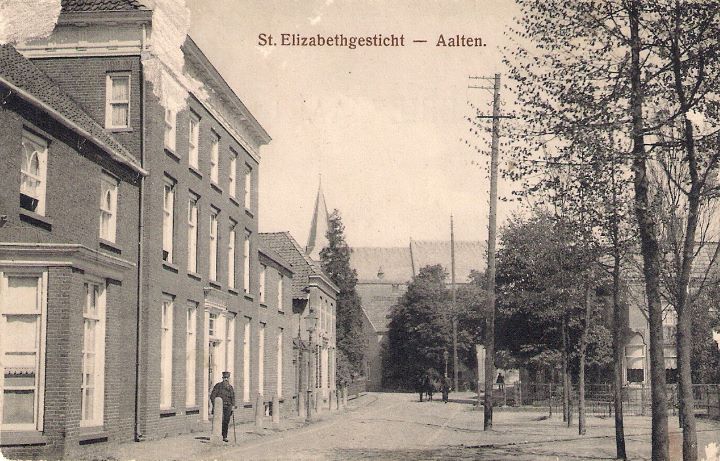
    Landstraat 5 in Aalten is a characteristic residential and commercial building dating from 1911, built for the Heijmans firm, drapers and cloth merchants. The new building replaced an older house on the same site. The Aalten architect Jan Brill was responsible for the design.

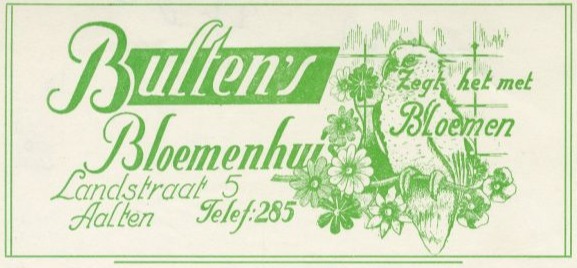
    In the 1930s, Bulten’s Bloemenhuis (flower shop) established itself here, and two greenhouses were erected at the rear of the property. In 1947, the narrow northern section of the building—originally consisting of a room, kitchen, and upper room—was incorporated into the business. The ground floor then housed a garage/workshop, a florist’s workshop, a small kitchen, and an office, with a storage attic above.
    Geling’s Department Store

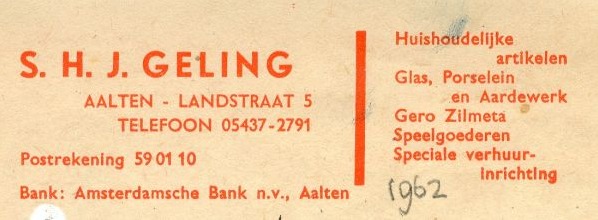
    In the late 1950s, S.H.J. Geling established a department store here, specialising in household goods and toys. Under his instruction, the building underwent extensive renovations in 1960, based on a design by H.A. and J.L.F. Waalders. During this project, the building was fitted with new shopfronts and a modernised layout.

    Three years later, in 1963, a significant expansion followed on the western side, including additional shop and warehouse space, also designed by the Waalders architectural firm from Winterswijk. In the following decades (1960s and 1970s), the shop and its facade were further modernised, and the workshop was integrated into the retail area.

    Following the closure of Geling’s department store, Theissen Tweewielers (a bicycle shop) occupied the premises for some time. Currently (2025), the building has been vacant for many years.


    Owners

    Overview is incomplete.

    YearPlotOwnerDescription
    1832I-1269
    I-1270
    I-1271
    I-1272
    widow of Jan Hendrik Brethouwer 38 m² house & yard
    51 m² house & yard
    192 m² house & yard
    350 m² garden

    Residents

    1813

    Aalten 63

    Jan Hendrik Brethouwer (Aalten, 14-06-1761), cloth merchant

    1 man
    1 woman

    Population register 1823-1838

    Aalten 63

    Harmina (Hendrika) Manschot (Aalten, 21-12-1766), shopkeeper
    widow of Jan Hendrik Brethouwer

    Next residents:

    Joseph Wilhelm Stephan Blomesath (Bocholt, 26-12-1806), weaver
    Johanna Magdalena Vultink (Aalten, 21-03-1811)

    Population register 1838-1850

    Aalten 60

    Joseph Wilhelm Stephan Blomesath (Bocholt, 26-12-1806), weaver
    Johanna Magdalena Vultink (Aalten, 21-03-1811)

    Next residents:

    Derk Prins (Aalten, 09-09-1794), farmer
    Willemina Aleida Freriks (Aalten, 30-11-1801)

    Next residents:

    Johan Henrich Geuting (Bocholt, 06-03-1808), cotton spinner
    Johanna Hafkenscheid (Ulft, 23-08-1803)

    Next residents:

    Derk Hendrik Gerhardus Brethouwer (Aalten, 25-02-1794), farmer
    Johanna te Bokkel (Aalten, 15-02-1807)

    Population register 1850-1860

    Aalten 60

    Derk Hendrik Gerhardus Brethouwer (Aalten, 25-02-1794), farmer
    Johanna te Bokkel (Aalten, 15-02-1807)

    Next residents:

    Johan Wilhelm Carl Schmeinck (Bocholt, 26-02-1803), office clerk
    Antonetta Kramer (Aalten, 16-08-1816)

    Next residents:

    Population register 1860-1870

    Aalten 60

    Hendrikus Brethouwer (Aalten, 06-08-1823), grocer
    Everdina Wilhelmina Margaretha Smits (Winterswijk, 18-07-1834)

    Next residents:

    Population register 1870-1880

    Aalten 75

    Maria Adriana Ledeboer (Oud Beijerland, 04-09-1815)

    Next residents:

    Nathan Salomon Heijmans (Groenlo, 14-11-1826), merchant
    Bettij van Oss (Emden/D, 12-01-1847)

    Population register 1880-1890

    Aalten 83

    Nathan Salomon Heijmans (Groenlo, 14-11-1826), merchant
    Bettij van Oss (Emden/D, 12-01-1847)

    Population register 1890-1900

    Aalten 79

    Nathan Salomon Heijmans (Groenlo, 14-11-1826), clothier
    Bettij van Oss (Emden/D, 12-01-1847)

    Population register 1900-1910

    Aalten A101 > A130

    Nathan Salomon Heijmans (Groenlo, 14-11-1826), clothier
    Bettij van Oss (Emden/D, 12-01-1847)

    Next (head) resident, son:

    Simon Nathan Heijmans (Aalten, 01-11-1877), clothier

    Population register 1910-1920

    Aalten A130 > 131

    Simon Nathan Heijmans (Aalten, 01-11-1877), clothier

    Address directory 1934

    Aalten A131 > Landstraat 5

    N.S. Heijmans

    Address directory 1967

    Landstraat 5

    S.H.J. Geling

    Features


    Cadastral no.I-8118
    FunctionResidential house,
    Shop
    ArchitectJan Brill
    Year of construction1911
    ListedMunicipal
    monument

    Sources


  • Patrimoniumstraat 12

    Patrimoniumstraat 12

    Aalten

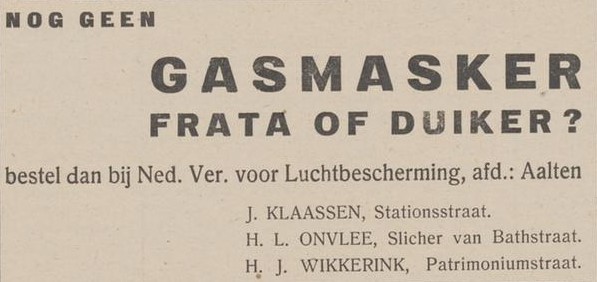
    The house is of particular significance due to its history of occupation. During the Second World War, it was inhabited by the resistance leader ‘Ome Jan’ (Uncle Jan) Wikkerink and his family. Motivated by his religious convictions, Wikkerink was deeply involved in assisting those in hiding. He became the leader of the Landelijke Organisatie voor hulp aan Onderduikers (LO – National Organisation for Aid to People in Hiding) and the Landelijke Knokploegen (KP – National Assault Teams) in Aalten.

    On Sunday, 15 September 1944, the house was surrounded and he was arrested along with several others. However, he was liberated that very same day. In retaliation for the rescue operation, the Germans threw hand grenades into the house on Patrimoniumstraat, causing the interior to go up in flames.

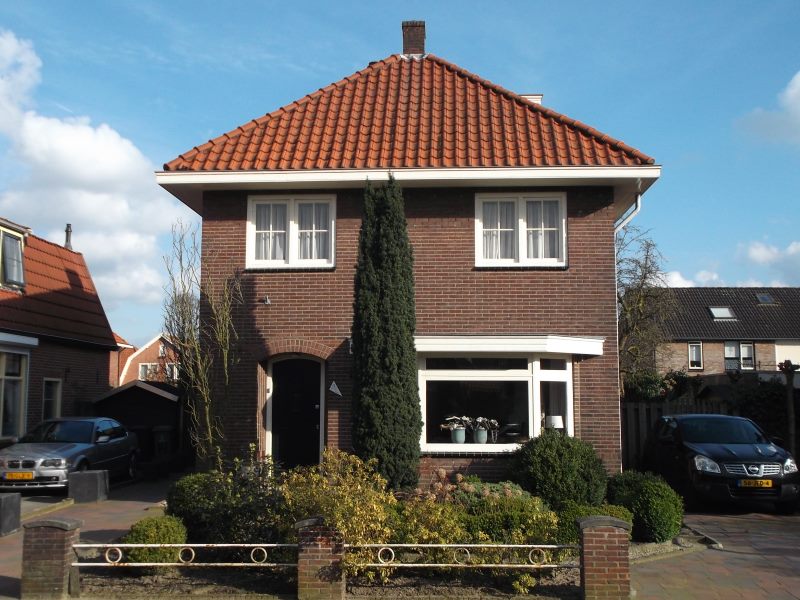
    The house was built in the traditional brick architecture characteristic of the Interwar period, featuring a substantial overhang and strong horizontal elements, such as the bay window at the front of the property.


    Owners

    Overview is incomplete.

    YearPlotOwnerDescription
    1832I-167de Hervormde Armen van Bredevoort (Reformed Poor of Bredevoort)57.570 m² farmland

    Residents

    Population register 1930-1940

    Hendrik Jan Wikkerink (Aalten, 30-06-1896), bricklayer
    Dela Gesina Eppink (Dale, 28-02-1898)

    Address directory 1934

    Aalten C439/2 > Patrimoniumstraat 12

    H.J. Wikkerink

    Address directory 1967

    Patrimoniumstraat 12

    G.C. Wikkerink

    Features


    Cadastral no.I-12553
    FunctionHouse
    Year of construction1932
    Listedno
  • Lindenhof

    Lindenhof

    Wilhelminastraat 25, Aalten

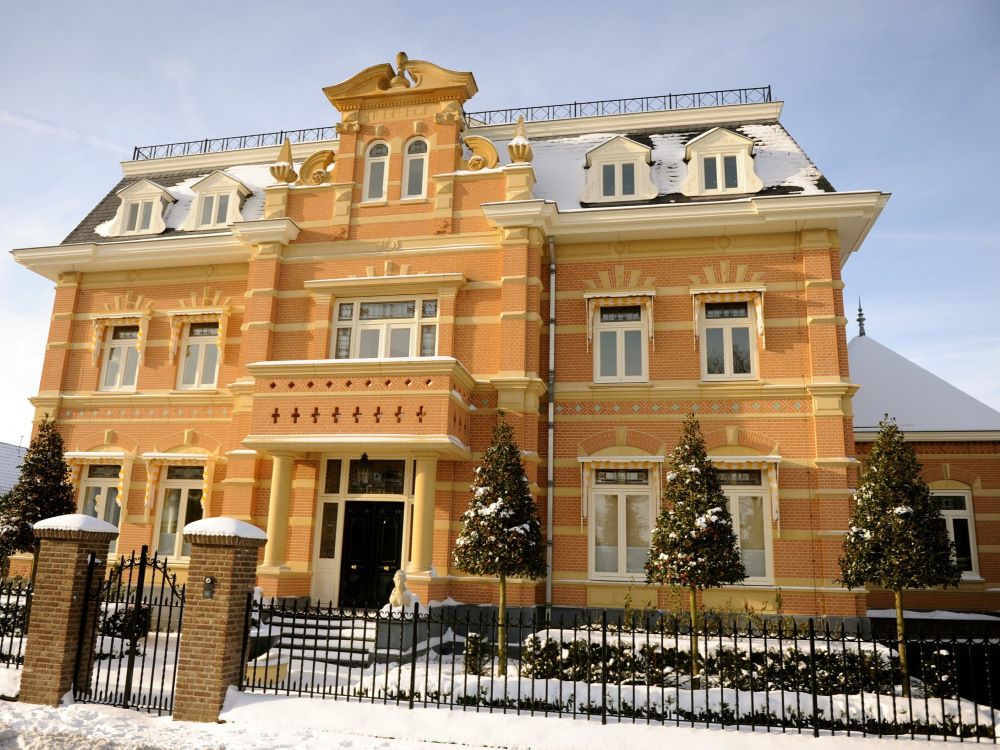
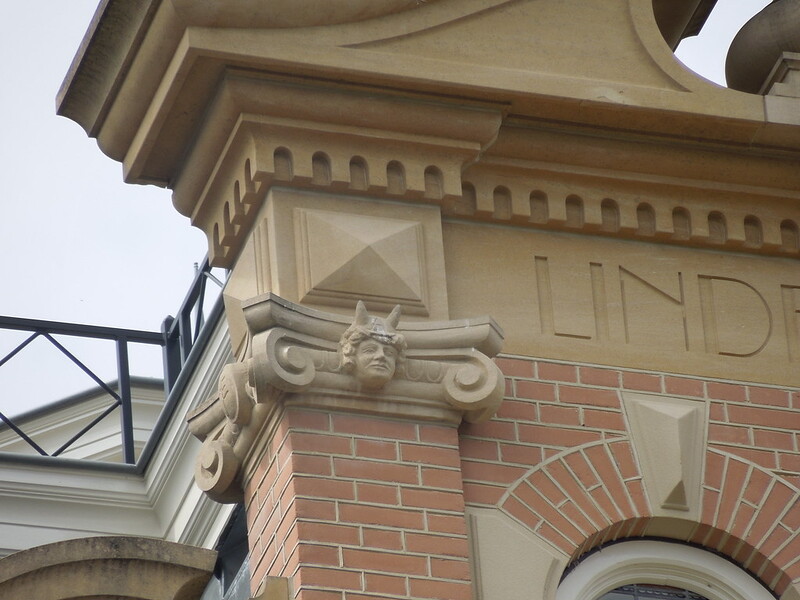
    This villa, designed in the nineteenth-century Neo-Renaissance style, was completed in 2012. Its architecture is inspired by the historic Aalten director’s villa, de Beukenhof. As a tribute to the ‘original’, the name Lindenhof adorns the facade of this mansion. The house was commissioned by living rock legend Angus Young, guitarist of AC/DC, and his wife, Ellen van Lochem, who is originally from Aalten.

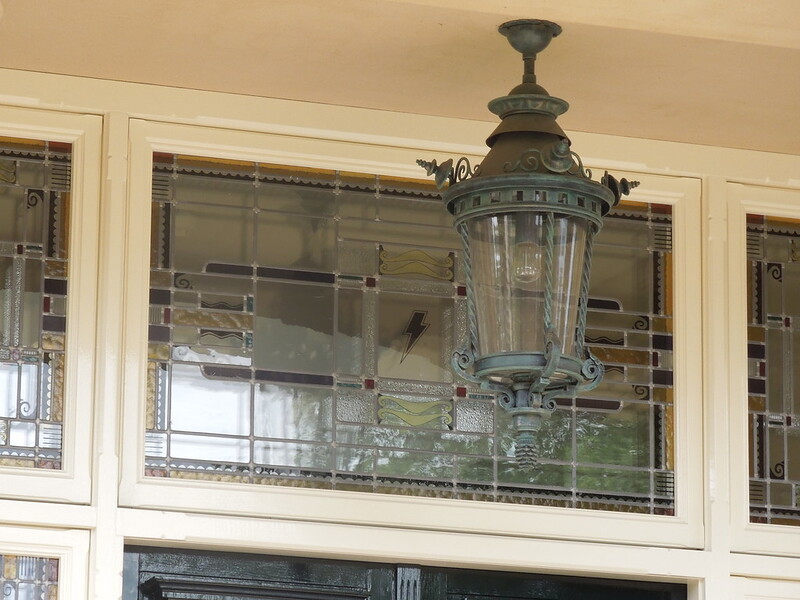
    The enormous house features three floors above ground and a recording studio for the musician underground. Several architectural jokes have been incorporated into the facade as subtle references to the master of the house. For instance, at the top of the facade, on both sides of the house name, there is a sculpted head featuring devil’s horns. Many fans immediately associate this with the cover of the 1979 album Highway To Hell. The stained-glass window above the front door incorporates a lightning bolt, taken directly from the band’s logo.

    Publicity

    Since the construction plans were announced, many articles about this house and its owners have been published online, in newspapers, and in magazines. In 2023, an article appeared in Nieuwe Revu which once again explained how Angus Young ended up in Aalten (link).

    Previously, the so-called Wijkgebouw (community centre) stood on this plot.

    Features


    Cadastral no.I-8086
    FunctionHouse
    Year of construction2012
    Listedno

    Sources


  • Stad Munster Lodging House

    Stad Munster Lodging House

    Peperstraat, Aalten (no longer extant)

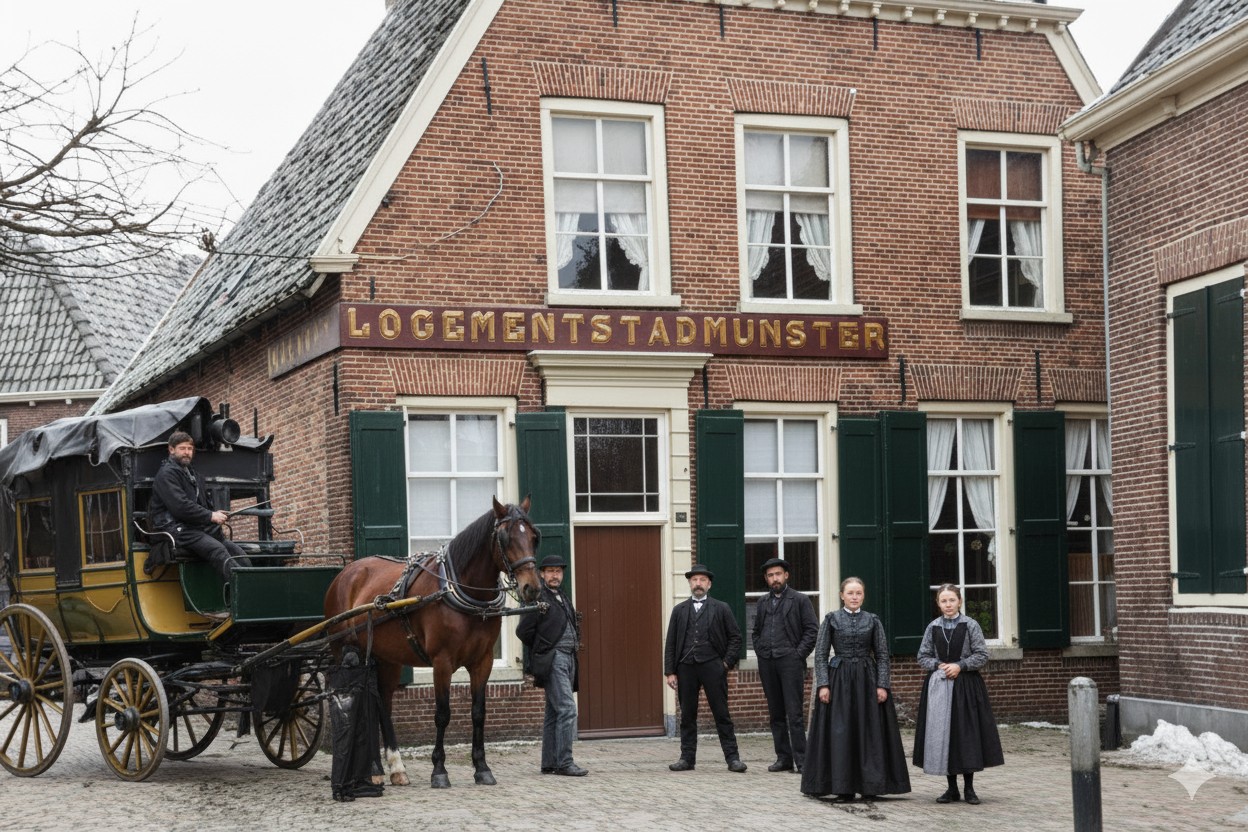
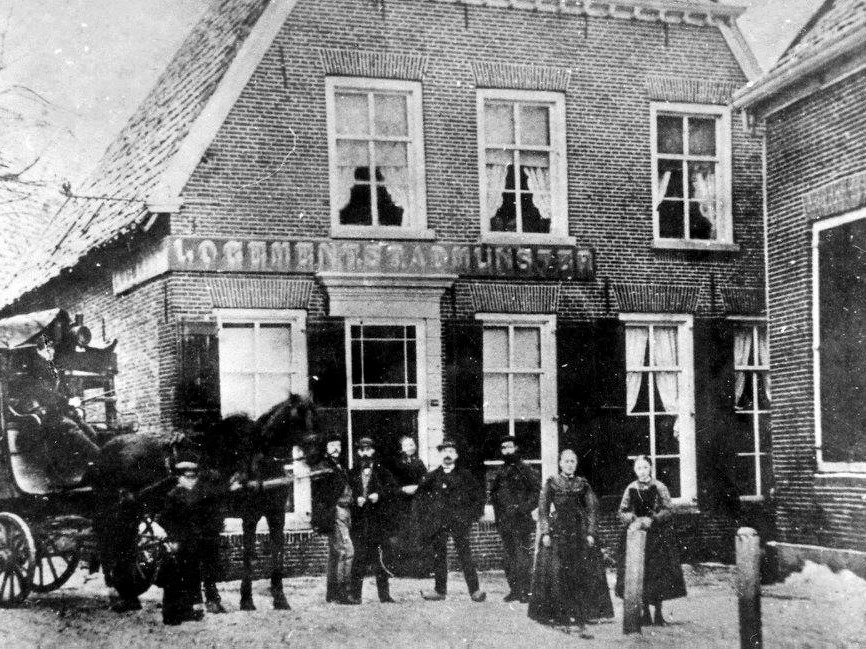
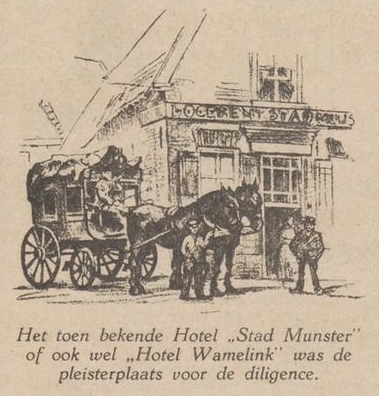
    Stad Munster Lodging House was once an important rest stop for travellers and mail coaches. It stood in Peperstraat, situated between the former post office and ‘De Postiljon’, opposite Stegers. Following the municipal reorganisation of 1816, it briefly served as a courthouse (Rechthuis). In 1873, the building was completely destroyed by fire and was never rebuilt.

    A Coaching Inn for the Diligence

    In previous centuries, when the mail coach—or diligence—was the official mode of transport, ‘Logement Stad Munster’ (also known as ‘Hotel Wamelink’) functioned as a coaching inn for the diligence and a place of rest for weary travellers. Those embarking on a long journey who could afford it would board at Hotel Wamelink, after which the journey continued, jolting and bumping towards its destination. Those with less to spend put on their ‘steffels’ (boots) and undertook the journey on foot; a walk to Arnhem or Zutphen was no rarity in those days. People had the time. Stad Munster welcomed travellers of all kinds, such as a manufacturer from Armentières in France, a merchant from Stadlohn, and a clerk on foot from Oosterwijk. Three English factory workers from Manchester, Ashton, and Oldham once stayed there for two months.

    In 1823, Johanna Maria Martha Mensinck was registered at this address as the lodging house keeper. She was the widow of Gerrit Jan Wamelink, who had passed away in 1822. Johanna died in 1854. Their son, Lambertus Hermanus Wamelink, continued the business. In 1852, at the age of 39, he had married Johanna Catharina Heming. After her death in 1854, he remarried Wilhelmina Louisa Hendrina Meijrink in 1856.

    Fire

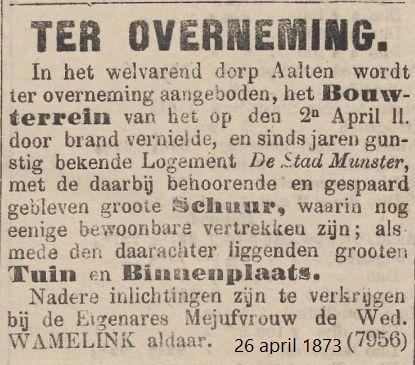
    On 2 April 1873, a violent thunderstorm broke out over Aalten. Labourers in the fields fled into barns and garden sheds. Thunder rolled incessantly and lightning filled the sky. Suddenly, a loud crack was heard, and shortly thereafter, everyone could hear the tolling of the fire bell in the church tower above the sound of the rain. A lightning strike had hit the building next to the lodging house, which was occupied by Mr Van Eerden and the national tax collector, Mr Boudewijn.

    By the time the fire wardens arrived, both buildings were engulfed in flames. The fire engines could do little against such a blaze. The old lodging house—the pride of the Wamelinks, who had lived there since the beginning of the 18th century—burnt to the ground, as did the adjacent house on the corner of Kerkstraat. The lodging house was never rebuilt, and the site has remained an open passage between Peperstraat and Het Hoge Blik ever since.


    Owners

    Overview is incomplete.

    YearPlotOwnerDescription
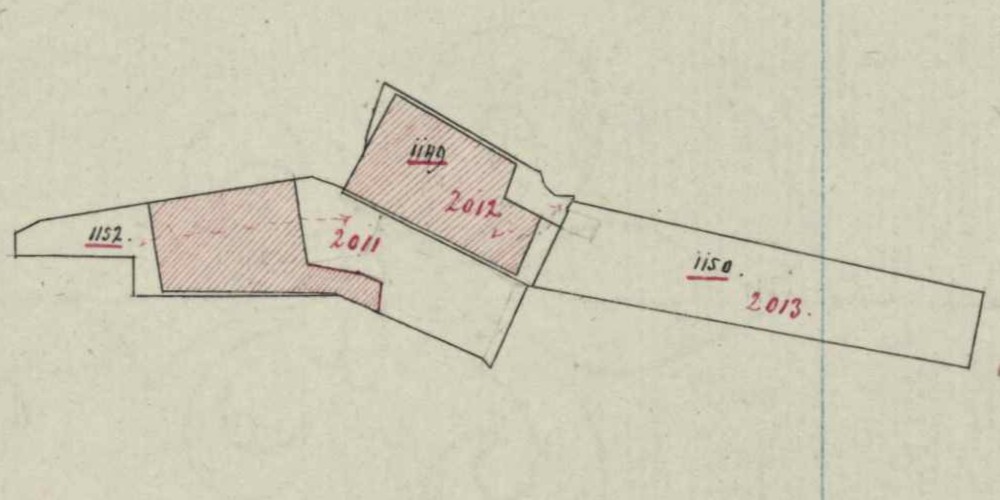
    1832I-1152widow of Gerrit Jan Wamelink 490 m² house, barn
    1858I-2011
    I-2012
    widow of Gerrit Jan Wamelink
    heirs of Lambertus Hermanus Wamelink
    490 m² house, yard
    260 m² barn, stabling
    1863I-2011
    I-2012
    Wilhelmina Louisa Hendrina Meijerink,
    lodging house keeper
    490 m² house, yard
    260 m² barn, stabling

    Residents

    Population register 1823-1838

    Aalten 256

    Johanna Maria Martha Mensinck (Winterswijk, 16-08-1788), lodging house keeper

    Widow of Gerrit Jan Wamelink.

    Population register 1838-1850

    Aalten 271

    Johanna Maria Martha Mensinck (Winterswijk, 16-08-1788), lodging house keeper

    Population register 1850-1860

    Aalten 271

    Johanna Maria Martha Mensinck (Winterswijk, 16-08-1788), lodging house keeper

    Next residents, son and daughter in law:

    Lambertus Hermanus Wamelink (Aalten, 18-02-1813)
    (1) Johanna Catharina Heming (Vreden/D, 02-07-1822)
    (2) Wilhelmina Louisa Hendrina Meijerink (Aalten, 06-11-1823)

    Population register 1860-1870

    Aalten 271

    Wilhelmina Louisa Hendrina Meijerink (Aalten, 06-11-1823), lodging house keeper

    Population register 1870-1880

    Aalten 348

    Wilhelmina Louisa Hendrina Meijerink (Aalten, 06-11-1823), lodging house keeper

    Features


    Cadastral no.I-11441
    FunctionLodging house
    Year of constructionunknown
    Burned down1873

    Sources


  • Gasworks

    Gasworks

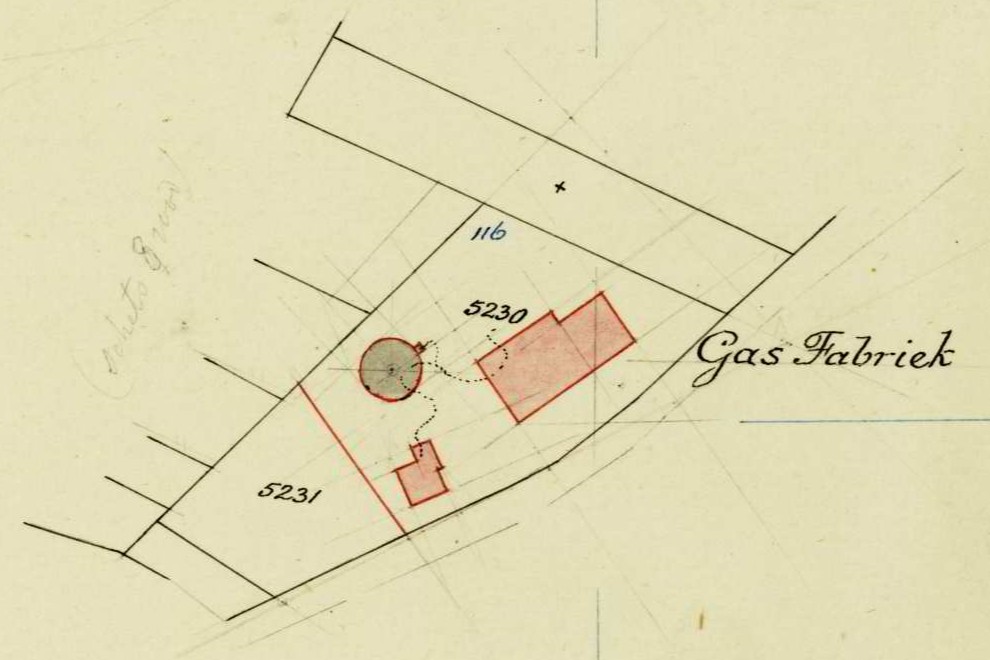
    Bredevoortsestraatweg 109, Aalten (no longer extant)

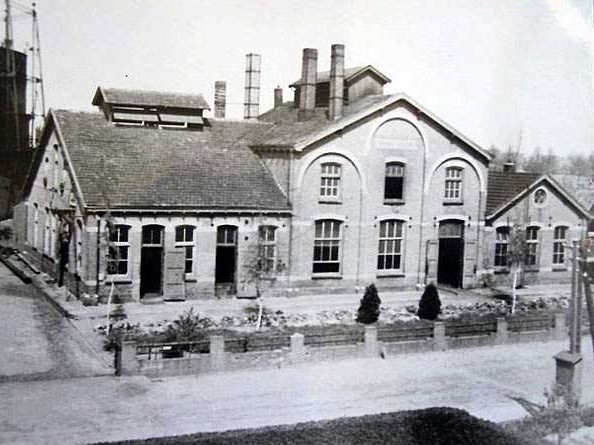
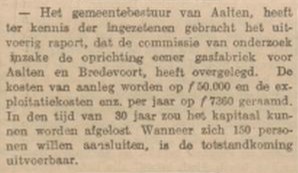
    At the beginning of the twentieth century, there was a growing demand for modern energy supplies in the Netherlands. Until then, many households and businesses relied on oil and paraffin lamps for lighting, and on wood or coal for heating and cooking. Gas lighting was seen as a major advancement.

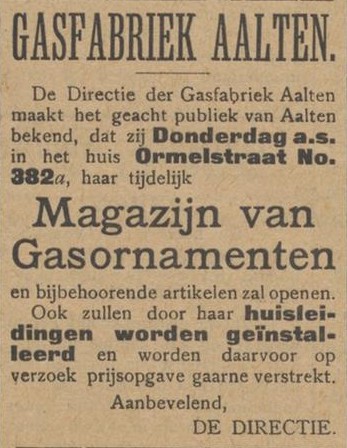
    As in many other places, it was decided to build a gasworks in Aalten to provide households, businesses, and street lighting with gas. The arrival of the plant marked a significant step in the modernisation of local infrastructure, though it also brought its share of challenges.

    The Production Process

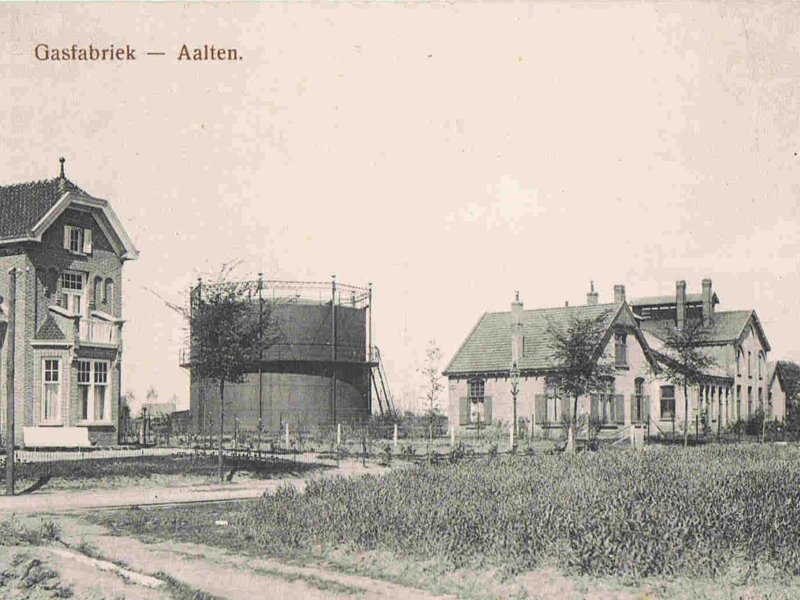
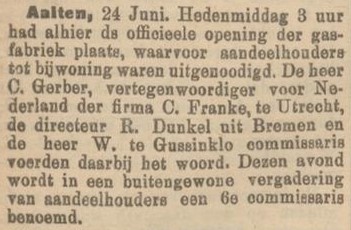
    In 1905, the decision was made to build a ‘coal gas plant’ in Aalten. Two years later, in 1907, it was put into operation. The plant produced gas through the dry distillation of coal. This process involved heating coal in the absence of oxygen, releasing gas that could be captured for distribution.

    The raw gas contained various impurities, such as tar, ammonia, and sulphur compounds. These were removed through condensation and chemical purification. The purified gas was then stored in a large gas holder (gasometer) and guided through a network of underground pipes to homes and businesses, where it was used for lighting, cooking, and heating.

    Installation of the Gas Grid

    The installation of the gas grid caused considerable disruption. Streets frequently had to be dug up to lay the pipes, leading to many complaints from residents.

    Until the end of 1908, people complained about the poor state of the roads and the inconvenience caused by the works. Nevertheless, the use of gas quickly became popular, and the gasworks grew into an essential utility within the municipality.

    In 1919, the municipality of Aalten took over the gasworks for a sum of ƒ 115,000, plus ƒ 29,602.87 for infrastructure such as piping and gas meters.

    Gas Tokens

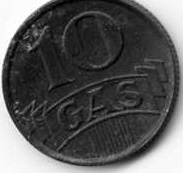
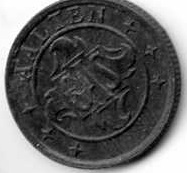
    Until the 1950s, some households had a gas meter that operated with special gas tokens. This system, intended to prevent payment arrears, was also used in Winterswijk. The Aalten gas token was a zinc coin with a value of 10 cents. When the gas ran out, a new token had to be inserted into the meter.

    With the arrival of the geyser (water heater), this system fell into disuse. The pilot light of these appliances had to burn continuously, which was not permitted in combination with a coin meter. Around 1955–1958, gas tokens disappeared completely, partly due to the introduction of the national natural gas grid.

    The End of the Gasworks

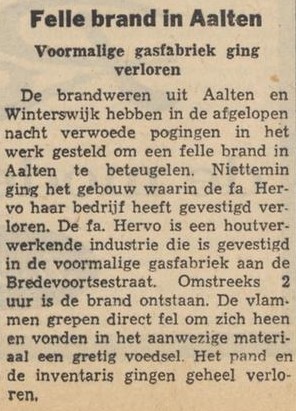
    The discovery of the natural gas field in Slochteren marked the end of local gasworks, including the one in Aalten. The building subsequently served various temporary functions, such as a technical school and later a furniture factory (Fa. Hervo), until the premises were destroyed by fire in 1964.

    After its closure, the soil was found to be severely contaminated with hazardous substances such as sulphur and cyanide. The remediation of the site was only fully completed decades later, in 2009.

    Tram Stop

    There used to be a tram stop at the gasworks on the Lichtenvoorde-Bocholt line.


    Owners

    Overview is incomplete.

    YearPlotOwnerDescription

    Archives

    Address directory 1934

    Aalten C429 > Bredevoortschestraat 109

    Gasworks

    Features


    Cadastral no.I-12882/13058
    FunctionGasworks
    Year of construction1907
    Destroyed by fire1964

    Sources


  • Beukenhof

    Beukenhof

    Hofstraat 12, Aalten

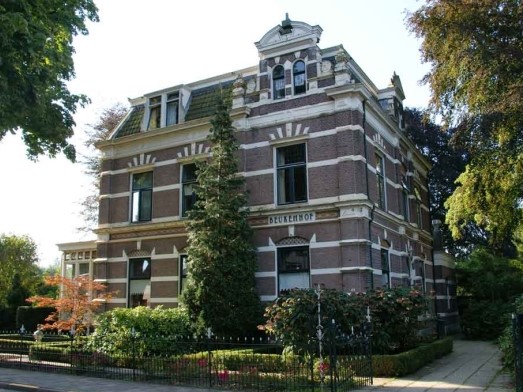
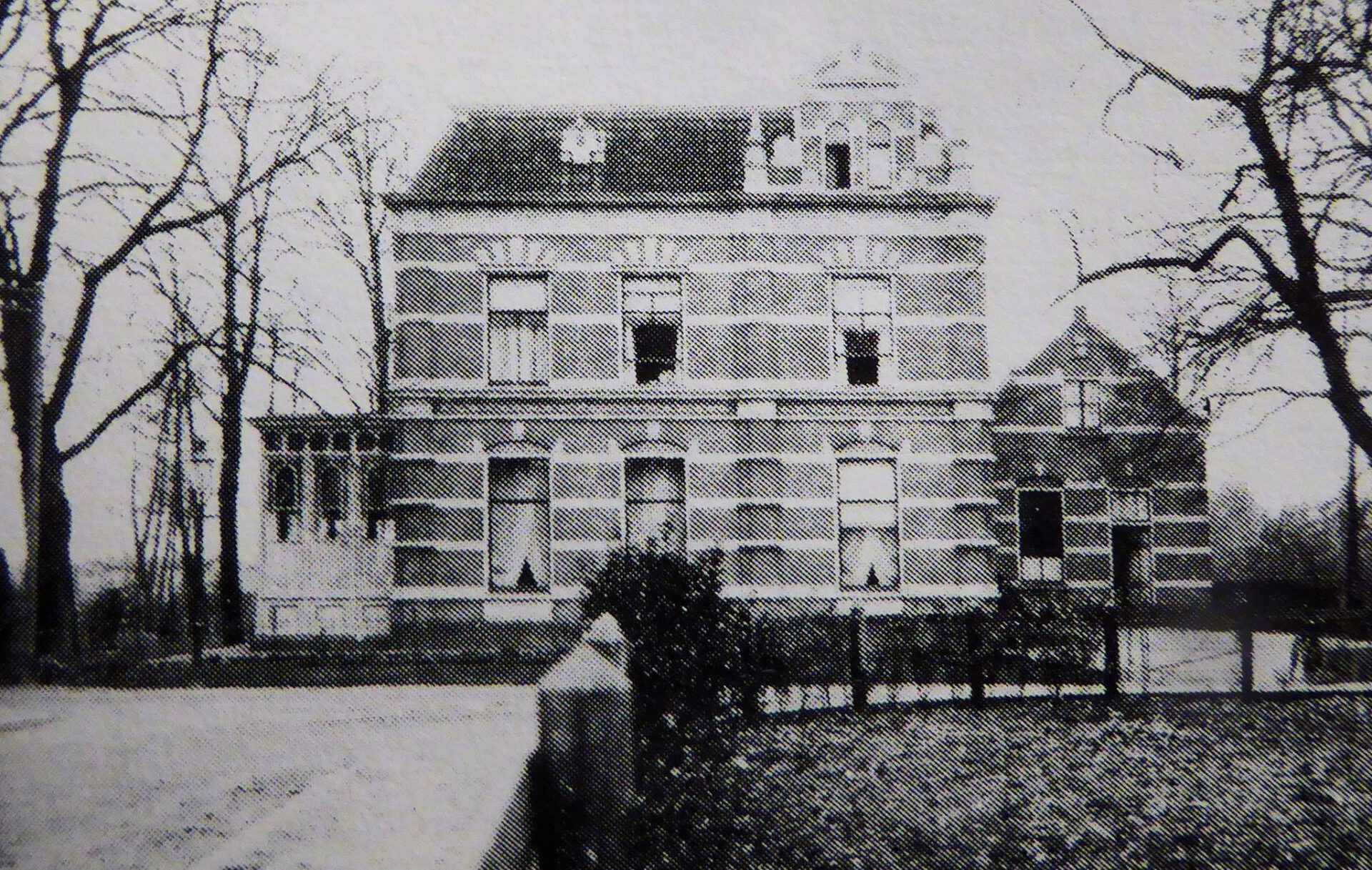
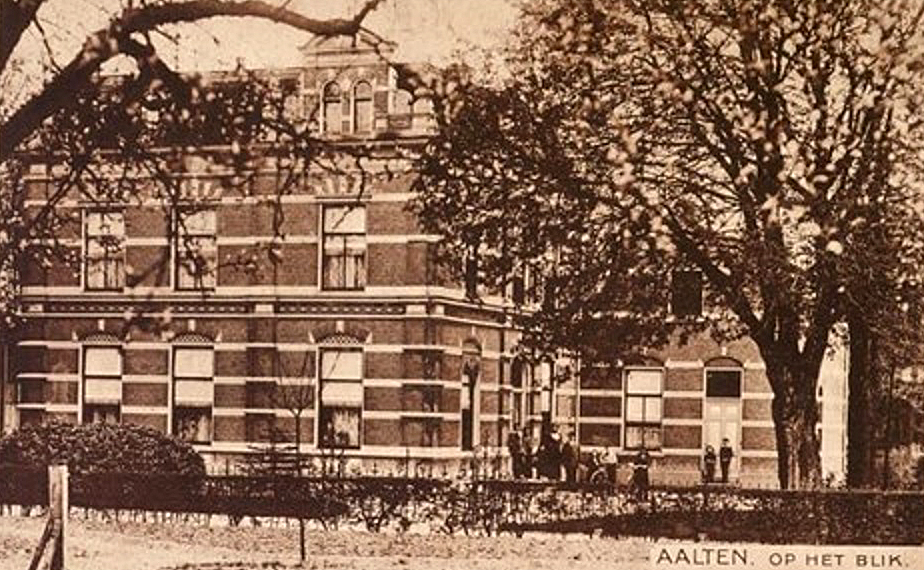
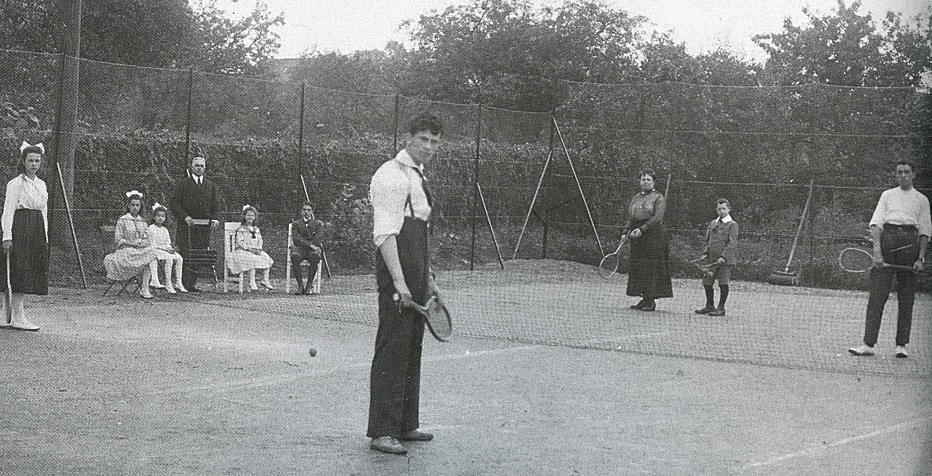
    This director’s villa was built in 1893–1894 by textile manufacturer Herman Driessen, concurrently with the former steam weaving mill situated next door. In later years, the stately villa served as a foster home for Estinea for a long time. Behind the house once lay what was likely the first tennis court in Aalten.

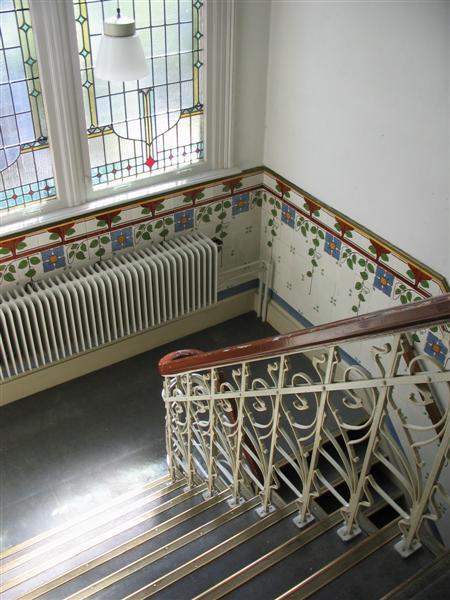
    The villa is constructed in a Neo-Renaissance style and features 10 bedrooms across the first and second floors. It is a national monument and retains many monumental details, including a very fine staircase with original Art Nouveau-patterned tiles and various original stained-glass windows. This characteristic property is currently in private hands and is undergoing restoration.

    In 2015, Jalf Flach wrote to Oud Aalten:

    “I recently rediscovered a text I wrote 25 years ago following an interview with Mrs Bella Driessen. In 1893, the Hofstraat was still called ‘Het Blik’, and in that year, a steam weaving mill and a house were erected there, which would be occupied by members of the Driessen family for the next 75 years. It was not until 1953 that the house was named ‘Beukenhof’ by one of its residents. But by then, the house already had an eventful history behind it.

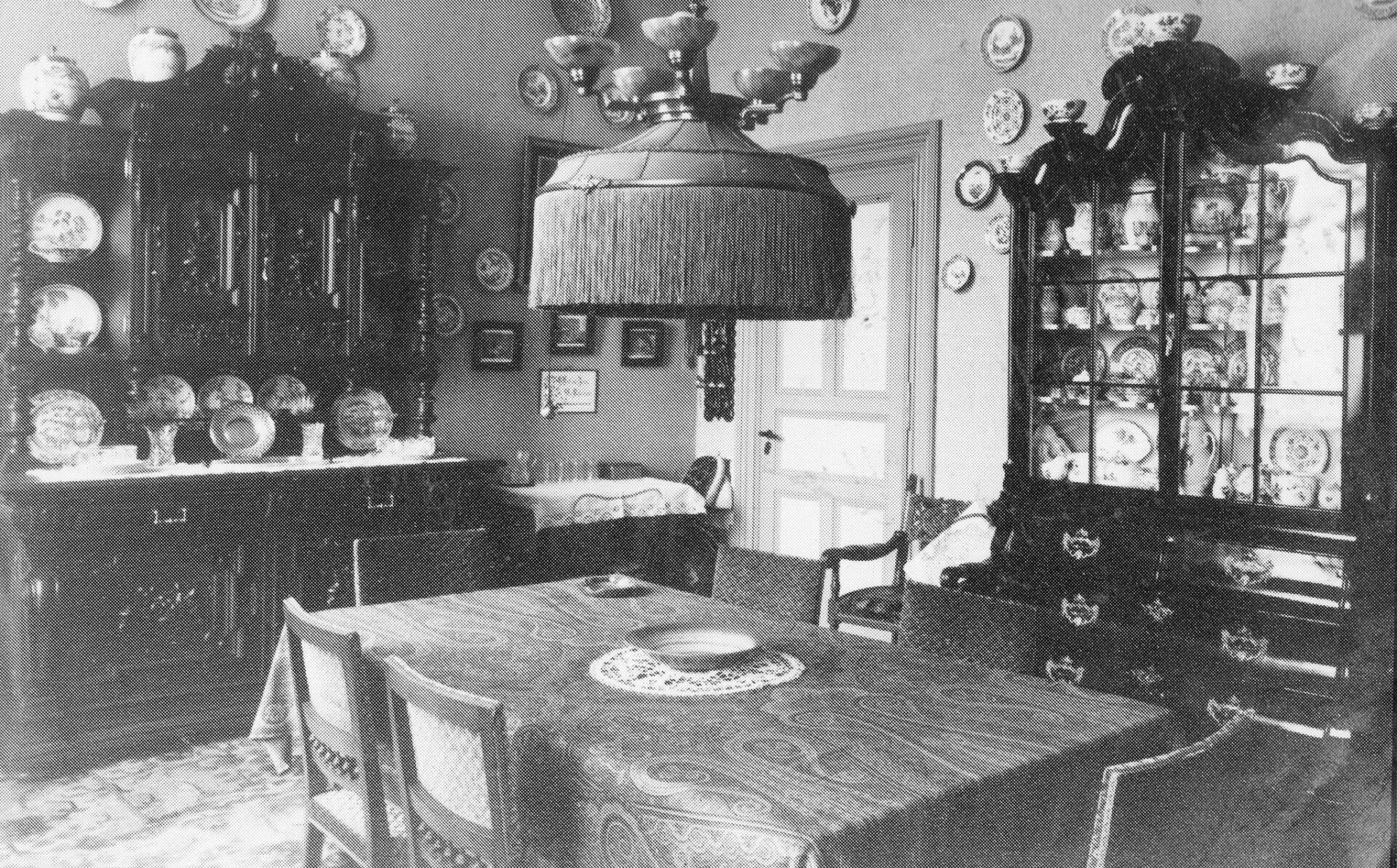
    Bella Driessen lived in the house from her early childhood until 1969, when the factory closed and the house changed hands. That is a period of over 60 years. In those days, the Beukenhof was a true patrician residence, as is evident from the interior photograph she kindly lent me. In later years, she occupied the small house that had been built onto the main building, which, much to her sorrow, was demolished in 1976 when the house was converted into a foster home. That brought an end to what was colloquially and irreverently referred to as ‘Bella’s pimple’.

    Mrs Driessen’s stories about the war years were fascinating. There were a couple of magnificent stained-glass windows in the stairwell. One depicted the weir on the Smees, and the other, the cathedral of Malmédy, from where her mother originated. After a German soldier had first shot through them because of a breach of blackout regulations, they were completely destroyed during a bombing raid on Aalten. For the remainder of the war, planks were nailed over them, and the residents, billeted German soldiers, and evacuees had to find their way in the dark.

    After the war, simpler stained-glass windows were installed, which still adorn the staircase in an Art Nouveau style today and, together with the beautiful tiles and wrought-iron bannisters, give the building a unique character.”


    Owners

    Overview is incomplete.

    YearPlotOwnerDescription

    Residents

    Population register 1890-1900

    Aalten 20

    Herman Anton Frans Carel Maria Driessen (Aalten, 22-09-1831), manufacturer
    Anna Maria Theodora Mühren (Neuenkirchen/D, 14-10-1840)

    Population register 1900-1910

    Aalten 23 > C584

    Herman Anton Frans Carel Maria Driessen (Aalten, 22-09-1831), manufacturer
    Anna Maria Theodora Mühren (Neuenkirchen/D, 14-10-1840)

    Population register 1910-1920

    Aalten C584 > D691

    Josephus Walter Julius Driessen (Aalten, 07-01-1870), manufacturer
    Maria Anna Elisa Josepha Beckmann (Malmédy, 12-05-1872)

    Address directory 1934

    D691 > Hofstraat 12

    J.W.J. Driessen

    Address directory 1967

    Hofstraat 12

    Mevr. I.M.E.B.G. Driessen-Smeets

    Features


    Cadastral no.I-12941
    FunctionHouse
    Year of construction1893
    ListedNational monument
  • Old General Cemetery Aalten

    Old General Cemetery Aalten

    Varsseveldsestraatweg 21, Aalten

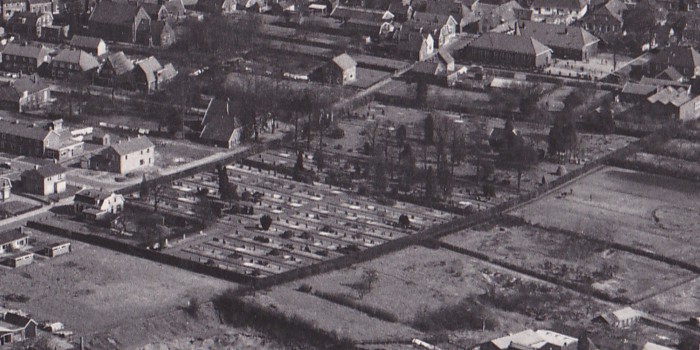
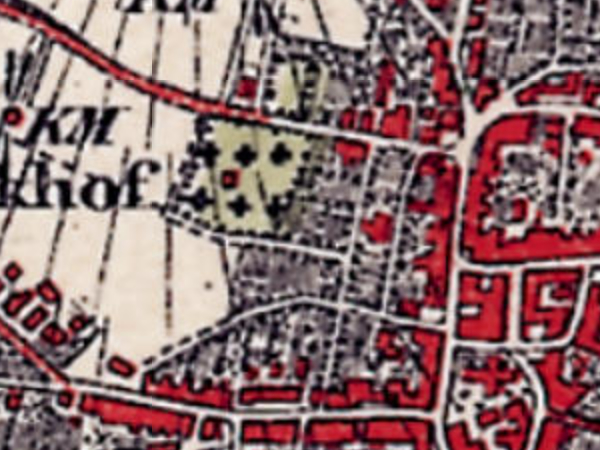
    In 1827, King Willem I decreed by law that, as of 1829, cemeteries had to be established outside built-up areas. In Aalten, a site was designated for this purpose on Varsseveldsestraatweg, then known as Melkersweg.

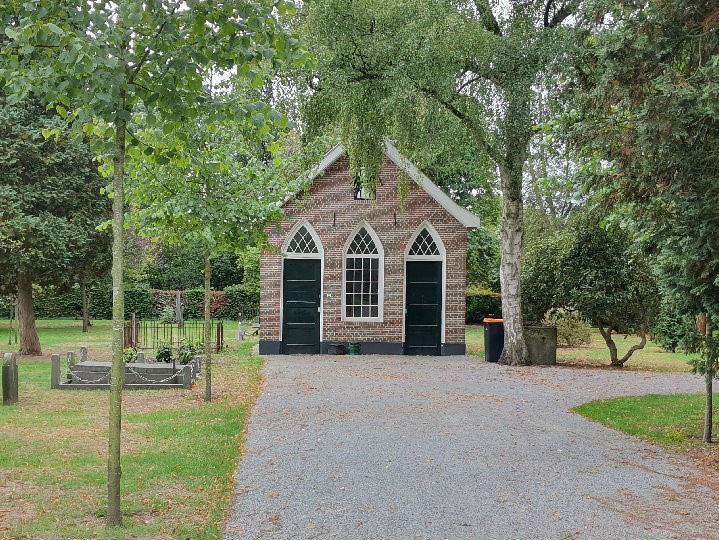
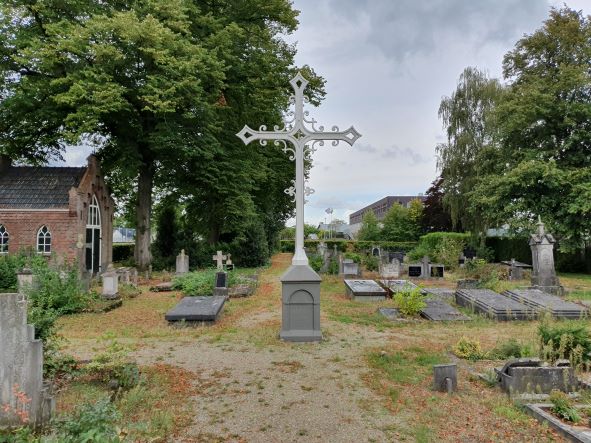
    The cemetery was later extended to the west. The oldest section is characterised by relatively empty lawns with scattered old funerary monuments and a small lychgate (baarhuisje). The western part has a more structured, orthogonal layout.

    By the beginning of the 20th century, the Old Cemetery became increasingly enclosed by the village’s expanding built-up area. This led to the need for a new cemetery. In 1923, the Berkenhove cemetery on Romienendiek was put into use.

    Although the Old Cemetery has since taken on the function of a ‘tranquillity park’, it is still sporadically used for interring the deceased in existing family graves.

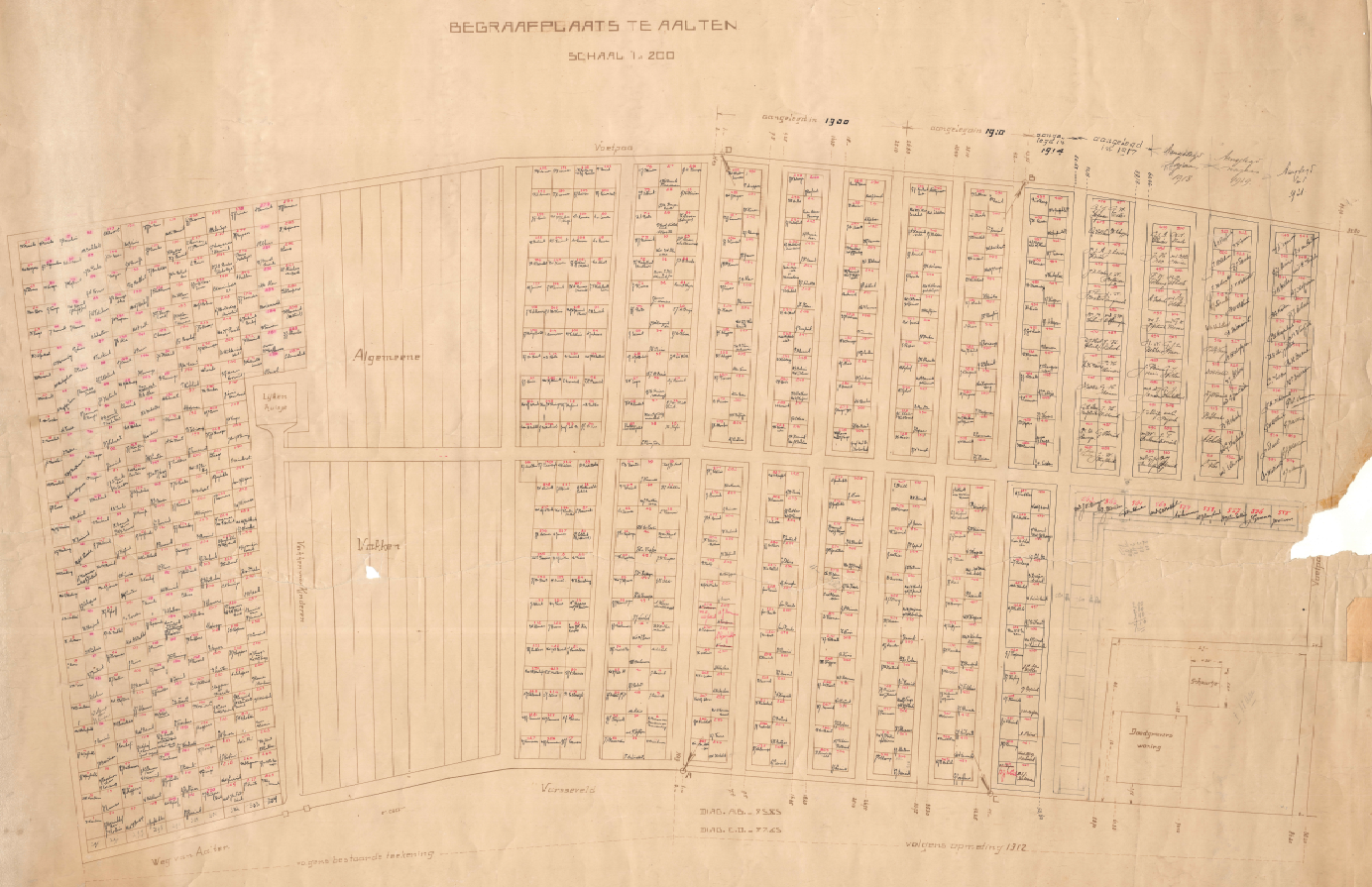
    A map is available providing an overview of all graves and those interred from circa 1921; click the thumbnail below for a large, legible version (PDF):

    Old General Cemetery Aalten, 1921
    Old General Cemetery Aalten, 1921

    Commemorative Column

    In 2015, as part of the commemorations for 70 years of liberation, a commemorative column was placed at the Old Cemetery to honour all soldiers from Aalten who fought on and around the Grebbeberg in May 1940. Seven servicemen from Aalten lost their lives there. Their names and photographs are immortalised on the column.

    Roman Catholic Cemetery

    When the cemetery on Varsseveldsestraatweg was established, the Catholic community in Aalten insisted that a separate section be designated and consecrated for them. The municipality purchased a piece of land for this purpose across the street, on the corner with Molenstraat.

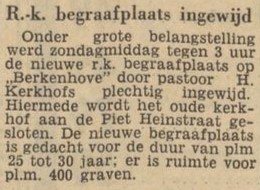
    However, this small Catholic cemetery became full after only thirty years. In 1868, a new R.C. cemetery on Piet Heinstraat was opened. The former Catholic burial ground on Varsseveldsestraatweg later became a public green space. The graves of at least 50 Aalten Catholics, however, were never cleared.

    In 2015, the site was redesigned at the initiative of local residents to better reflect its historical significance. An information panel has been placed at the location highlighting the history of the cemetery.


    Owners

    Overview is incomplete.

    YearPlotOwnerDescription
    1832I-1409
    I-1436
    The Municipality of Aalten4.430 m² (Protestant) churchyard
    720 m² (R.C.) churchyard

    Features


    Cadastral no.K-466
    FunctionCemetery
    ListedMunicipal
    monument

    View the graves on Findagrave.

  • Roman Catholic Cemetery Aalten

    Roman Catholic Cemetery Aalten

    Piet Heinstraat, Aalten

    In the late 1860s, the small Roman Catholic cemetery on the corner of Varsseveldsestraatweg and Molenstraat reached its capacity. This created a need for a new cemetery for the Catholic community in Aalten.

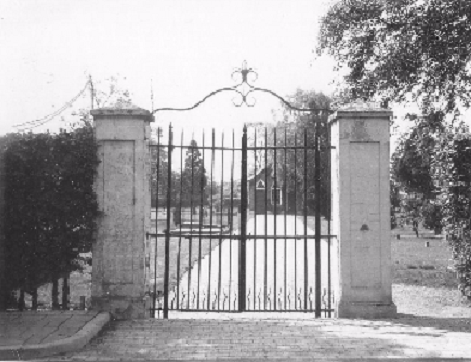
    In 1868, Anton Driessen, a textile manufacturer in Aalten, donated a plot of land on what is now Piet Heinstraat to the church to be established as a cemetery. In addition to the land, he donated an iron Calvary cross and an iron gate, both of which still stand today. Anton also stipulated that his family be buried in a contiguous plot next to the cross. The mortuary on the cemetery grounds dates from 1888.

    Lack of space and closure

    A century later, this cemetery also became full, and there was no room for expansion. From 1960 onwards, Catholic deceased were therefore buried in the new Roman Catholic section of the Berkenhove cemetery.

    In the early 1970s, the cemetery on Piet Heinstraat was officially closed. The site was transferred to the municipality of Aalten for the symbolic amount of one guilder.

    Notable graves

    Several prominent Catholic former residents of Aalten rest in this cemetery, including various members of the Driessen textile family. This family is inextricably linked to the textile history of Aalten and had a major influence on the emancipation of the Roman Catholic population in the municipality.

    The grave of Pastor Van Rooijen, who died on January 23, 1945, during a bombardment of Dijkstraat, is also located here. Additionally, there are graves of the sisters from the former Saint Elizabeth Convent on Dijkstraat. They provided primary education at the Saint Joseph School and nursed the sick of all faiths.

    Features


    Cadastral no.K-711
    FunctionCemetery
    Establishment1868
    ListedMunicipal
    monument

    View the graves, as far as they are known, on Findagrave.

  • Watermill on the Pol

    Watermill on the Pol

    Polstraat, Aalten (no longer extant)

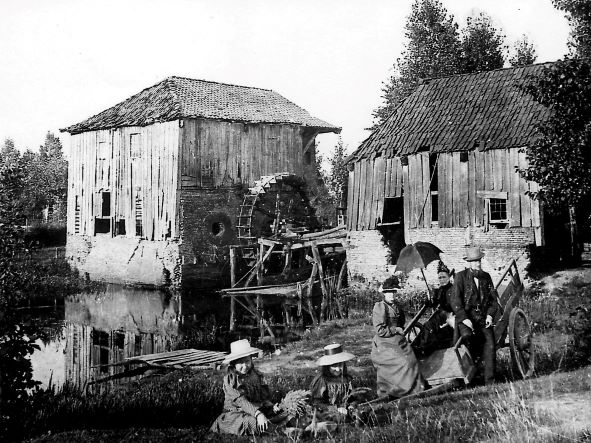
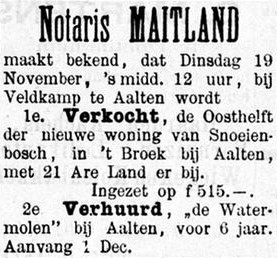
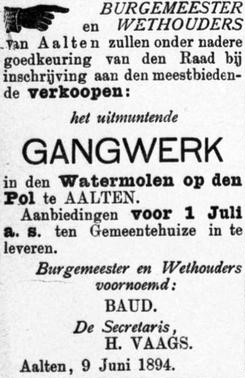
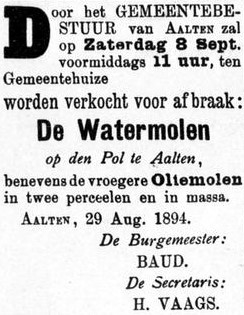
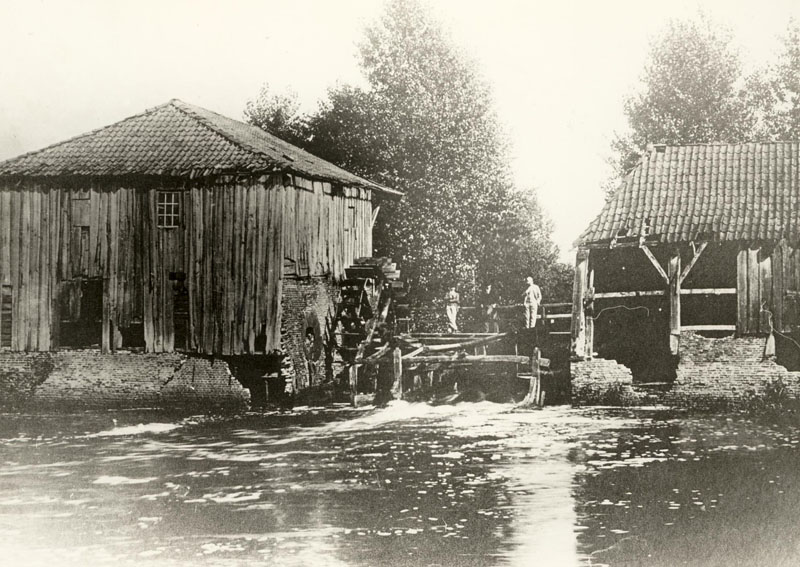
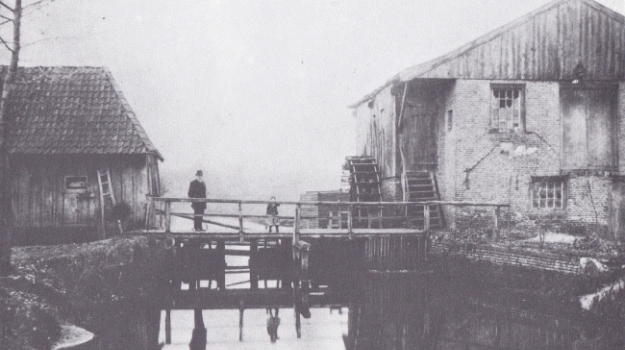
    For centuries, a watermill stood on the Slingebeek stream near the De Ahof manor, approximately at the location of the current stone bench erected by Aaltens Belang. At the beginning of the 20th century, the dilapidated mill was demolished. The mill featured wheels on both sides of the stream: on the south bank stood the oil mill (with a wheel of 4.42 m Ø) and on the north bank was the bark mill (with a wheel of 4.66 m Ø), with the corn mill situated above it.

    The watermill was likely built shortly after 1500, possibly due to a transfer of manorial milling rights from the Grevinkhof in Dale to De Ahof, which later also came into the possession of the Grevink family. The first mentions of the mill date from 1502, including records concerning income for the steward.

    In 1562, the mill was described as a ruin, yet it repeatedly appears in the archives in later years. B.D. Rots writes in his book ‘Aalten en Bredevoort in vervlogen tijden’ that around 1700, the watermill was owned by the House of Orange, who leased it to a miller. On 9 February 1707, De Ahof, along with “the hereditary lease of the Aalten Watermill”, passed into the hands of the Arentsen/Arentzen family.

    In 1739, the owners Bernardus Arentzen and Gerrit Jan Heusinkveld complained about competition from the numerous horse mills around Aalten, while they constantly incurred costs to keep the watermill in good repair. In 1758, it is noted that the city council of Bredevoort had the right, in the event of flooding, to raise the sluice gates at De Ahof and take them to their city.

    Around 1830, the corn mill had two undershot wheels and three sets of millstones, while the oil mill had one wheel and three stampers. During water shortages, the mills could also be driven by horses. Although the mill had three undershot wheels, a small overshot wheel with a separate leat could be deployed for the corn mill during low water levels from 1840 onwards.

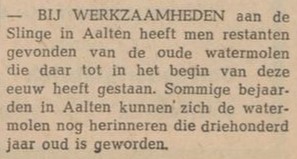
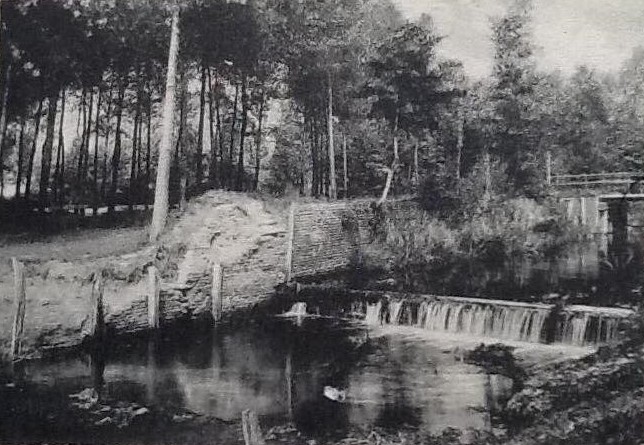
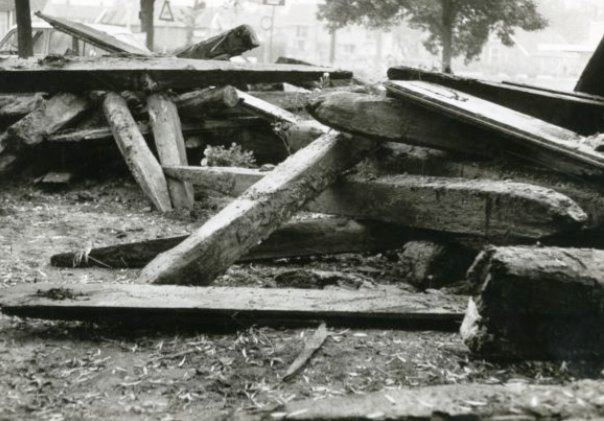
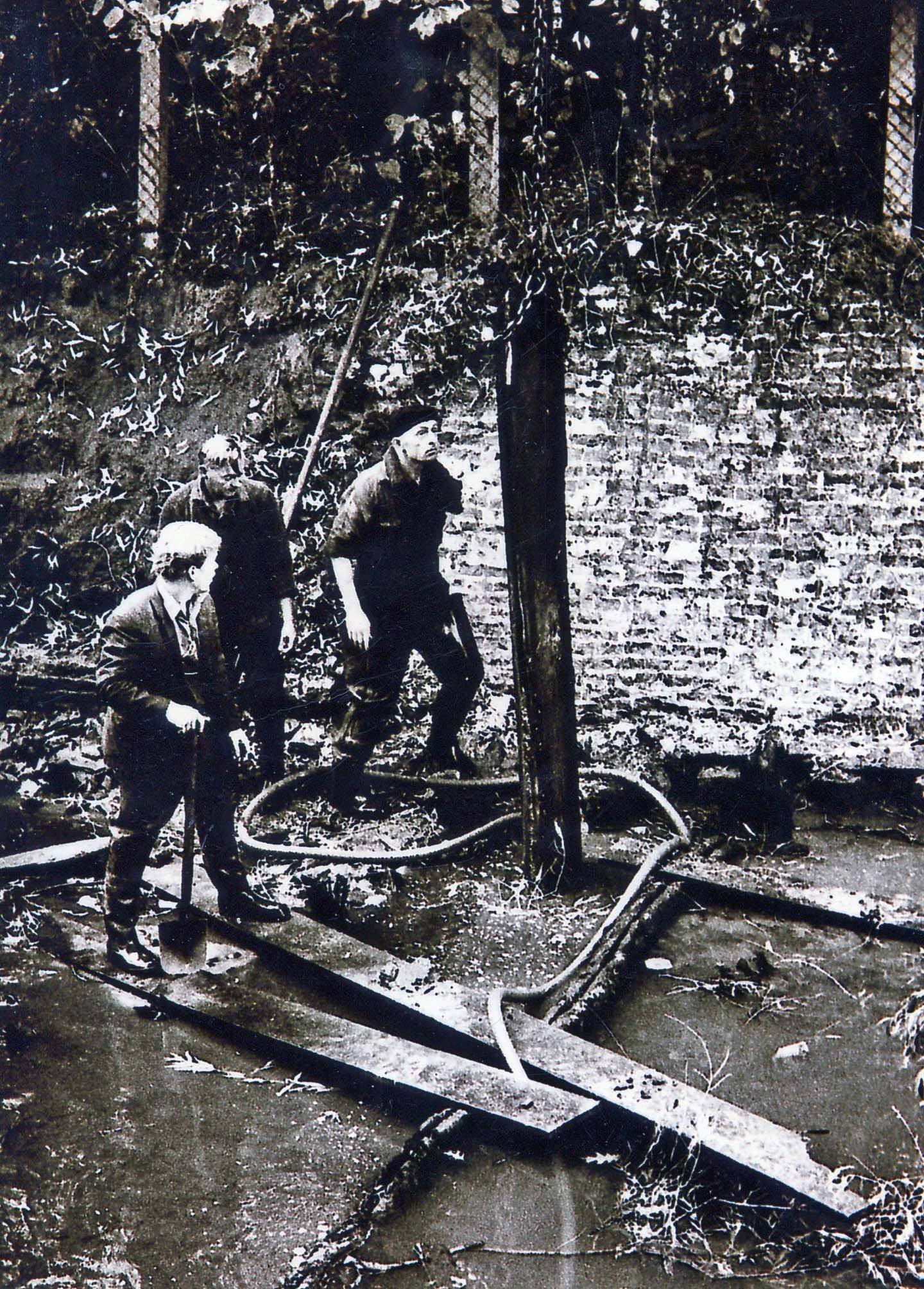
    The mill finally disappeared around 1900; only the wheel of the corn mill remained at that time. Photographs from that era show that the entire complex had fallen into decay. During works on the Slinge in 1969, approximately 200 foundation piles were removed. Today, only a remnant of a wall serves as a reminder of the watermill.


    Owners

    Overview is incomplete.

    YearPlotOwnerDescription
    1832I-182
    I-228
    Roelof Arentzen, assessor470 m² mill & yard
    920 m² mill & yard
    1851I-182
    I-228
    Engelbarta Hendrica Arendsen and
    Gezina Arendsen, widow of J.W. te Gussinklo
    470 m² mill & yard
    920 m² mill & yard
    1854I-1918
    I-1968
    Engelbarta Hendrica Arendsen and
    Gezina Arendsen, widow of J.W. te Gussinklo
    470 m² grain mill & yard
    178 m² mill & yard

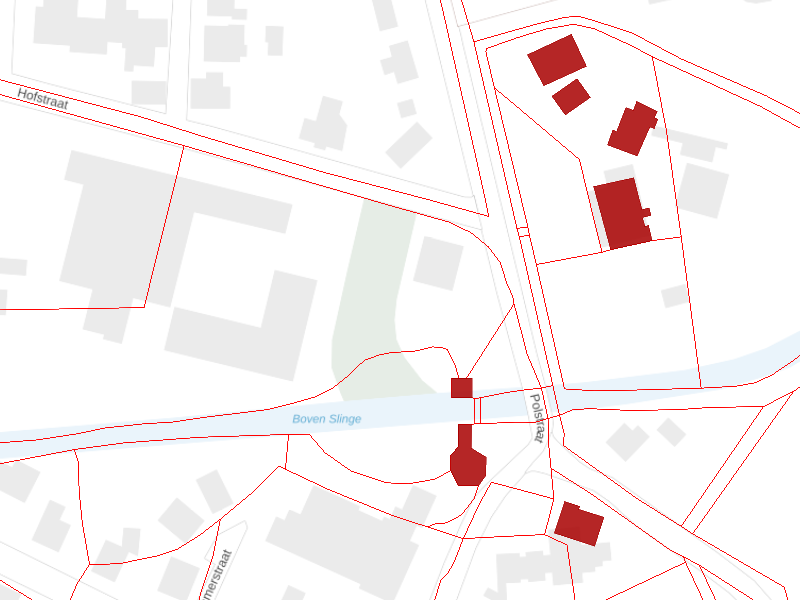
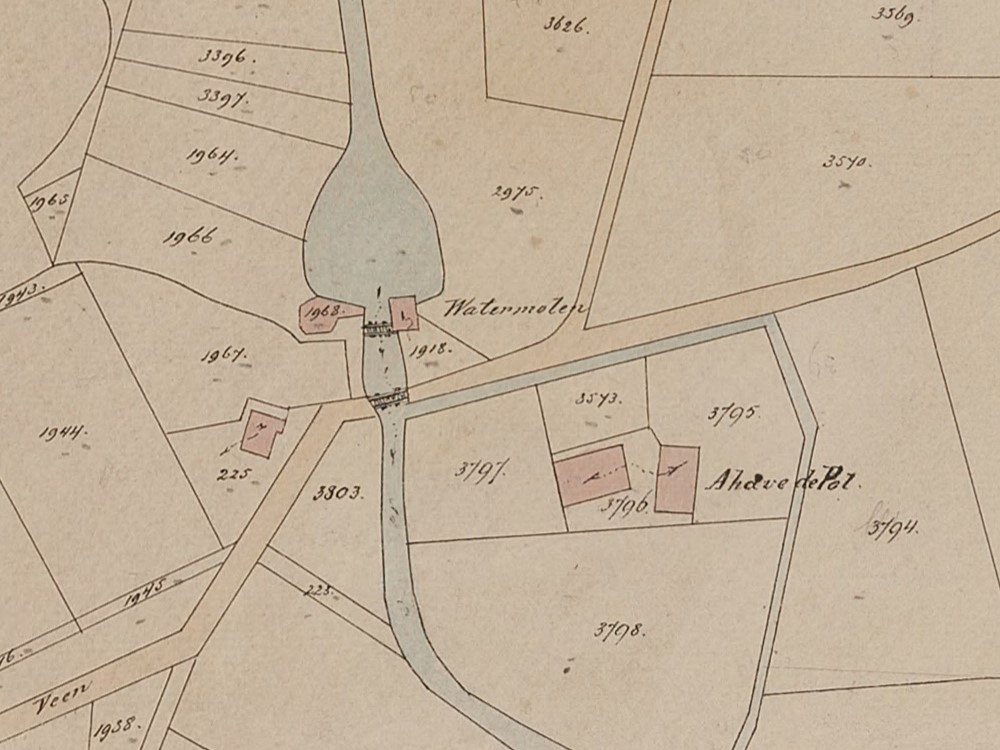
    Location of the watermill, with De Ahof at the top right. All red buildings on this map were, according to 1832 land registry data, owned by Roelof Arentzen, assessor in Aalten. The red lines represent the plot boundaries at the time, which also clearly show the course of the former moat around De Ahof.


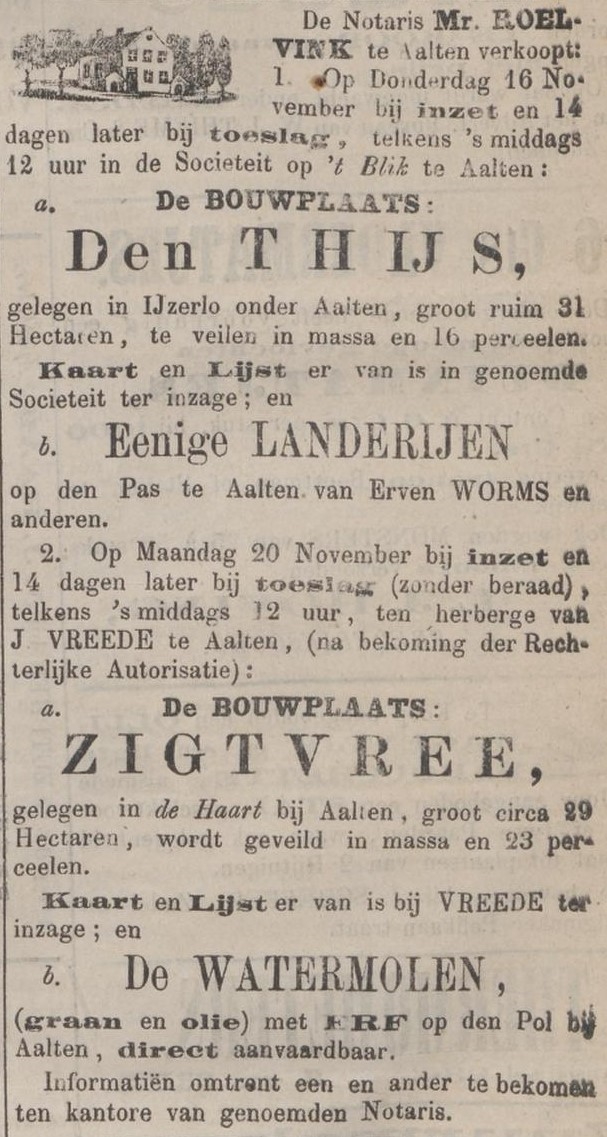
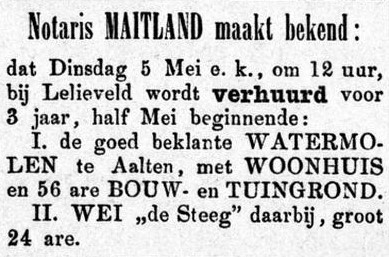
    Newspaper reports

    Features


    Cadastral no.I-12213/8533
    FunctionWatermill
    Year of constructionc. 1500
    Demolitionc. 1900

    Sources


  • St Elisabeth’s Convent

    St Elisabeth’s Convent

    Dijkstraat 8, Aalten

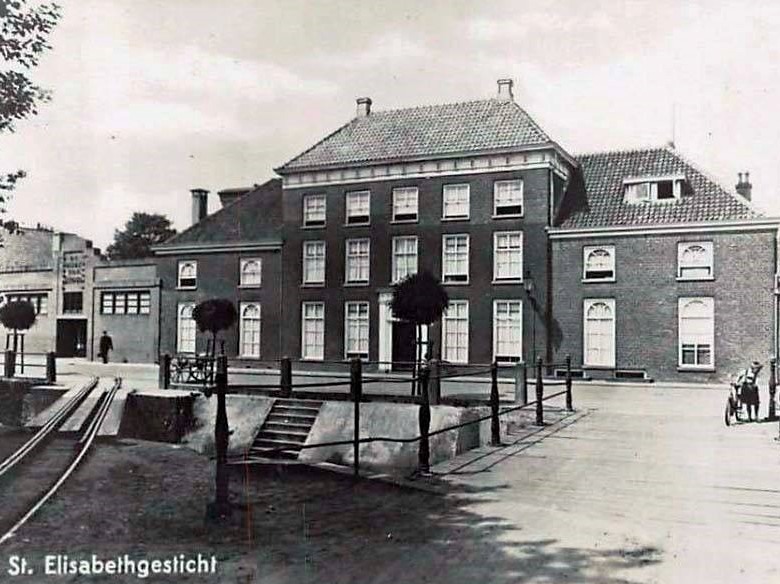
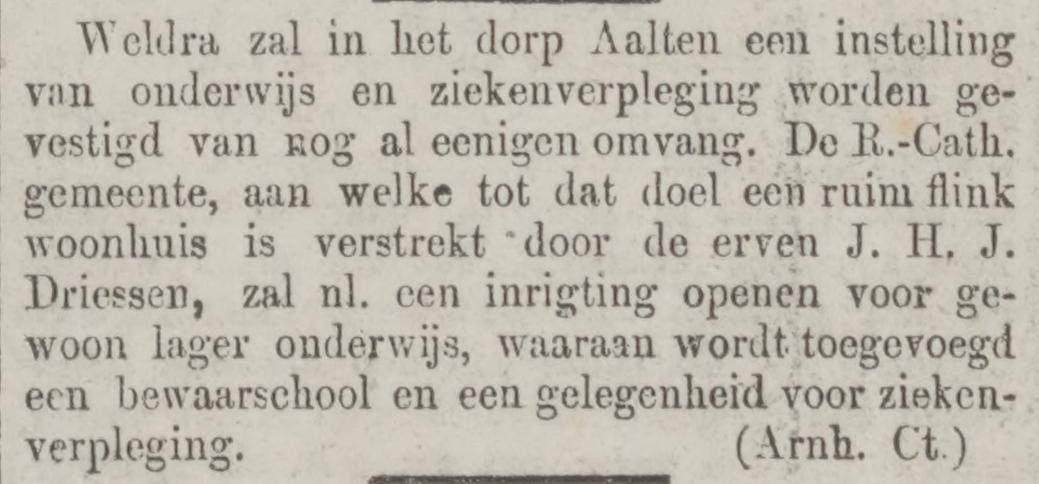
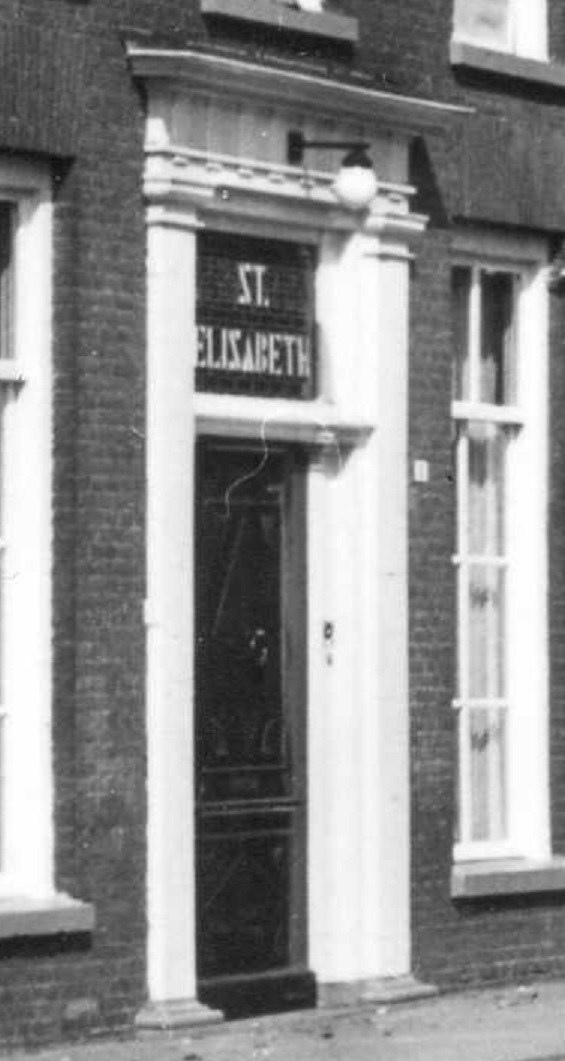
    St Elisabeth’s Convent in Aalten was originally the residence of textile manufacturer Johann Heinrich Joseph (Heinrich) Driessen (Bocholt, 10 July 1794 – Aalten, 4 July 1879). On 29 June 1837, his eldest son, Theodoor, laid the foundation stone.

    Heinrich was also known as “Den veursten Driessen” (The front Driessen); his cousin Anton also lived on what was then Landstraat, in Villa Beekhuize, slightly further south of the town centre, and was therefore known as “d’n achtersten Dreessen” (The rear Driessen).

    Business premises were also established on the property, which served primarily as storage for yarns and woven fabrics. These fabrics were transported by wagon, usually pulled by an ox, to the bleachery in Dale. The driver carried the fitting nickname ‘Ossen Willem’ (Ox Willem).

    After Heinrich’s death, the house came into the possession of the Roman Catholic Church, after which it was put into use as a convent for nuns. On 30 May 1882, six sisters were brought to Aalten from Lichtenvoorde-Groenlo station in a carriage drawn by four horses. The convent was named after Heinrich’s wife, Elisabeth. Locally, it was also referred to as the St Elisabeth Institute.

    Education and Nursing

    For eighty years, the sisters provided education here to the Catholic school children of Aalten. The sisters’ ‘sewing and knitting school’ was also based there. Not everyone held pleasant memories of the nuns. The sewing and knitting school, later the Fashion Vocational School, was highly regarded. Partly for this reason, it was not only Catholics who knitted there, but people of all denominations.

    On 23 December 1962, the last sisters left for a convent in Bennebroek. Later, the convent served as accommodation for guest workers.

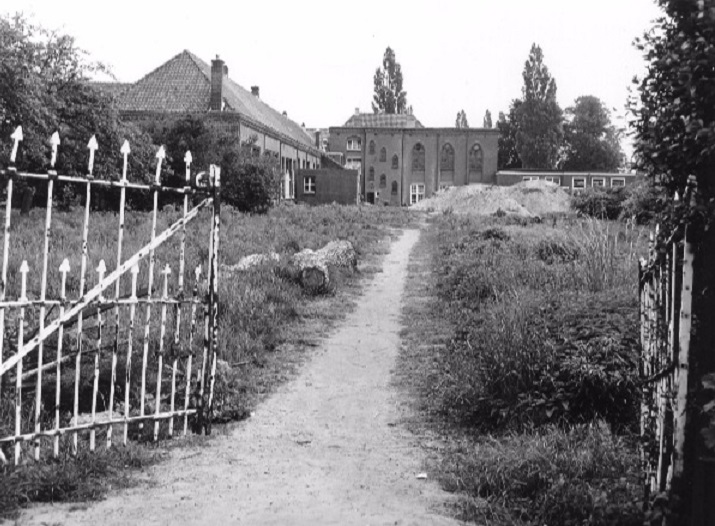
    On 20 December 1980, a small fire broke out in the completely boarded-up building. Just as a ‘foundation stone’ had once been laid, the last stone was removed shortly after the fire. The building made way for the Parish Centre. This has since disappeared as well and has been replaced by an apartment building named ‘Kloosterhof’ (Convent Court).


    Owners

    Overview is incomplete.

    YearPlotOwnerDescription
    1832I-1208Peter Driessen, merchant in Bocholt410 m² house & yard

    Residents

    1813

    Aalten 45

    Gerrit Peters (Heerde, 25-07-1769), tanner

    1 man
    1 woman
    1 son
    4 daughters
    1 old woman

    Population register 1823-1838

    Aalten 45

    Gerrit Peters (Heerde, 24-09-1769), tanner
    Johanna Margreta ten Dam (Aalten, 29-10-1774)

    Next residents:

    Johan Hend. Joseph Driessen (Bocholt/D, 10-07-1794), merchant
    Marie Carolina Elisabeth Sträter (Rheine/D, 13-03-1803)

    Population register 1838-1850

    Aalten 44

    Johan Henrich Joseph Driessen (Bocholt/D, 10-07-1794), manufacturer & merchant
    Marie Caroline Elisabeth Sträter (Rheine/D, 13-03-1803)

    Population register 1850-1860

    Aalten 44

    Johan Henrich Joseph Driessen (Bocholt/D, 10-07-1794), merchant
    Maria Carolina Elisabeth Sträter (Rheine/D, 13-03-1803)

    Population register 1860-1870

    Aalten 44

    Johan Henrich Joseph Driessen (Bocholt/D, 10-07-1794), manufacturer
    Maria Carolina Elisabeth Josephina Sträter (Rheine/D, 13-03-1803)

    Population register 1870-1880

    Aalten 61

    Johann Heinrich Joseph Driessen (Bocholt/D, 10-07-1794), manufacturer

    Next (head) resident (1879-1882):

    Bernhard Heinrich Groot Langenhoff (Dingden/D, 13-09-1833), servant

    Population register 1880–-1890

    Aalten 66

    Bernhard Heinrich Groot Langenhoff (Dingden/D, 13-09-1833), farmer

    Next (head) resident (1882-1901):

    Barbara Elizabeth Elzeman (Gouda, 06-10-1835), sister of charity

    Population register 1890-1900

    Aalten 65

    Barbera Elisabeth Elseman (Gouda, 06-10-1835)

    Population register 1900-1910

    Aalten 82 > A20

    Barbera Elisabeth Elseman (Gouda, 06-10-1835)

    Next (head) resident:

    Geertje Ruijter (Westwoud, 08-06-1857)

    Population register 1910-1920

    Aalten A20

    Geertje Ruijter (Westwoud, 08-06-1857), mother superior

    Next (head) resident:

    Aalten A20 > A6

    Aafke van der Werf (Bolsward, 21-10-1872), nurse

    Address directory 1934

    Aalten A6 > Dijkstraat 8

    Convent

    Address directory 1967

    Dijkstraat 8

    Former Convent

    Features


    Cadastral no.I-11429
    FunctionResidential,
    Convent
    Year of construction1837
    Demolitionc. 1981

    Sources


  • Beekhuize

    Beekhuize

    Dijkstraat 14, Aalten

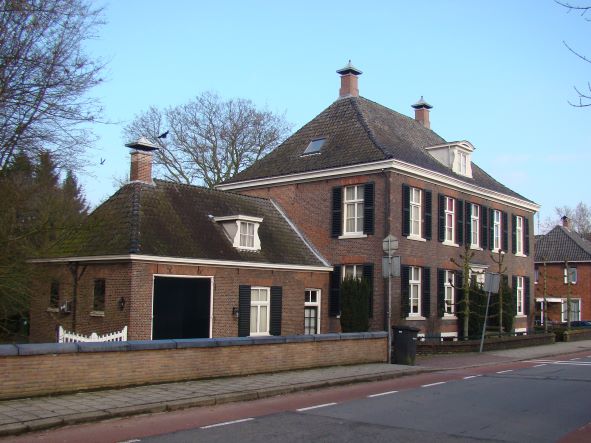
    Villa Beekhuize serves as a reminder of the heyday of the textile industry in the village of Aalten.

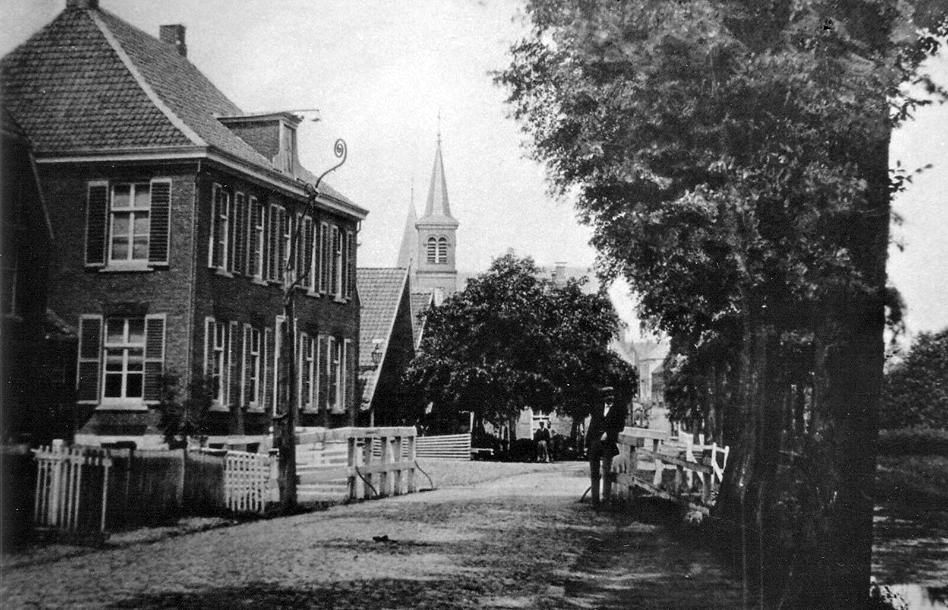
    Textile manufacturer Anton Driessen initially lived with the Meijerink family on Kerkstraat upon his arrival in Aalten. Later, he purchased a property on Landstraat. In 1833, Anton Driessen wished to build a new residence. To this end, he had purchased a house from the Degenaar estate at the end of Landstraat—the present-day Dijkstraat. He intended to demolish that house and construct a new, modern home on the site, complete with a warehouse, barn, and stables. However, he required more space than the existing plot provided. Anton Driessen subsequently submitted a proposal to the municipal authorities.

    This plan necessitated the diversion of both the stream and the street. Furthermore, a new bridge was required. Because the piles of the old bridge had nearly rotted away, the construction of a new bridge was not only highly necessary but, according to Driessen, the relocation would also be less costly. In addition to diverting the stream and building a new bridge, Driessen also required land for his plans. To this end, he exchanged a plot of land with the municipality. Negotiations regarding the aforementioned matters lasted several years. Construction finally commenced in March 1835.

    In addition to Anton Driessen, his nephew Heinrich also built a house on what was then Landstraat. Heinrich Driessen positioned a generous residence closer to the town centre, for which his eldest son, Theodoor, laid the foundation stone on 29 June 1837. Ever since, locals have referred to the two properties as ‘d’n veursten’ (the front) and ‘d’n achtersten Dreessen’ (the rear Driessen).


    Owners

    Overview is incomplete.

    YearPlotOwnerDescription
    1832I-1231
    I-1233
    Jan Berend Lohuis199 m² house & yard
    2.250 m² garden

    Residents

    1813

    Aalten 37

    Johannes Degenaar (Aalten, 25-10-1779), weaver son
    Evert Degenaar (Aalten, 10-05-1744), weaver father

    1 man
    1 woman
    1 father
    3 boys

    Population register 1823-1837

    Aalten 37

    Hendrika Luijten (Aalten, 16-09-1784), widow of Johannes Degenaar

    Next residents:

    Aalten 37

    Johannes Bernardus Antonius Driessen (Bocholt, 05-12-1797 – Aalten, 07-03-1879)
    Isabella Lodewika Antoinetta Dees (Bocholt, 04-11-1800 – Aalten, 15-12-1879)

    Population register 1838-1851

    Aalten 35

    Johannes Bernardus Antonius Driessen (Bocholt, 05-12-1797 – Aalten, 07-03-1879)
    Isabella Lodewika Antoinetta Dees (Bocholt, 04-11-1800 – Aalten, 15-12-1879)

    Population register 1850-1861

    “Landstraat”

    Aalten 35

    Johan Bernard Anton Driessen (Bocholt, 05-12-1797 – Aalten, 07-03-1879)
    Isabella Lodewika Antonetta Dees (Bocholt, 04-11-1800 – Aalten, 15-12-1879)

    Population register 1860-1870

    Aalten 35

    Joh. Bernard Anton Driessen (Bocholt, 05-12-1797 – Aalten, 07-03-1879)
    Isabella Lodewika Antonetta Dees (Zutphen, 04-11-1800 – Aalten, 15-12-1879)

    Population register 1870-1880

    Aalten 54

    Johan Bernard Anton Driessen (Bocholt, 05-12-1797 – Aalten, 07-03-1879)
    Isabella Lodewika Antonetta Dees (Zutphen, 04-11-1800 – Aalten, 15-12-1879)

    Next (head) resident:

    Helena Dorothea Elisabeth Driessen (Aalten, 09-06-1840 – Aalten, 21-04-1918)

    Population register 1880-1890

    Aalten 57

    Helena Dorothea Elisabeth Driessen (Aalten, 09-06-1840 – Aalten, 21-04-1918)

    Next residents:

    Johannes Henricus Lambertus van den Hurck (Den Bosch, 14-11-1840), office clerk
    Wilhelmina Philomena Maria Kroes (Den Bosch, 30-07-1844)

    Next (head) resident:

    Helena Dorothea Elisabeth Driessen (Aalten, 09-06-1840 – Aalten, 21-04-1918), widow of Johannes Antonius van Basten Batenburg

    Population register 1890-1900

    Aalten 57

    Helena Dorothea Elisabeth Driessen (Aalten, 09-06-1840 – Aalten, 21-04-1918)

    Population register 1900-1910

    Aalten A79 > A23

    Helena Dorothea Elisabeth Driessen (Aalten, 09-06-1840 – Aalten, 21-04-1918)

    Population register 1910-1920

    Aalten A23

    Helena Dorothea Elisabeth Driessen (Aalten, 09-06-1840 – Aalten, 21-04-1918)

    Next resident:

    Aalten A23 > A9

    Maria Petronella Johanna Koster (Epe, 21-11-1881)

    Address directory 1934

    Aalten A8/1 > Dijkstraat 14

    H.J.A.M. Driessen

    Address directory 1967

    Dijkstraat 14

    H.J.A.M. Driessen

    Features


    Cadastral no.I-11032
    FunctionHouse
    Year of construction1835
    ListedNational monument

    Sources


  • Old Helena Church

    Old Helena Church

    Landstraat 22, Aalten

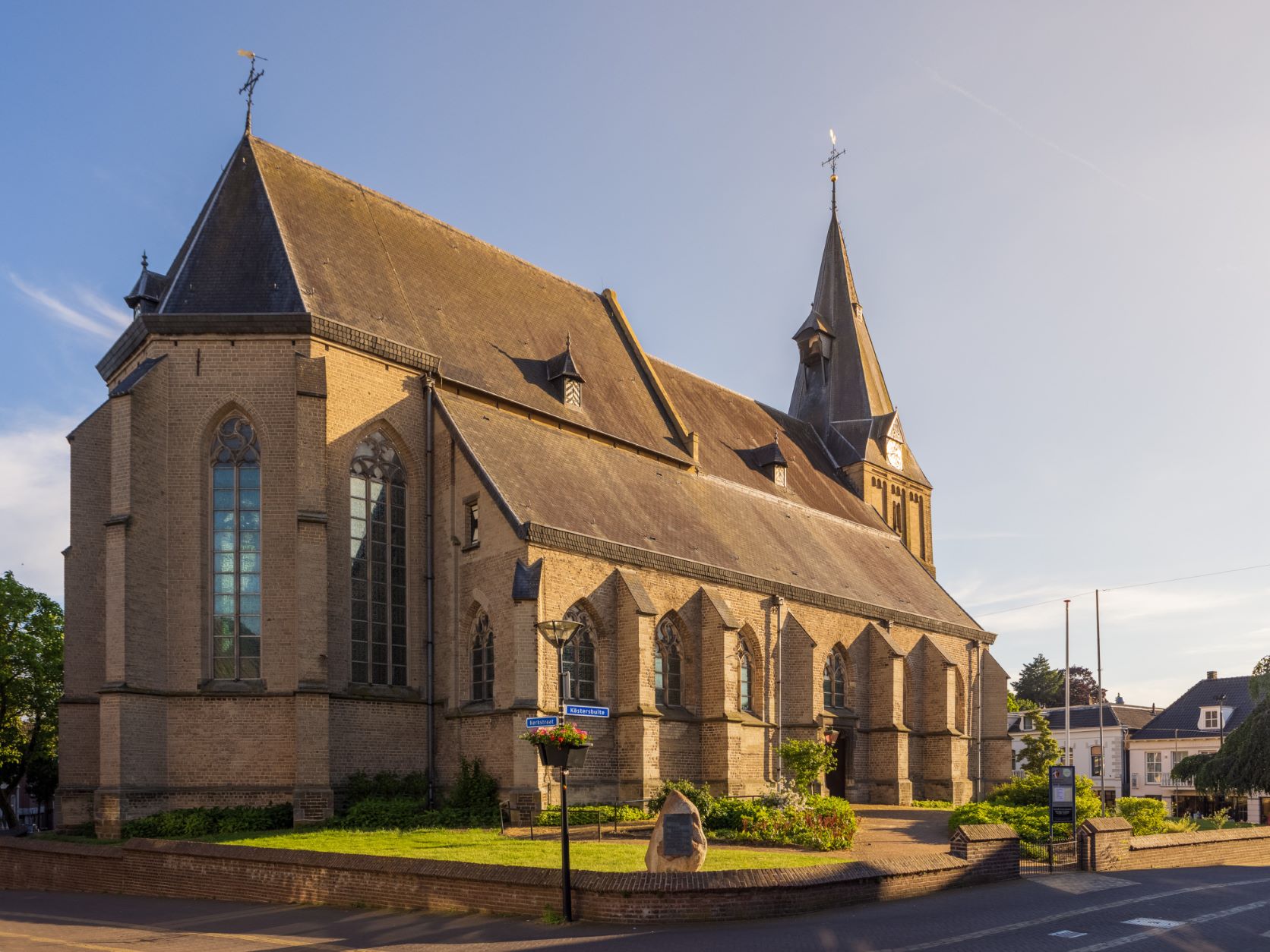
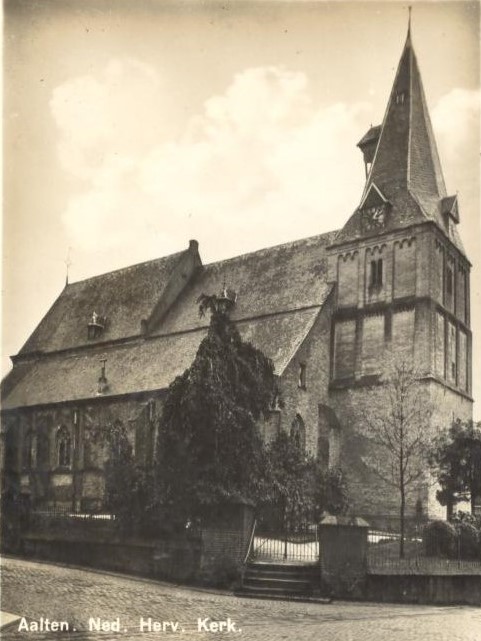
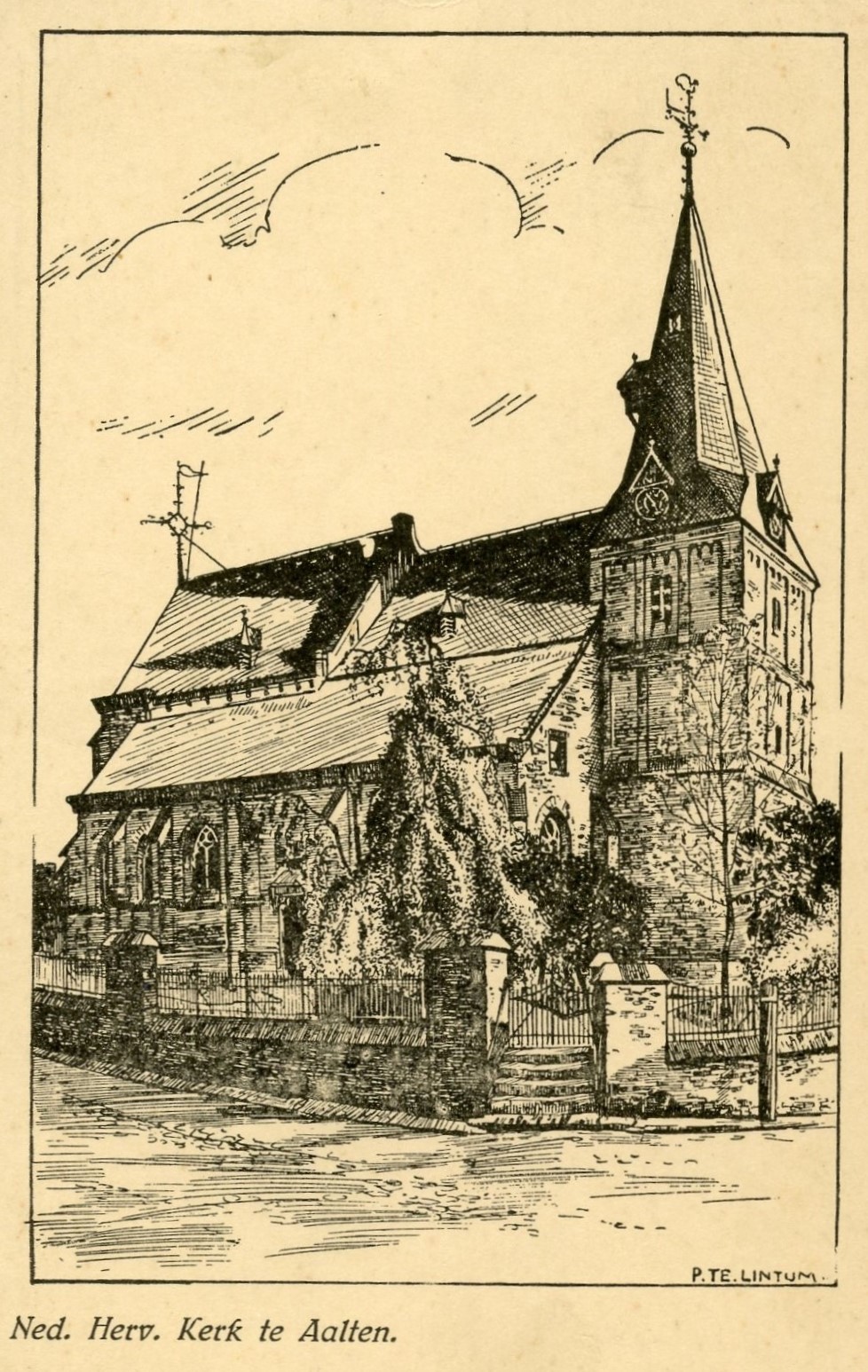
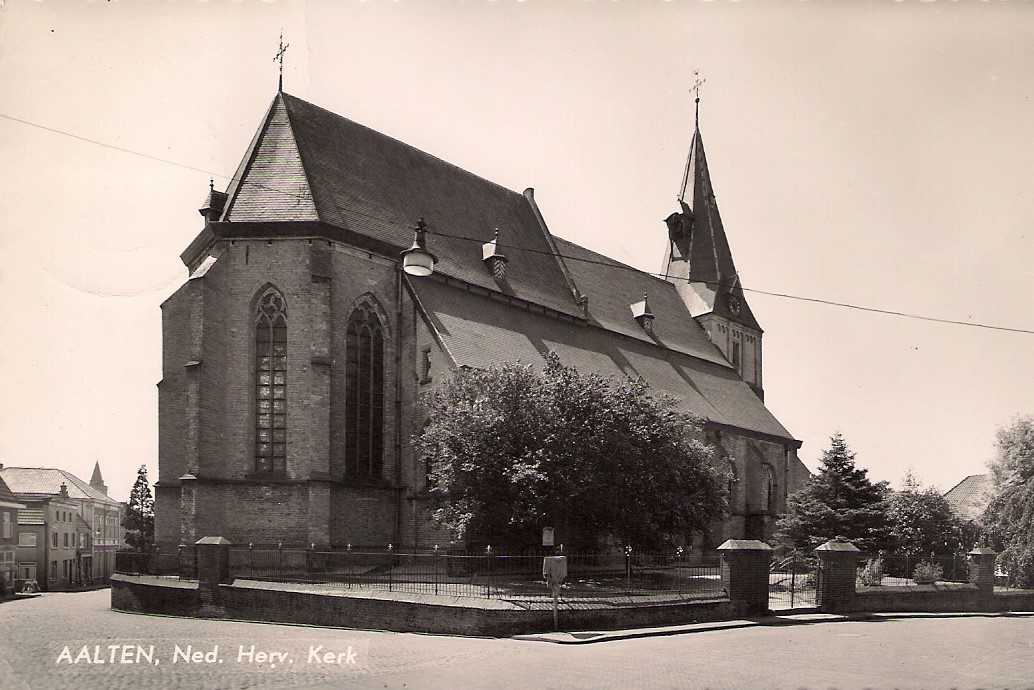
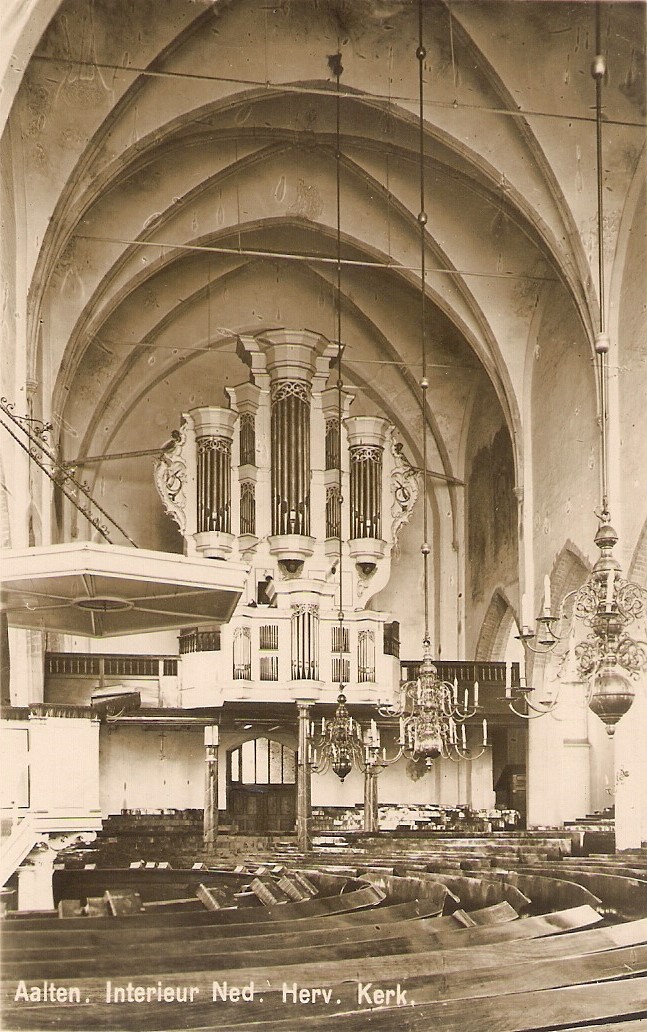
    The Oude Helenakerk has stood in the center of Aalten for centuries. It is the oldest and most prominent building in Aalten. This Late Gothic pseudo-basilica with its Romanesque tower is a monument of immeasurable historical and emotional value. Countless residents of Aalten have been baptized and married here, found solace within its walls, and were brought from this church to their final resting place.

    History

    Around the year 800, when the Saxons were subjugated by Charlemagne, he decreed that every community should provide a so-called ‘hoofdhof’ (head court) for the construction of a church. In the settlement of Aladna, the ancient name for Aalten, this was likely a piece of land belonging to the later Havezate de Ahof.

    The first small church on this site was presumably built in the Carolingian style, a precursor to Romanesque architecture. The church was dedicated to Saint Helena, the mother of the Roman Emperor Constantine the Great, who converted to Christianity.

    In the 12th century, a Late Romanesque tower was added to this first church. The Romanesque architectural style is characterized by heavy, massive walls with small round-arched windows. In contrast to the later Gothic style, Romanesque architecture features little ornamentation. The tower is constructed entirely of tuff, a soft volcanic stone that was widely used in these regions at the time for building churches and castles. The spire takes the form of a so-called constricted needle spire.

    Between 1470 and 1483, the three-aisled nave of the church was built, also from tuff. This part of the church was executed in the Late Gothic style, characteristic of the 15th century, with large windows featuring pointed arches that point, as it were, toward heaven. The higher choir on the east side of the church dates from the period between 1440 and 1450. In the late 15th and early 16th centuries, murals were applied to the vaults and walls.

    Reformation

    Until the end of the 16th century, the parish of Aalten fell under the Diocese of Münster. With the conquest of Bredevoort—the administrative center of the lordship of the same name to which Aalten belonged—by Prince Maurice on October 8, 1597, the Reformation also reached this region.

    At that time, Pastor Theunissen, a native of Bocholt, served the Aalten church. He fiercely resisted the reform. According to tradition, however, he had to flee in 1601 to the Burlo monastery, or according to others, to Rhede. He later died in Warendorf, where the small but valuable monstrance he had taken from Aalten reportedly remained until the middle of the 19th century.

    Presumably, shortly after 1597, the stone Stations of the Cross depicting the Passion of Christ were also removed. The stations, likely created around 1530 by the Westphalian sculptor Heinrich Brabender, disappeared but were rediscovered in the 19th century. Today, they can be admired in the Museum Catharijneconvent in Utrecht.

    The then-chaplain of Aalten, Anthonius van Keppel, originally from Doetinchem, was mentioned in 1602 as the first minister of the Aalten church community, which had recently converted to Protestantism. How did this come about? To expand the Reformation to the countryside, the cooperation of the local Roman Catholic clergy was required. In 1598, many of them were summoned to appear at the classical assembly in Zutphen. The clergy from Aalten were also present. At this meeting, the attending pastors and vicars were required to renounce the Catholic religion and profess that the Reformed religion was the true one.

    In the classical assembly of 1603 in Zutphen, the participants from Aalten, Winterswijk, and Zeddam declared their willingness to conform to the conditions set for them. By 1633, the number of members was sufficient to proceed with the establishment of a church council.

    Shared use

    After the conquest of the Achterhoek in 1672 by troops of the Bishop of Münster, the churches of Aalten, Winterswijk, and Dinxperlo were given to the Minorite fathers by the episcopal commissioner. The Reformed congregation in Aalten reached an agreement with the occupiers. This arrangement meant that Catholics and Protestants could use the church in Aalten alternately. However, a short time later, the use of the church building was forbidden to the Protestants. This situation did not last long. At Pentecost 1674, the Münster troops left Aalten and the church became available to the Reformed congregation once again.

    Disturbances

    In early 1750, the quiet town of Aalten was shaken by a series of striking religious phenomena. During church services, people burst into tears, sighed loudly, or collapsed as if they had lost consciousness. Some even spoke of encounters with angels or attacks by the devil. These events drew national attention and would go down in history as the Aaltense beroeringen (Aalten disturbances).

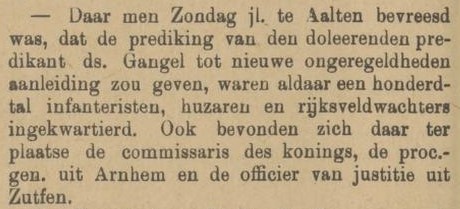
    Doleantie (Schism)

    In 1834, the movement of the so-called ‘Afscheiding’ (Secession)—manifesting through the departure of Rev. H. de Cock and the church council of Ulrum (Gr) from the Dutch Reformed Church—gained some following in Aalten. By 1840, the circle in Aalten had grown sufficiently to found a congregation. A few decades later, the movement of the so-called Doleantie emerged within the Dutch Reformed Church.

    Restorations

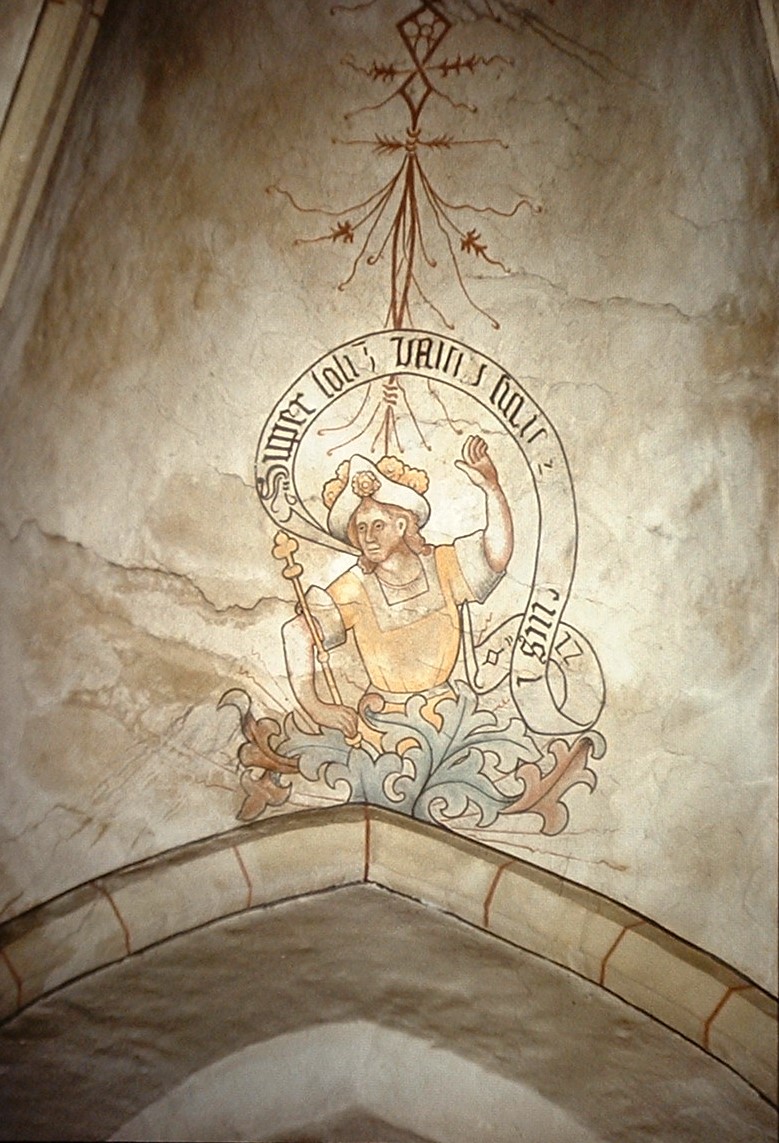
    In 1973, the plaster layer in the church was restored. Beneath the six to seven layers of whitewash, exceptional paintings were discovered. These murals include depictions of the twelve apostles, a representation of the Last Judgment, the Coronation of Mary, and—highly unique in Western Europe—an image of Emperor Constantine the Great together with his mother Helena, the namesake of the church. The paintings were subsequently restored.

    Burial vault

    Also in 1973, carpenter Henk Heijnen discovered a burial vault under the choir during work, containing three coffins with human remains. The vault was quickly resealed by order of the church board, but before that happened, Heijnen had already climbed inside and accurately measured and photographed everything. In 2019, he completed a wooden replica of the burial vault.

    Death knell

    For centuries, the bells of the Oude Sint Helenakerk in Aalten have tolled at set times to inform the population of deaths, a practice known as ‘overluiden‘.


    Owners

    Overview is incomplete.

    YearPlotOwnerDescription
    1832I-1498the Reformed Church of Aalten3,060 m² church & yard
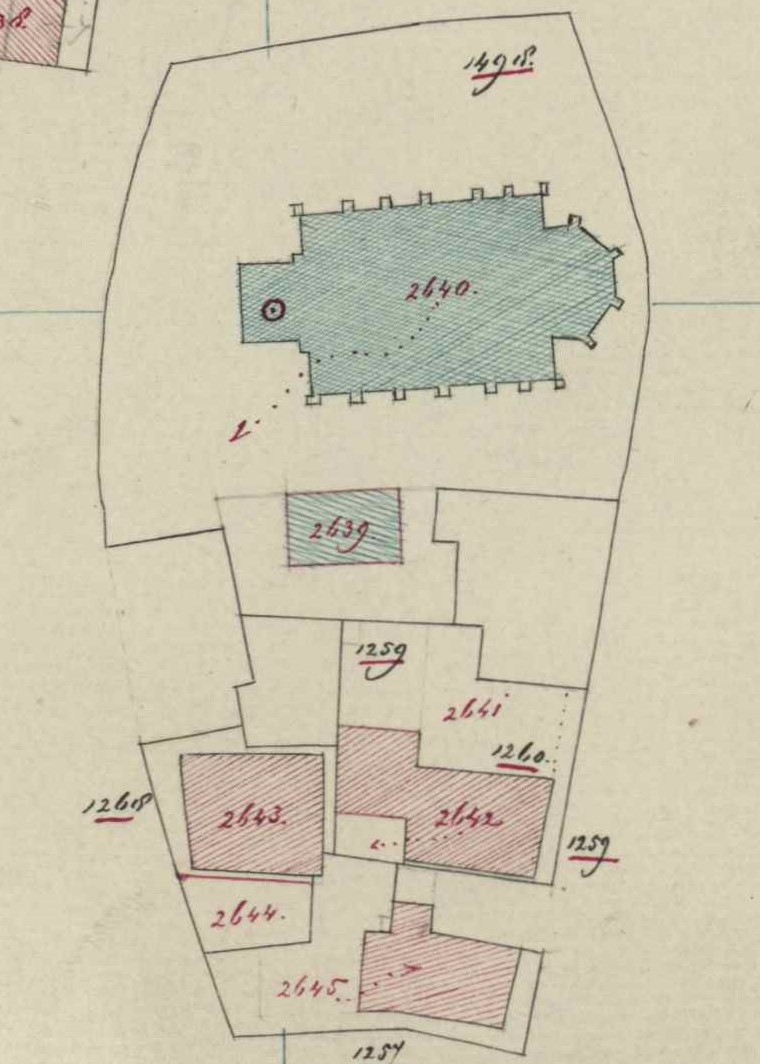
    1862I-2640the Reformed Church of Aalten2,966 m² church & yard
    1882I-3735the Reformed Church of Aalten2,924 m² church & yard
    1911I-5447the Reformed Church of Aalten2,938 m² church, catechism room & yard
    1914I-5613the Reformed Church of Aalten2,720 m² church & garden
    1959I-8339the Reformed Church of Aalten3,085 m² church, house & yard
    1963I-8941the Reformed Church of Aalten2,925 m² church, house, yard, park,
    part. community center, road

    Features


    Cadastral no.I-11437
    FunctionChurch
    Year of construction12th/15th century
    MonumentNational Monument
  • War Memorial

    War Memorial

    Whemerstraat, Aalten

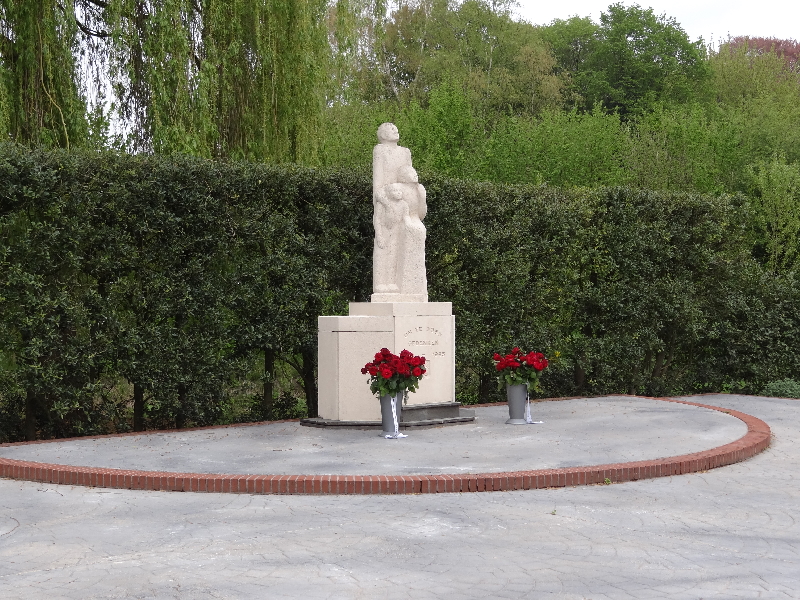
    The war memorial on the Wheme was erected in memory of all fellow citizens who died during the occupation years as a result of acts of war. The memorial also commemorates the liberation.

    The establishment of the memorial was an initiative of the Monument Foundation 1940-1945 committee. Immediately after the liberation, the population of Aalten felt the need to honour the war victims with a monument.

    The monument consists of a statue of a male figure with a woman and child. The sculpture of French limestone is placed on a terrace. The pedestal consists of masonry, concrete and natural stone. The memorial is 1 meter 31 high, 1 meter 43 wide and 90 centimeters deep.

    The monument was unveiled on 16 June 1956 by Hendrik Jan (Uncle Jan) Wikkerink, leader of the former resistance movement in Aalten.

    The text on the pedestal reads:

    OM TE DOEN
    GEDENKEN
    1940 1945

    (‘TO COMMEMORATE’)

    The group faces south from where the tribulation, but also the deliverance, came. Artist Bé Thoden van Velzen described the sculpture as follows: “… representing man, woman and child, as a symbol of the entire Dutch people, expectantly looking forward to liberation, unbowed and unweakened.”

    Features


    FunctionMonument
    Disclosure1956

    Sources


  • Air watchtower

    Air watchtower

    Koningsweg, Aalten (disappeared)

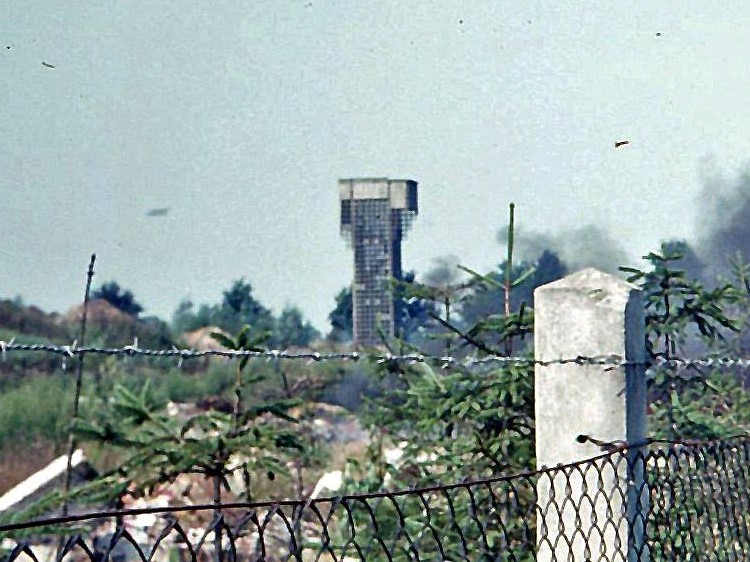
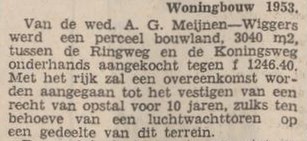
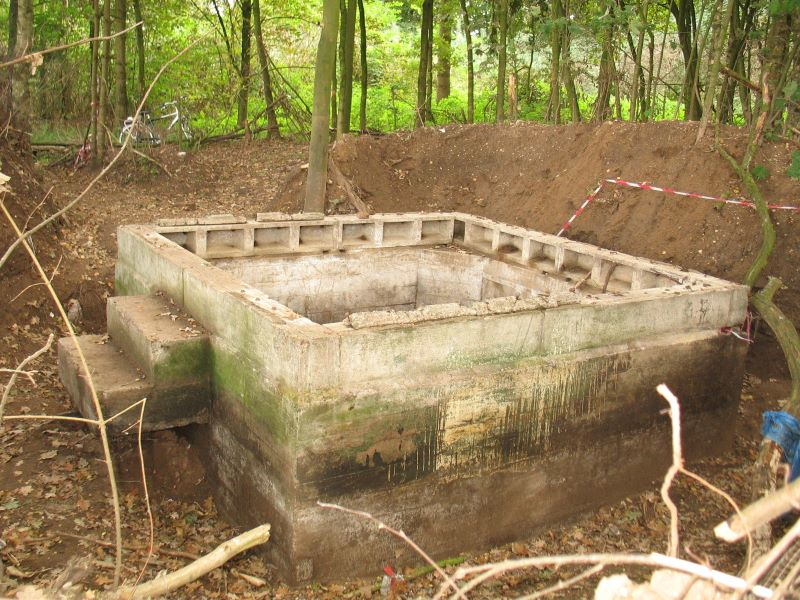
    The Air Watchtower in Aalten was a concrete watchtower that was part of the national network of air watchtowers that was established in the Netherlands during the Cold War. The tower was located on the Koningsweg, on the outskirts of the village, and was intended to detect enemy aircraft flying lower than the radar systems could detect.

    The Aalten air watchtower was a so-called ‘honeycomb construction tower’, recognizable by its characteristic honeycomb structure, a construction that offered both stability and strength. The tower, built of reinforced concrete, was fourteen meters high and the head of the tower was an open observation cabin with a hiding corner to protect against shrapnel. Neighboring municipalities such as Varsseveld and Winterswijk also had high lookouts, but not as characteristic as those in Aalten.

    Searching for the enemy

    The air watchtower in Aalten, codenamed ‘Isaac 1’, was inaugurated in 1953, at a time when the tension of the Cold War led to heightened preparedness. The tower was part of a network of 276 lookouts spread throughout the Netherlands and fell under the Air Guard Service Corps (KLD), a part of the Royal Netherlands Air Force that was under the Air Defense command. The Aalten tower was part of the command center KLD Deventer.

    The purpose of the towers was to visually detect enemy, especially Russian, aircraft that flew below 200 meters and therefore remained out of range of radar equipment.

    Crew and equipment

    The crew of the tower consisted of two men who, regardless of the weather conditions, observed the airspace. Women were excluded from these tasks at the time. The crew members wore uniforms and were equipped with headphones and a mouth microphone. The observation was done with the help of a tripod equipped with a scope and a pointing needle. The ranks in the Aalten air guard consisted of soldier, soldier first class, corporal and sergeant. Mr. H.J. Prinzen from Aalten was local commander for a while.

    The crew was trained to warn the surrounding towers in case of emergency and via a hotline also the command center. The staff was in an underground, nuclear-free bunker in Deventer. The tower was not continuously manned; only during exercises. Every two weeks there was a theory evening for aircraft recognition at a location in Aalten or Winterswijk.

    Recruitment of volunteers

    On May 20, 1953, a recruitment meeting was held by the Air Guard Service in the Society on the Hofstraat in Aalten. Commander Ruseler from Deventer provided information to the men who had been called up for this purpose. As an incentive to sign up, exemption from military service or participation in the Population Protection was offered. A number of men volunteered and joined the KLD.

    Removal and demolition

    With the advent of more modern control systems and improved radar equipment, the need for visual perception became smaller and smaller in the 1960s. This eventually led to the dissolution of the Air Guard Service. The Aalten air watchtower was demolished in 1970, a spectacle that attracted a lot of interest from the local population. The heavy concrete foundation of the tower is still hidden underground and is a silent reminder of this chapter in history.

    Features


    Cadastral no.L-941
    FunctionHouse
    Year of constructionca. 1953
    Demolition1970

    Sources


  • Memorial for People in Hiding

    Memorial for People in Hiding

    Stationsstraat, Aalten

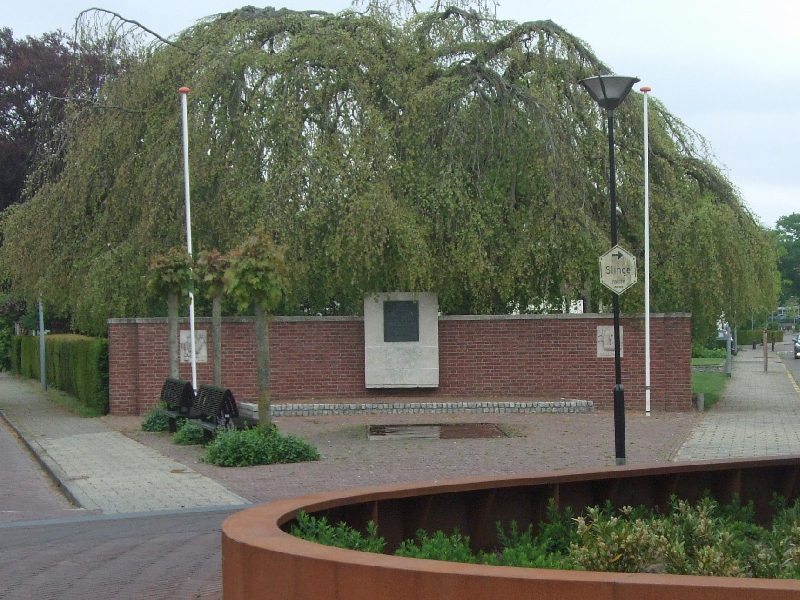
    The memorial for people in hiding (Onderduikersmonument) on Stationsstraat is an expression of gratitude from those who were once in hiding to the people of Aalten for their hospitality, and to the members of the Resistance who were the driving force behind finding accommodation for them.

    The monument consists of a brick memorial wall with a fountain. A bronze plaque and two sculpted fragments of natural stone are set into the memorial wall.

    The monument was unveiled on 4 October 1947 by Mrs D.G. Wikkerink-Eppink, the wife of Resistance leader Hendrik Jan (Ome Jan) Wikkerink.

    The text on the plaque reads (translated from Dutch):

    PRESENTED TO THE MUNICIPALITY OF AALTEN BY PERSONS IN HIDING
    WHO DURING THE YEARS OF OCCUPATION 1940-1945
    FOUND A SAFE HAVEN HERE.

    The sculpted fragments bear the text of Psalm 91:5 and 6.

    The text of the left fragment reads:

    THOU SHALT NOT BE AFRAID FOR THE TERROR BY NIGHT,
    NOR FOR THE ARROW THAT FLIETH BY DAY;
    NOR FOR THE PESTILENCE THAT WALKETH IN DARKNESS,
    NOR FOR THE DESTRUCTION THAT WASTETH AT NOONDAY.

    The text of the right fragment reads:

    FOR HE SHALL COVER THEE WITH HIS FEATHERS, AND
    UNDER HIS WINGS SHALT THOU TRUST.

    The sculpture on the left depicts three studded boots belonging to the barbarian horde, threatening to trample a young, sprouting fruit. This symbolises the overwhelming force and occupation, portraying the vulnerability of young life that continues to germinate despite the danger.
    The fragment on the right depicts a pelican with outspread wings, protecting its nest and young. The pelican is a Christian symbol of total self-sacrifice; according to legend, the bird feeds its young with its own blood. It symbolises the contribution of the resistance in the struggle against the occupier. The waning swastika in the background represents the transience of the threat.

    Sources


  • Fallschirm-Armee Waffenschule

    Fallschirm-Armee Waffenschule

    Herenstraat 4, Aalten (Oct 1944 – Feb 1945)

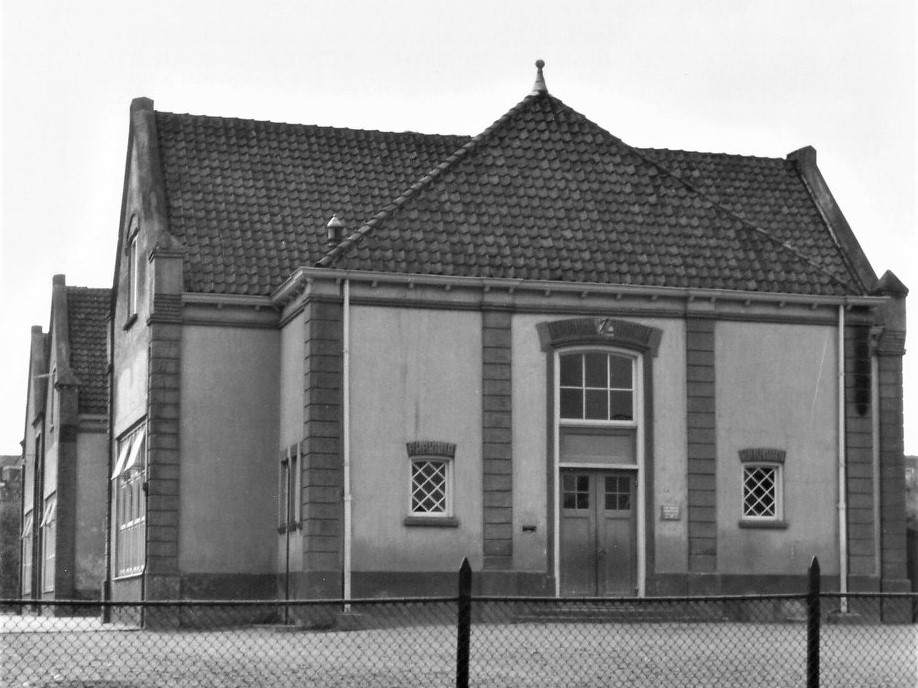
    During the occupation years, a ‘Fallschirm-Armee Waffenschule’ was located for a short time in the Public Primary School on the Herenstraat in Aalten.

    After the Normandy landings, Hitler wanted to launch a large-scale counterattack on the Western Front as soon as possible. With this he wanted to bring the Allies to a standstill. This should give Germany time to complete their “secret project,” which is the development of weapons of mass destruction.

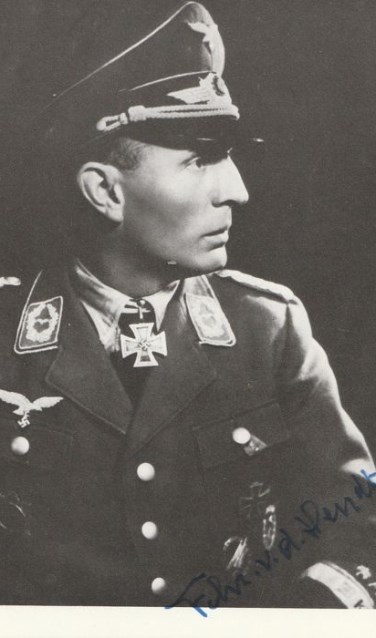
    The Germans made preparations in a very tactical manner and the necessary combat units were assembled. This is also the case in Aalten. Here, Freiherr Von der Heydte had to put together a Kampfgruppe in preparation for a special deployment in this new offensive. In these months, Aalten was overrun by German troops. They requisitioned almost all school buildings for the quartering of these troops.

    School for paratroopers

    The so-called ‘Fallschirm-Armee Waffenschule’ (October 1944 – February 1945) was established in the public school on the Herenstraat. The majority of the Germans were also billeted here. Non-commissioned officers and officers were billeted with civilians in Aalten.

    The school was intended to train aspiring officers of the German paratroopers in practice and prepare them for work at the front. In addition, experienced instructors gave courses on how to disable the enemy’s armored vehicles with the resources and weapons that the Germans had at the time. And finally, a special Kampfgruppe (combat unit) was formed. He was going to receive a special assignment, namely an in-force parachute jump behind Allied lines during the Ardennes Offensive. At its peak, about 1200 German paratroopers were gathered in Aalten. They formed the so-called ‘Kampfgruppe Von der Heydte’.

    German paratroopers were billeted everywhere in Aalten and surrounding villages. Not only in large school buildings but also privately in people’s homes. The soldiers had to go to the district office that was located in the town hall. Here they received a certificate of quartering, as they called it at the time, and continued their way to the address where they were allowed to stay. In addition, almost all cafes in Aalten were used by the German troops and converted into so-called kasinos. Not to watch films here, but to entertain the soldiers in their spare time with fun and trinkets.

    Strict regime

    There was a strict regime among the German troops. Valuable time was efficiently used to turn this mixed group into a real Kampfgruppe as soon as possible. Every morning the troops were expected to complete a march of about 10 km on an empty stomach. Furthermore, shooting exercises were held on some training grounds around Aalten and the battle groups were trained in fighting in wooded areas.

    An eyewitness has seen German paratroopers in sports uniforms, on their way to swimming pool ‘t Walfort. Here the paratroopers jumped from an elevation into the loose sand. When they came into contact with the sand, they made a so-called para-roll to break the fall. They had to master this maneuver before they went on a parachute jump to avoid injury.

    After Von der Heydte had left the so-called Kampfgruppe, Hauptmann Von Hütz took over command of the Waffenschule in Aalten. During the remaining period, this new battle group deployed a number of operations. These were described as very harsh by both the Allies and the Germans themselves.