Landstraat 22, Aalten
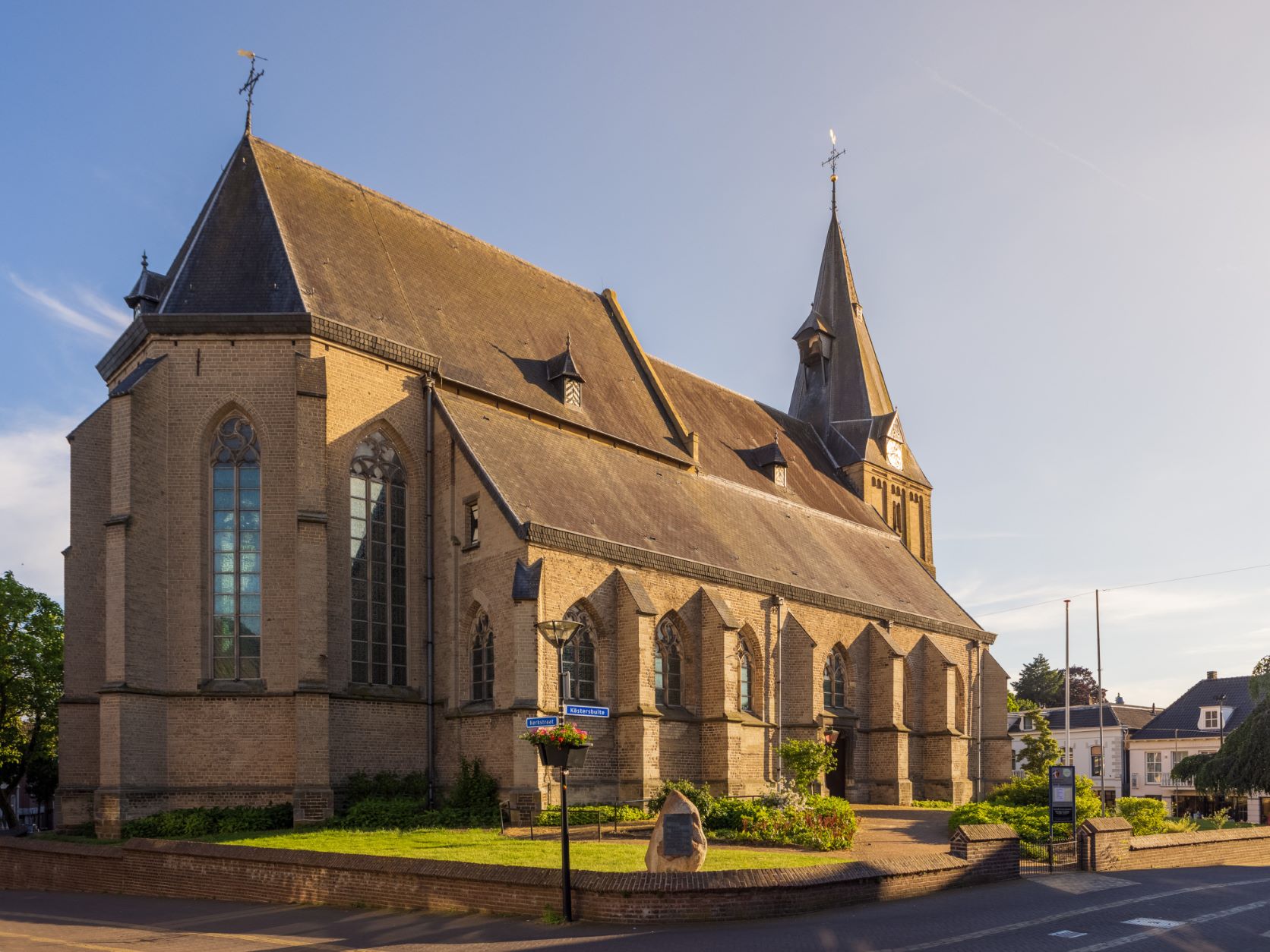
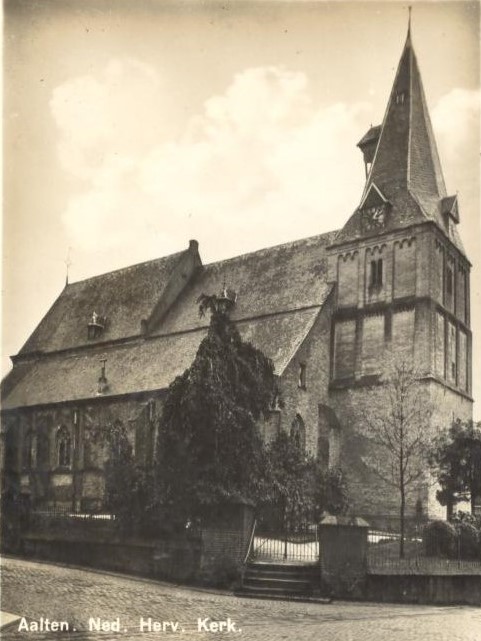
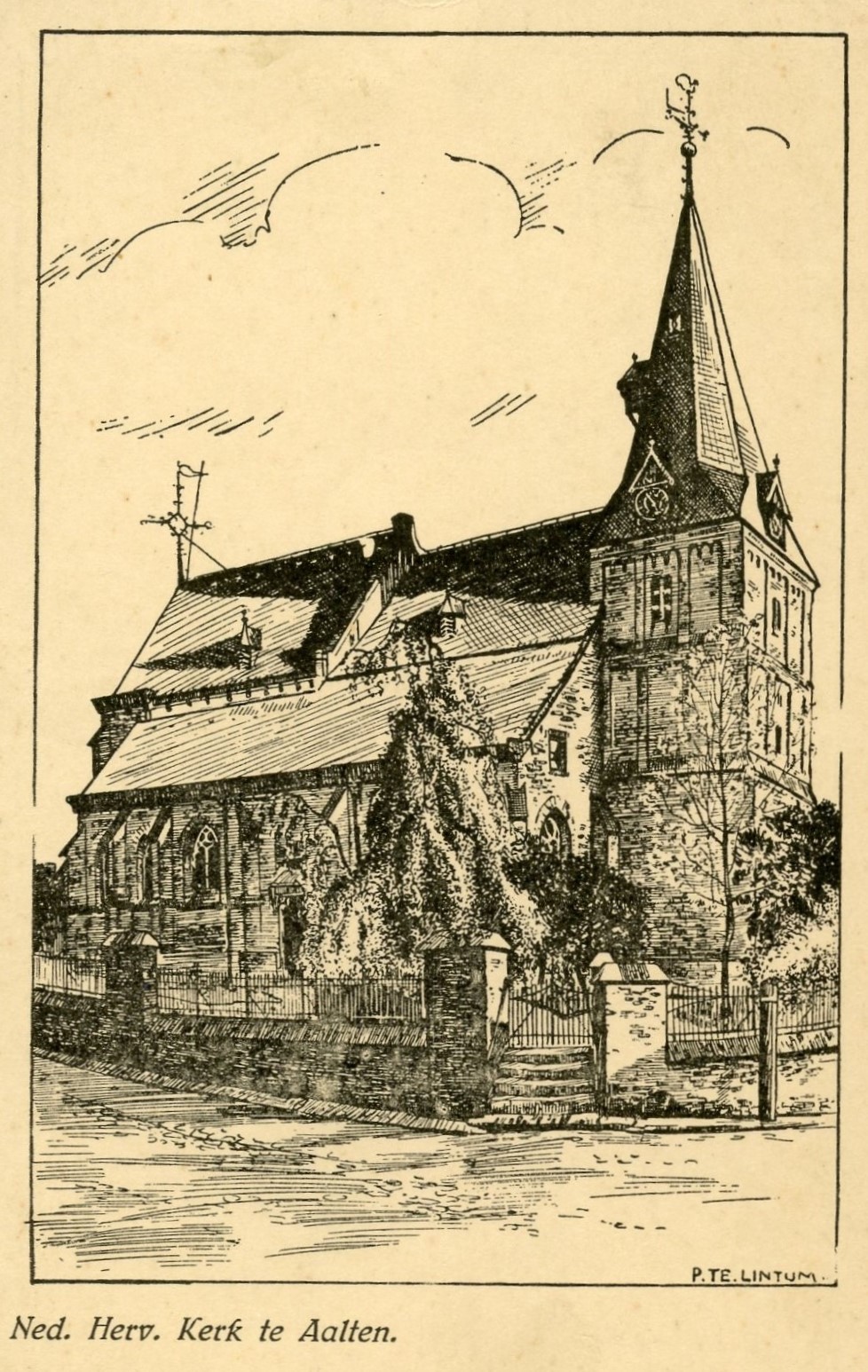
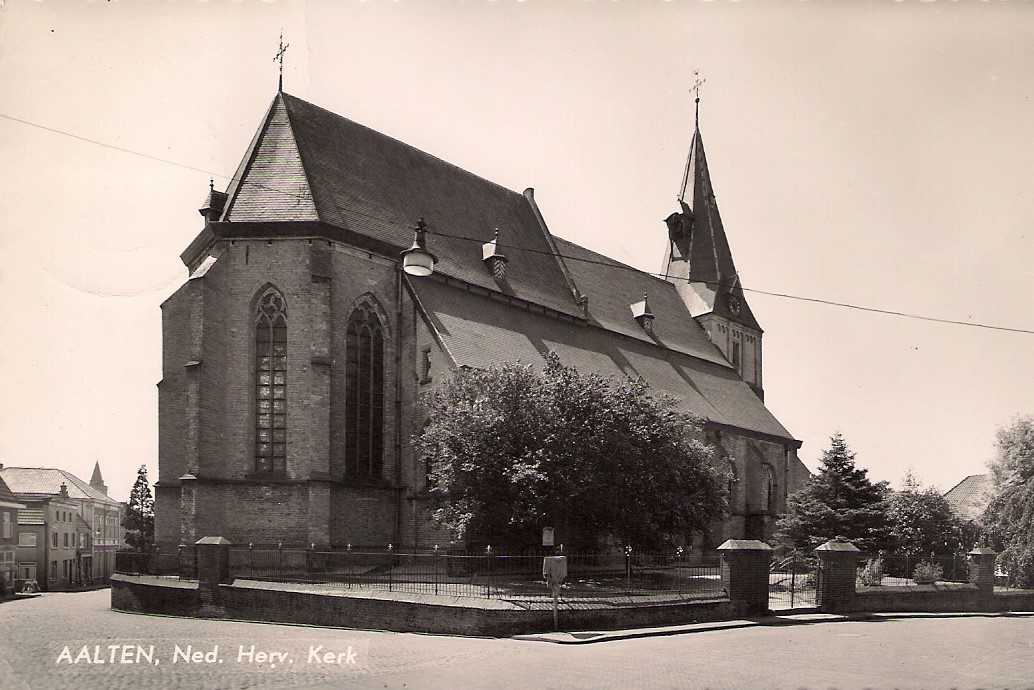
The Oude Helenakerk has stood in the center of Aalten for centuries. It is the oldest and most prominent building in Aalten. This Late Gothic pseudo-basilica with its Romanesque tower is a monument of immeasurable historical and emotional value. Countless residents of Aalten have been baptized and married here, found solace within its walls, and were brought from this church to their final resting place.
History
Around the year 800, when the Saxons were subjugated by Charlemagne, he decreed that every community should provide a so-called ‘hoofdhof’ (head court) for the construction of a church. In the settlement of Aladna, the ancient name for Aalten, this was likely a piece of land belonging to the later Havezate de Ahof.
The first small church on this site was presumably built in the Carolingian style, a precursor to Romanesque architecture. The church was dedicated to Saint Helena, the mother of the Roman Emperor Constantine the Great, who converted to Christianity.
In the 12th century, a Late Romanesque tower was added to this first church. The Romanesque architectural style is characterized by heavy, massive walls with small round-arched windows. In contrast to the later Gothic style, Romanesque architecture features little ornamentation. The tower is constructed entirely of tuff, a soft volcanic stone that was widely used in these regions at the time for building churches and castles. The spire takes the form of a so-called constricted needle spire.
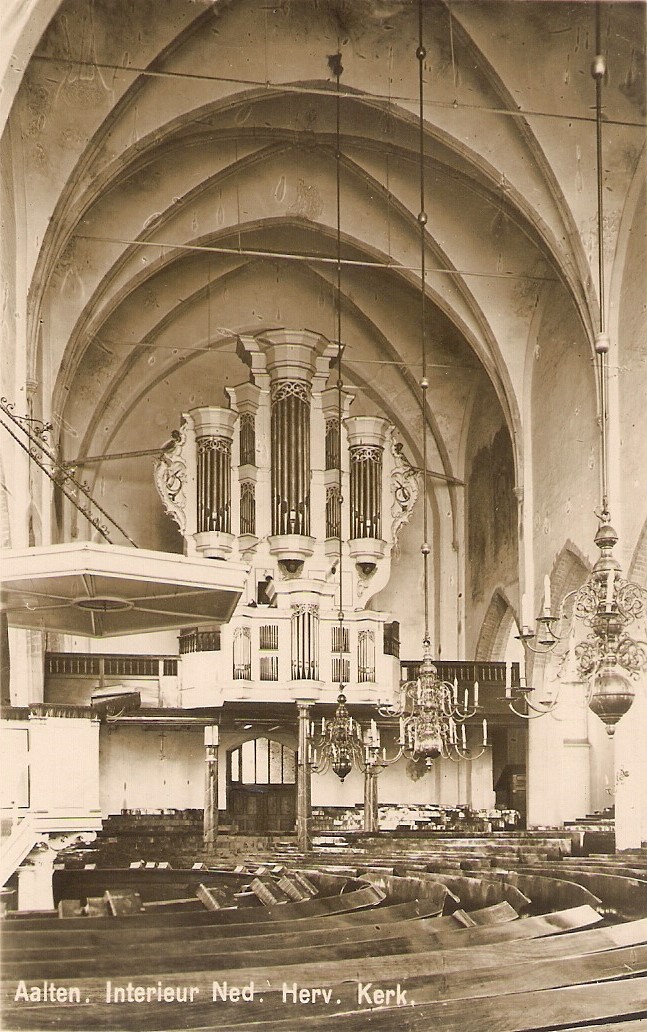
Between 1470 and 1483, the three-aisled nave of the church was built, also from tuff. This part of the church was executed in the Late Gothic style, characteristic of the 15th century, with large windows featuring pointed arches that point, as it were, toward heaven. The higher choir on the east side of the church dates from the period between 1440 and 1450. In the late 15th and early 16th centuries, murals were applied to the vaults and walls.
Reformation
Until the end of the 16th century, the parish of Aalten fell under the Diocese of Münster. With the conquest of Bredevoort—the administrative center of the lordship of the same name to which Aalten belonged—by Prince Maurice on October 8, 1597, the Reformation also reached this region.
At that time, Pastor Theunissen, a native of Bocholt, served the Aalten church. He fiercely resisted the reform. According to tradition, however, he had to flee in 1601 to the Burlo monastery, or according to others, to Rhede. He later died in Warendorf, where the small but valuable monstrance he had taken from Aalten reportedly remained until the middle of the 19th century.
Presumably, shortly after 1597, the stone Stations of the Cross depicting the Passion of Christ were also removed. The stations, likely created around 1530 by the Westphalian sculptor Heinrich Brabender, disappeared but were rediscovered in the 19th century. Today, they can be admired in the Museum Catharijneconvent in Utrecht.
The then-chaplain of Aalten, Anthonius van Keppel, originally from Doetinchem, was mentioned in 1602 as the first minister of the Aalten church community, which had recently converted to Protestantism. How did this come about? To expand the Reformation to the countryside, the cooperation of the local Roman Catholic clergy was required. In 1598, many of them were summoned to appear at the classical assembly in Zutphen. The clergy from Aalten were also present. At this meeting, the attending pastors and vicars were required to renounce the Catholic religion and profess that the Reformed religion was the true one.
In the classical assembly of 1603 in Zutphen, the participants from Aalten, Winterswijk, and Zeddam declared their willingness to conform to the conditions set for them. By 1633, the number of members was sufficient to proceed with the establishment of a church council.
Shared use
After the conquest of the Achterhoek in 1672 by troops of the Bishop of Münster, the churches of Aalten, Winterswijk, and Dinxperlo were given to the Minorite fathers by the episcopal commissioner. The Reformed congregation in Aalten reached an agreement with the occupiers. This arrangement meant that Catholics and Protestants could use the church in Aalten alternately. However, a short time later, the use of the church building was forbidden to the Protestants. This situation did not last long. At Pentecost 1674, the Münster troops left Aalten and the church became available to the Reformed congregation once again.
Disturbances
In early 1750, the quiet town of Aalten was shaken by a series of striking religious phenomena. During church services, people burst into tears, sighed loudly, or collapsed as if they had lost consciousness. Some even spoke of encounters with angels or attacks by the devil. These events drew national attention and would go down in history as the Aaltense beroeringen (Aalten disturbances).
Doleantie (Schism)
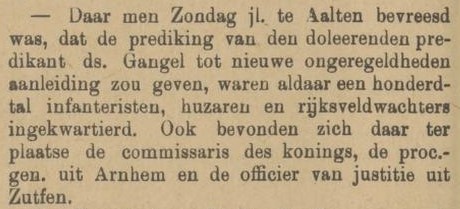
In 1834, the movement of the so-called ‘Afscheiding’ (Secession)—manifesting through the departure of Rev. H. de Cock and the church council of Ulrum (Gr) from the Dutch Reformed Church—gained some following in Aalten. By 1840, the circle in Aalten had grown sufficiently to found a congregation. A few decades later, the movement of the so-called Doleantie emerged within the Dutch Reformed Church.
Restorations
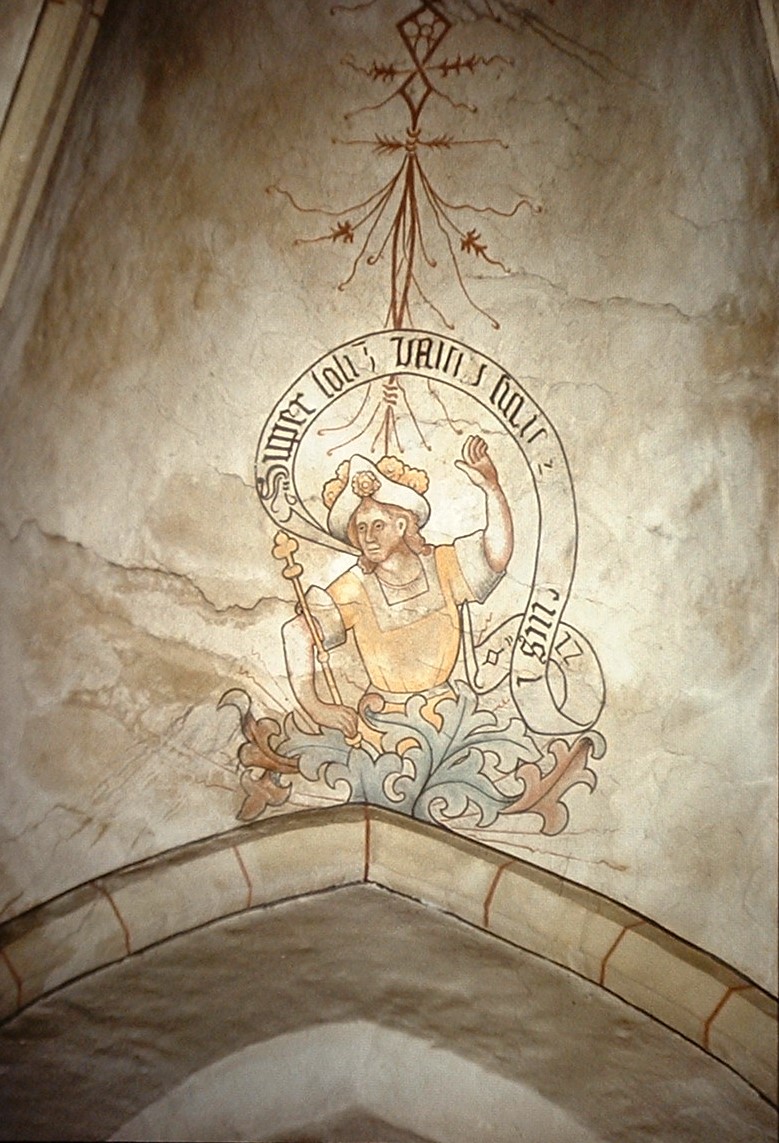
In 1973, the plaster layer in the church was restored. Beneath the six to seven layers of whitewash, exceptional paintings were discovered. These murals include depictions of the twelve apostles, a representation of the Last Judgment, the Coronation of Mary, and—highly unique in Western Europe—an image of Emperor Constantine the Great together with his mother Helena, the namesake of the church. The paintings were subsequently restored.
Burial vault
Also in 1973, carpenter Henk Heijnen discovered a burial vault under the choir during work, containing three coffins with human remains. The vault was quickly resealed by order of the church board, but before that happened, Heijnen had already climbed inside and accurately measured and photographed everything. In 2019, he completed a wooden replica of the burial vault.
Death knell
For centuries, the bells of the Oude Sint Helenakerk in Aalten have tolled at set times to inform the population of deaths, a practice known as ‘overluiden‘.
Owners
Overview is incomplete.
| Year | Plot | Owner | Description |
|---|---|---|---|
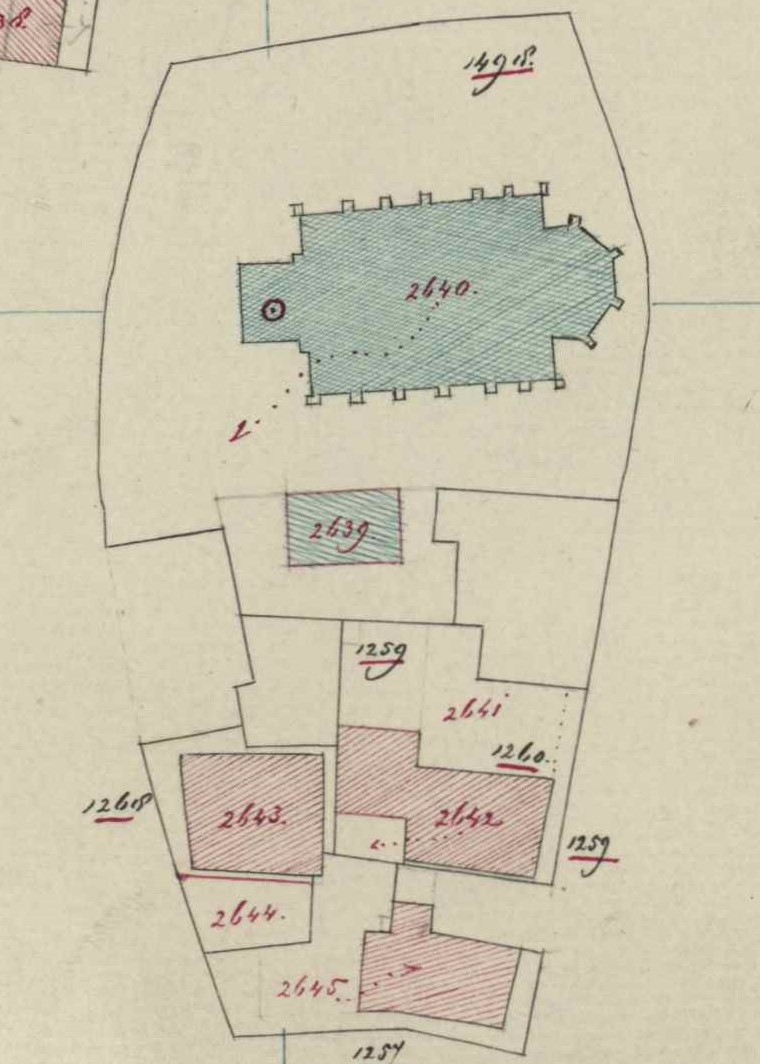
| 1832 | I-1498 | the Reformed Church of Aalten | 3,060 m² church & yard |
| 1862 | I-2640 | the Reformed Church of Aalten | 2,966 m² church & yard |
| 1882 | I-3735 | the Reformed Church of Aalten | 2,924 m² church & yard |
| 1911 | I-5447 | the Reformed Church of Aalten | 2,938 m² church, catechism room & yard |
| 1914 | I-5613 | the Reformed Church of Aalten | 2,720 m² church & garden |
| 1959 | I-8339 | the Reformed Church of Aalten | 3,085 m² church, house & yard |
| 1963 | I-8941 | the Reformed Church of Aalten | 2,925 m² church, house, yard, park, part. community center, road |
Features
| Cadastral no. | I-11437 |
| Function | Church |
| Year of construction | 12th/15th century |
| Monument | National Monument |