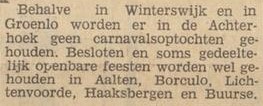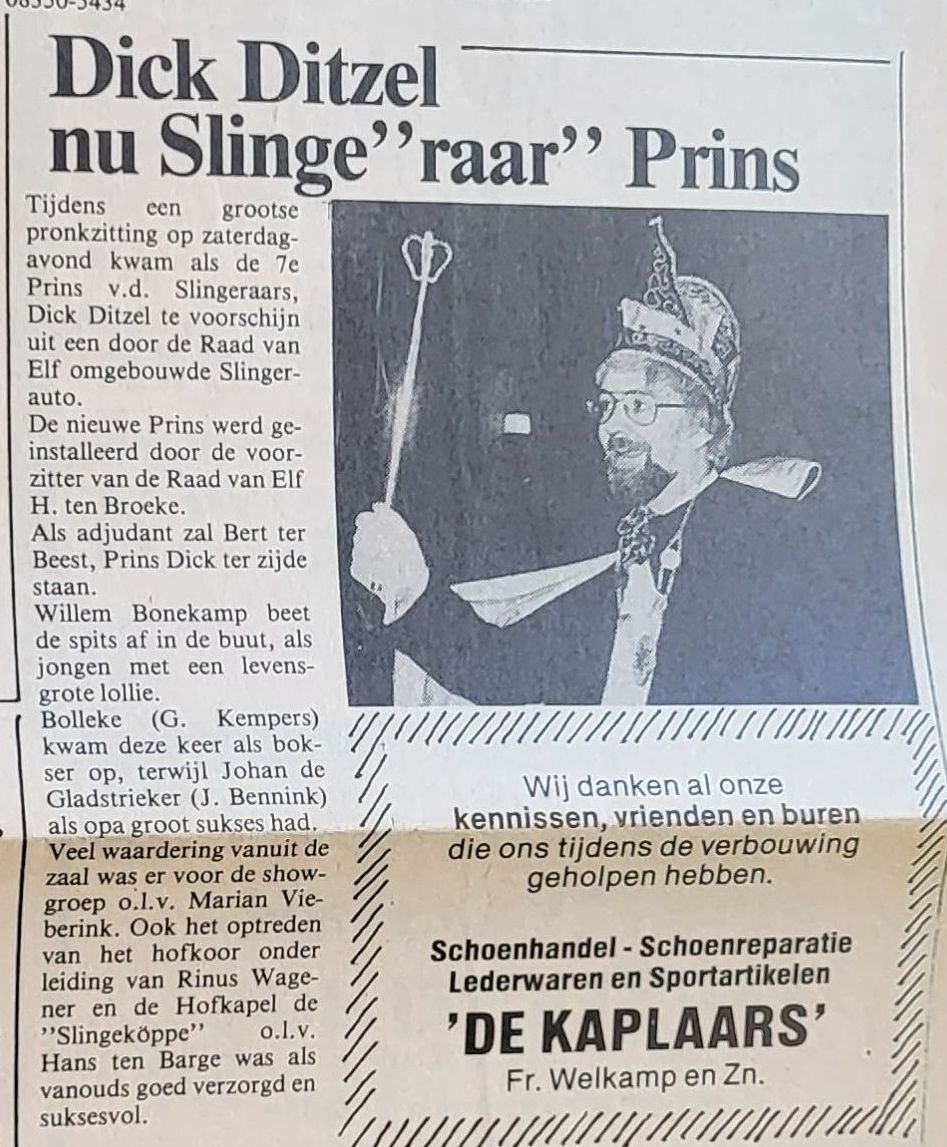
In large parts of the country, Carnival is celebrated seven weeks before Easter. In Aalten, this is not so much the case. Carnival is traditionally a Catholic festival, and Aalten has remained predominantly Protestant since the Reformation. Nevertheless, Carnival was also celebrated in Aalten in the past.
Carnival is originally a Christianized pagan folk festival traditionally celebrated only by Catholics. In parts of Gelderland, Carnival is celebrated exuberantly every year, while in many other parts it is not celebrated at all. These regional cultural differences often date back to the Reformation and the Eighty Years’ War (1568-1648). During this conflict, regions emerged that quickly aligned with the Protestant rebels. Other regions held on to the Catholic faith of the legitimate sovereign and Duke of Guelders for a long time.
For instance, the Lordship of Bredevoort was conquered in 1597 by the Calvinist Maurice of Nassau. He subsequently made the entire region from Aalten to Winterswijk Protestant. His half-brother Frederick Henry did not definitively conquer Groenlo from the Catholic sovereign until 1627. In the preceding years, the Catholic faith was able to take deeper root in the society of Groenlo and its surroundings thanks to the Counter-Reformation.
Carnival in Aalten
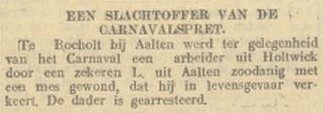
Nevertheless, Carnival was also celebrated in Aalten in the past. In 1937, G.H. Rots described in a series of articles how things were done in Aalten in earlier times. For example, he dedicated a section to ‘vastenoavond’, or Carnival:
“If we look at the cheerful things again, the first thing people in the village concerned themselves with was ‘vastenoavond’. However, compared to the Carnival festivities in southern parts of the country, it was very modest here. There was music in a few cafés, and a few people also appeared on the streets in jester costumes. Characteristic, however, was the custom of the youth walking around with a so-called ‘foekepot’. This was a tin canister over which a dried piece of pig’s bladder was stretched. In the middle was a small hole, into which a small wooden stick fitted. By pushing this stick up and down, a humming sound was produced, and so on Shrove Tuesday one could hear the dull sound of foeke-foeke-foeke. They sang the following song with it:
Foekepotterij, foekepotterij, give me a penny, then I’ll pass by. I have no money to buy bread, I’ve walked with the foekepot for so long. Foekepotterij, foekepotterij, give me a penny, then I’ll pass by.
The penny was usually given, and the ‘Shrove Tuesday fools’ did good business.”
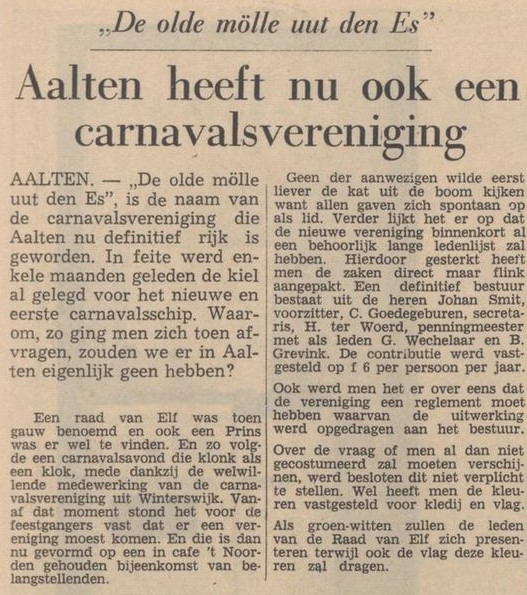
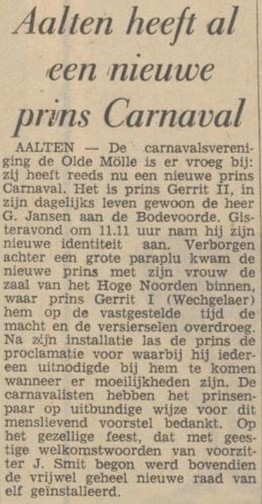
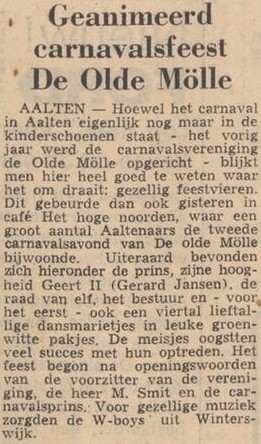
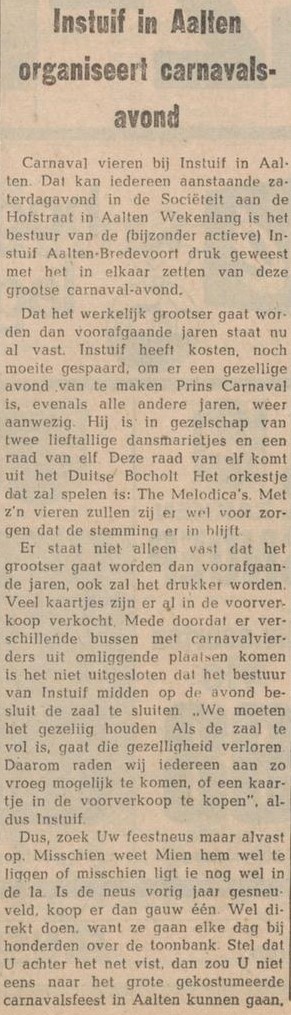
Aalten even had three Carnival associations: De Slinge-raars, Spuit Elf, and De Olde Mölle.
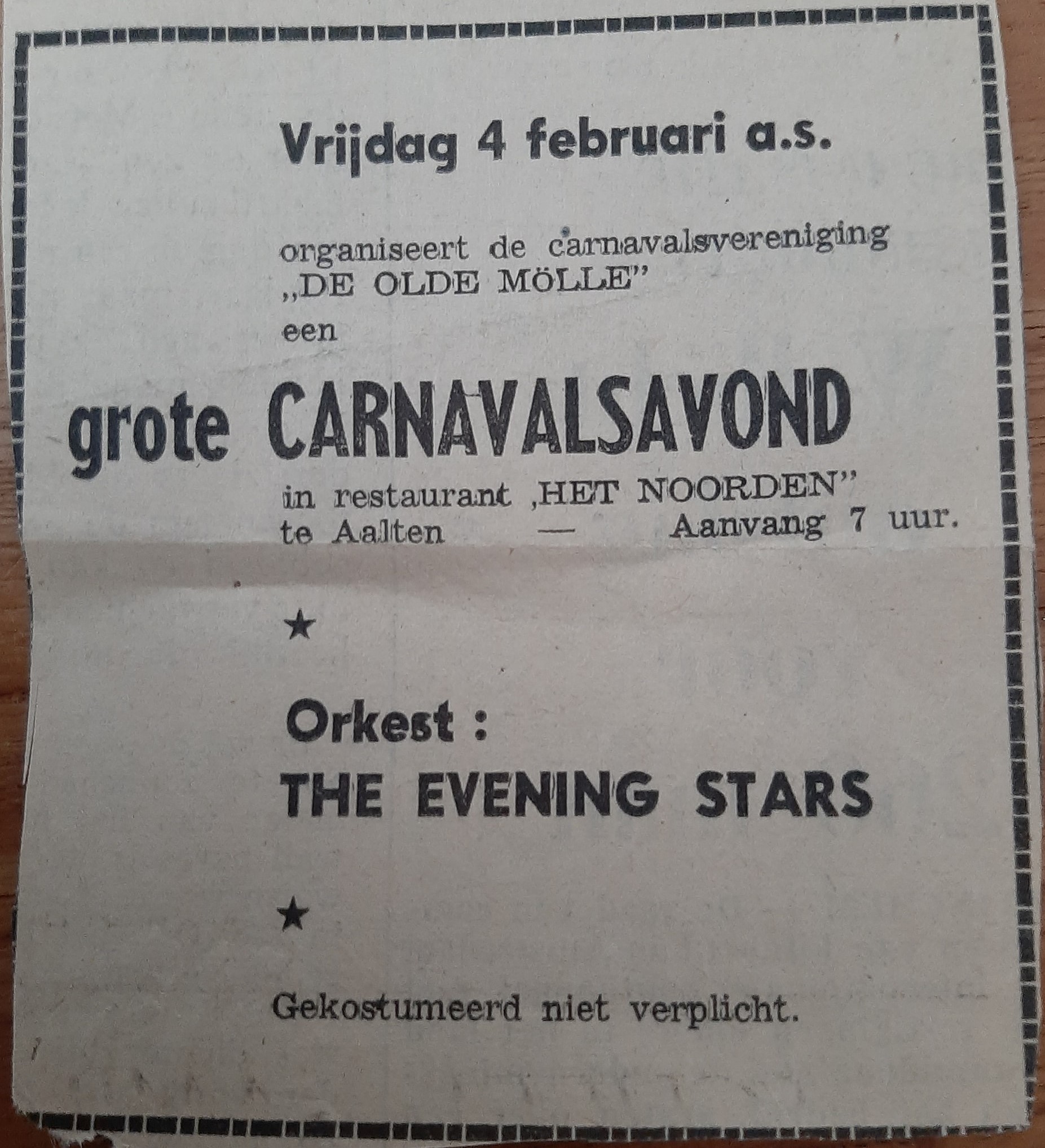
De Olde Mölle was founded in 1965 at café ‘t Noorden.
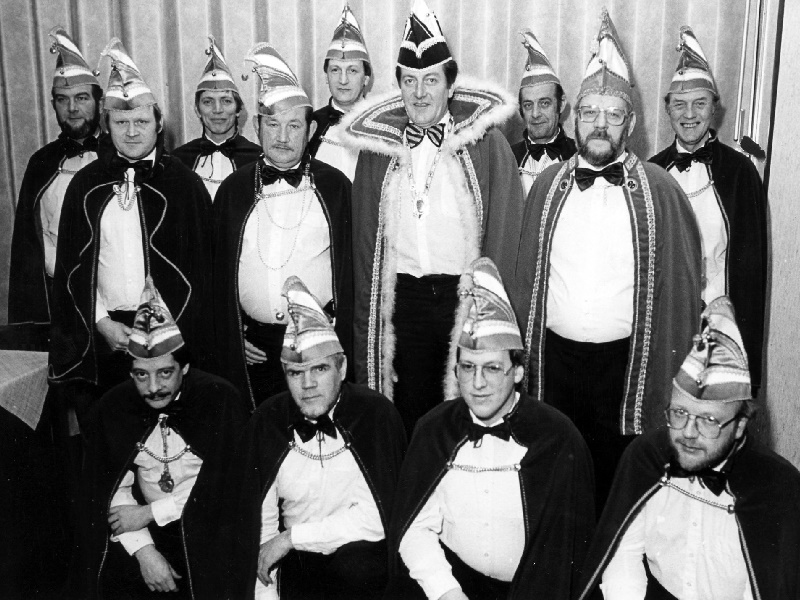
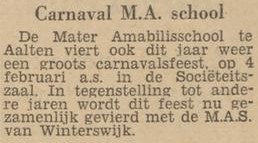
Nowadays, Carnival in Aalten is only celebrated by the children of the St. Jozefschool, the only remaining Catholic primary school in the village. Other residents of Aalten who wish to celebrate Carnival are forced to go to places such as Groenlo (Grolle), ‘s-Heerenberg (Waskuupstad), or Doetinchem (Leutekum).
Newspaper reports