Markt 3, Bredevoort
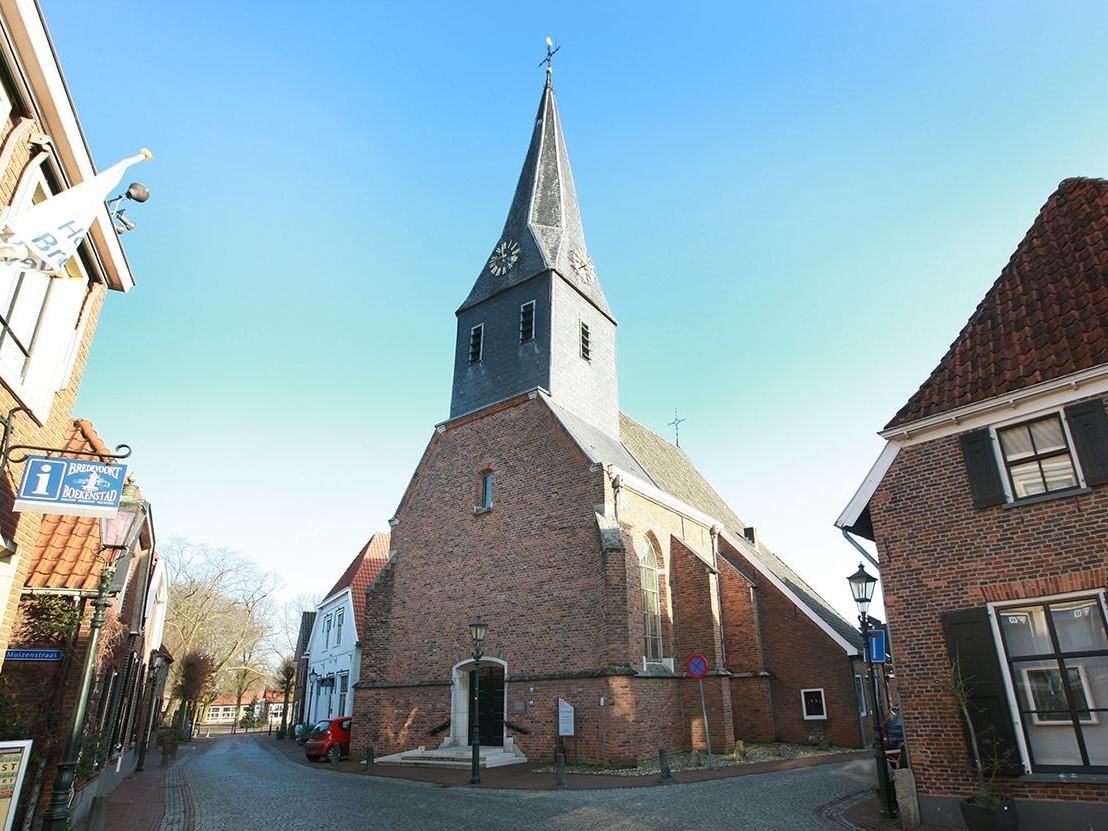
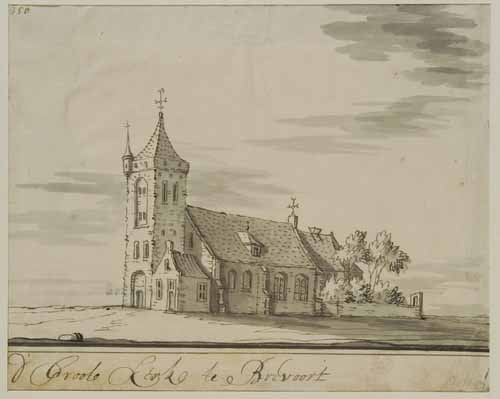
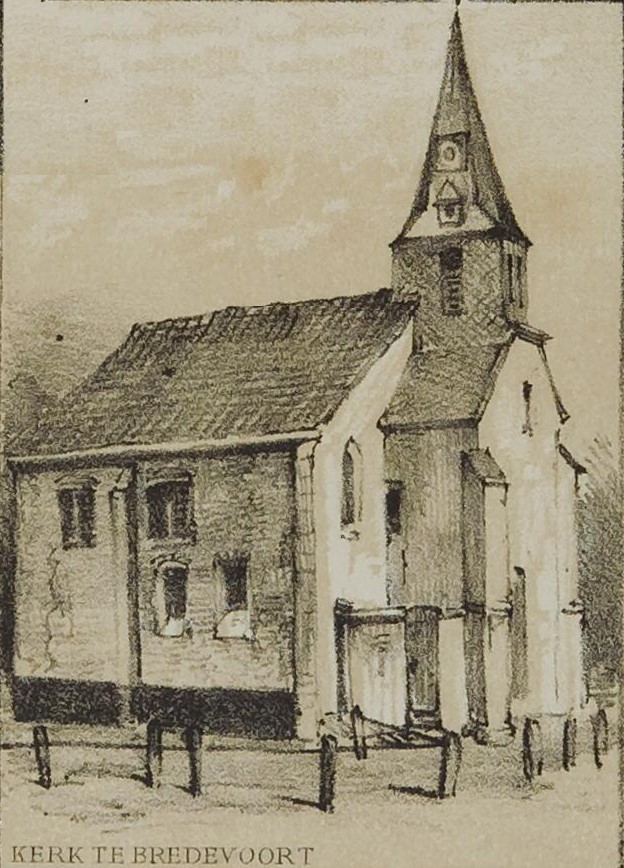
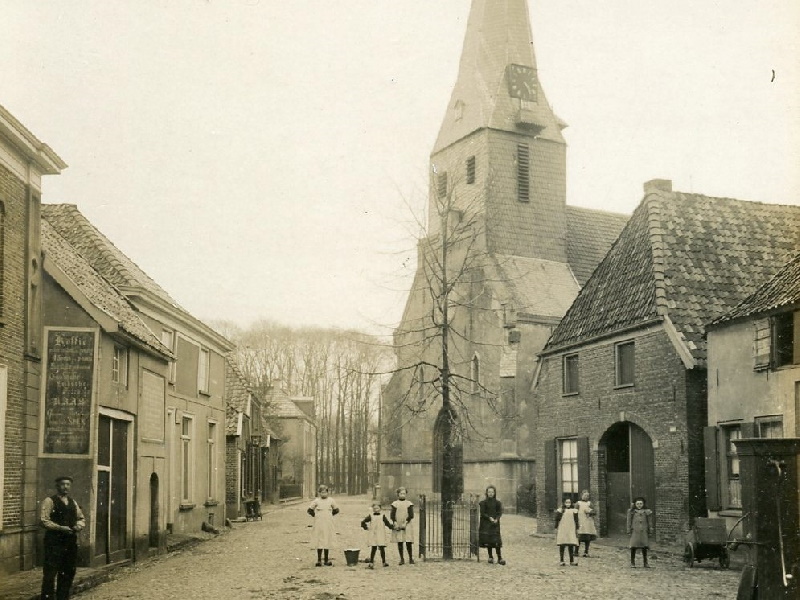
The Sint-Joriskerk (Saint George’s Church) is a late-Gothic church in Bredevoort, the foundations of which date back to 1316. The church is dedicated to Saint George, the patron saint of the borgmannen (castellans) of Bredevoort. A characteristic feature is the tower’s finial: a statue of Saint George and the Dragon instead of a traditional weathercock. On the east side of the church, there is a so-called ‘melaatsenraampje'(leper window). In earlier times, worshippers with contagious diseases used this window to follow the mass.
Early History
The oldest foundations of the church date from 1316, and the building may have served as a chapel for the castle of Bredevoort in its earliest years. During the Siege of Bredevoort in 1597 by Prince Maurice, the old (and larger) church burned down completely, and the vaults collapsed. The following year, the people of Bredevoort submitted a request to the classis of Zutphen to build a new church: “Die van Bredeforts soln met request an desen quartier verzoekcken assistentie tott reaparatie hearder Kapellene” (Those of Bredevoort shall request assistance from this quarter for the repair of their chapel). Reconstruction in the Gothic style began in 1599.
Expansions
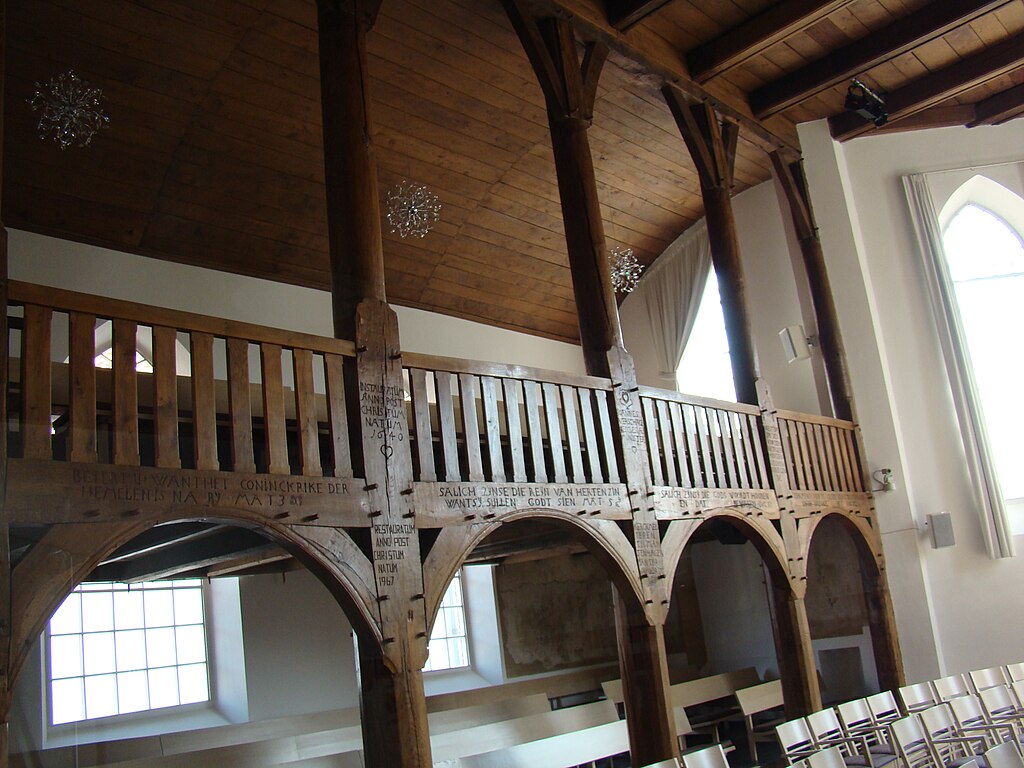
Following the reconstruction, the church underwent various expansions. In 1600, after another fire, a tower was added. In 1639, the chapel was enlarged and broken out on the north side. Using the same stones, the wall was rebuilt several metres further out. Later expansions followed in the form of the boerenzolder (farmers’ loft) and the orgelzolder (organ loft). This extension, including the loft, is clearly visible. Biblical proverbs are inscribed in the beams of the farmers’ loft, such as: “Salich zijn se die rein van herte zin want sij zullen Godt zien” (Blessed are the pure in heart, for they shall see God).
Powder Tower Disaster of 1646
On 12 July 1646, lightning struck the castle’s powder tower. The resulting explosion destroyed a large part of the town, and forty people were killed. The castle was turned into a ruin, and the church also sustained significant damage. Eleven victims, including the Drost of Bredevoort, his wife, and eight of their children, were buried in the choir (the eastern part of the church).
The church was rebuilt, though smaller than its predecessor. In 1672, Captain Satink donated a Rococo pulpit featuring his family coat of arms, as well as a copper lectern bearing the arms of the Holy Roman Empire.
Renovations
The church has undergone various renovations over the centuries. During the French period, features such as a wooden vault and a floor of Bentheimer sandstone were added. The church also received new pews, and the floor level was raised. In 1832, the church pews were painted white.
In 1849, the wooden plank ceiling was replaced with a lime ceiling. In 1858, a catechism room was added, for which King William III donated 200 guilders. The walls of the church were re-plastered in 1868, and this plaster layer was removed again during the restoration of 1949. In 1869, the tower was repaired. In 1882, five stained-glass windows were replaced by cast-iron ones. Three years later, two more cast-iron examples were installed in the farmers’ loft.
In 1889, the catechism room was extended with an annex. During a thorough renovation in 1896, the façade received new doors, a rose window, two small gable windows, and an iron cross. The commemorative stone is now placed on the inside of the wall of the organ loft. In 1920, the spire was renewed.
Post-War Restorations
After the Second World War, the church was in poor condition. Following a large-scale restoration, the church was put back into use in 1967. During a restoration in 2006, the subsided gravestones and the natural stone floor were repaired. It was discovered that a number of the stones had been laid upside down, likely during the French period; these have since been properly repositioned. During the work, several historical finds were made, including coins, human remains, and stained glass. Furthermore, a stone from the Republic of the Seven United Netherlands was found.
Research revealed that two of the stones that had been laid upside down belonged to the Bredevoort Drost, Wilhelm van Haersolte, and his family. They perished along with almost all their children during the powder tower disaster of 1646. Only their son, Anthony, had survived the disaster. In 2010, his descendants donated 3,000 euros to the restoration committee.
Bells and Clock
The Sint-Joriskerk houses three bells. The oldest, a monumental klepklok (chiming bell) from 1454, was borrowed from the Schaer Monastery in 1596. After the monastery was destroyed during the siege of 1597, this bell remained in the church. Wilhelm van Haersolte tot Elsen donated the brandklok (fire bell), cast in 1644. The luidklok (ringing bell) dates from 1731 and, according to old tradition, is rung daily at 8:00, 12:00, and 21:00. Historically, the town gates were opened at 8:00 and closed at 21:00, and 12:00 was mealtime.
In 1942, the church received a new clockwork. The old clockwork from 1666 will soon be on display in the Sint-Joriskerk again. In 1980, the small carillon of three bells was reinstalled.
Owners
Overview is incomplete.
| Year | Plot | Owner | Description |
|---|---|---|---|
| 1832 | B-80 | de Hervormde Kerk Bredevoord | 280 m² church |
Features
| Cadastral no. | B-1199 |
| Function | Church |
| Year of construction | 14th/17th century |
| Monument | National Monument |
Sources
- ‘Breevoort can ick vergeten niet’, H.A. Hauer (blz. 85-102), Uitgeverij De Graafschap, 1956
- De Graafschapbode, 12 August 1938
- HisGIS
- Cadastral map
- kerk-en-orgel.nl
- Kerkvenster Aalten-Bredevoort