Category: Infrastructure

  • The Hessenwegen in Aalten and Bredevoort

    The Hessenwegen in Aalten and Bredevoort

    Ancient trade routes as lifelines of the Achterhoek
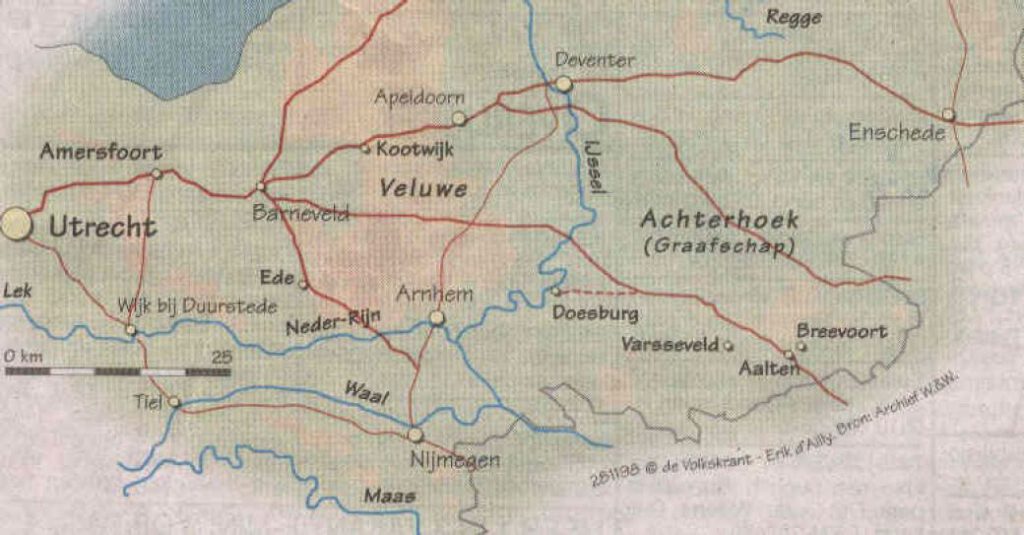
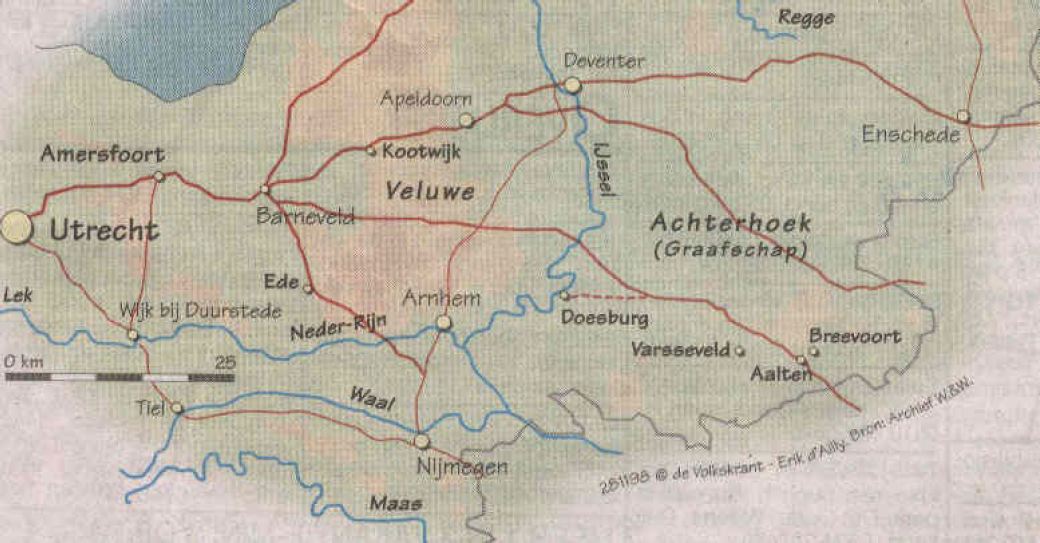
    De Hessenwegen in de Achterhoek en de Veluwe

    For centuries, German merchants traveled through the Achterhoek with their heavy carts via the so-called Hessenwegen: ancient trade routes that connected the region with Germany and the Dutch trading cities. One of these roads ran from Bocholt via Aalten towards Zutphen and Doesburg. The Hessenwegen were of great importance for early modern trade in this region.

    The term Hessenweg has been used since the 17th century. The traditional explanation refers to the merchants who came from the Landgraviate of Hesse-Kassel and the surrounding area. Within etymology, however, the name is explained differently: it is said to be a corruption of hers, meaning horse. These roads usually ran over high, dry sandy soils and along ridges.

    Four major Hessenwegen ran through the Achterhoek. Three of them followed a northern route, from Vreden and Ammeloe via Groenlo, Rekken, and Neede, among others, to Deventer or Zutphen.

    In the southern Achterhoek, a Hessenweg ran past Aalten. From Bocholt, this route crossed the current border at the Kesenbulte and continued via the Bodendijk, Dijkstraat, Landstraat, Berkenhovestraat, and the Romienendiek to De Radstake. From there, the road continued past Zutphen and Barneveld, with a branch between Halle and Zelhem towards Doesburg.
    From the IJssel cities, the Hessenwegen crossed the Veluwe, converged in the Gooi, and continued to Amsterdam. The Hessenwegen had numerous branches. One of these ran near Aalten from the Romienendiek, via the Koningsweg, Hessenweg, past the Walfort, via Bredevoort and Winterswijk to Vreden.

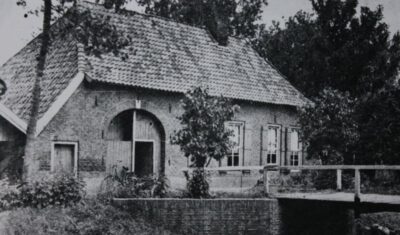
    The Hessians stayed overnight in inns along the road, such as De Radstake and the Slikkertap. In Aalten, there were lodgings such as De Leeuw, De Roskam, De Landman, and Stad Munster. In Bredevoort, De Zwaan and, just outside the town, De Leste Stuver were well-known stopping places.

    Hessenkeerls

    For those living along a Hessenweg in the 19th century, the arrival of the Hessenkeerls was quite an event. On the windward side of the procession walked men with heavy clubs, dressed in their characteristic blue Hessenkiel: a shirt of fine linen, closed with copper hooks in the shape of lion heads and three small bone buttons. Decorated facings were applied to the chest and shoulders.

    On the road, donkeys trudged through the loose sand, with a basket of woven willow twigs full of merchandise on either side. Once they arrived in a village, the men tied their donkeys near an inn or on the village square. The animals were fed and watered, while the men refreshed themselves at the village pump.

    Afterward, the baskets were opened and the Hessians went from house to house peddling. Their merchandise included light glassware and soft straw hats. These hats were in high demand: as soon as the Hessians arrived, customers were already waiting for them to buy a new summer hat. The hats were elastic and therefore almost always fit. After a few hours, the Hessians moved on.

    Pottenkeerls, musicians, and hannekemaaiers

    In addition to the Hessenkeerls, pottenkeerls also appeared on the Hessenwegen. They used heavy covered wagons that stood high on their wheels, the so-called Hessenkaoren, pulled by sturdy Holsteiner horses. The carts were full of Cologne pottery: gray or yellow-brown pots with blue decoration. The horses wore richly decorated harnesses, fitted and hung with copper decorations, so that their arrival could be heard from afar.
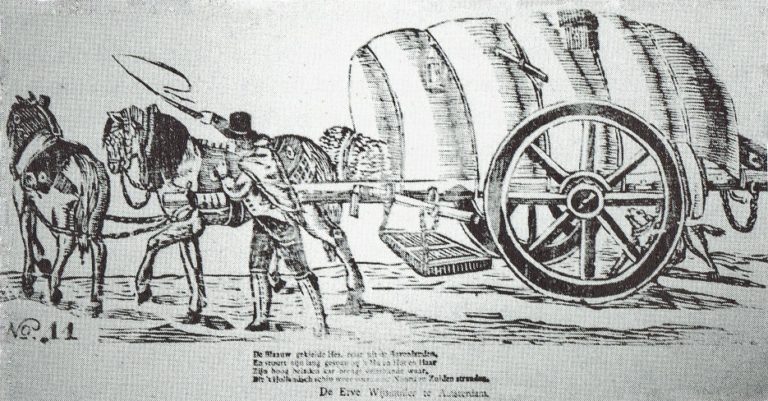
    An image of a carter with his Hessenkar from around 1830, from the Popular Prints collection of Museum ‘t Oude Slot in Veldhoven, with the text:

    The blue-smocked Hessian travels from the Uplands,
    And guides his long team with ‘Hu’ and ‘Hot’ and ‘Haar’.
    His high-laden cart brings many kinds of wares,
    Which the Dutch ship carries again to North and South shores.

    In the spring, groups of German musicians traveled over the Hessenwegen to the Netherlands. Some bands were very well known in Amsterdam, Rotterdam, and The Hague. Although they presumably came from the same region, they were not called Hessians because they did not wear the Hessenkiel.

    In addition, the hannekemaaiers came by in the summer: seasonal workers from Westphalia who helped in Holland with mowing grass and during the harvest. Women and children stayed behind at home to work on the land, while the men earned money elsewhere for the winter.

    The end of the Hessenwegen

    In the course of the 19th century, the significance of the Hessenwegen declined. In 1875, the last Hessians were seen near Zelhem, a meager group compared to former times. The Franco-Prussian War of 1870 and the subsequent industrial boom in the Ruhr area provided the Germans with a livelihood closer to home. Even many young people from the Achterhoek went that way to earn good money. With that, the Hessenwegen had had their day.

    Older origins

    Although the term Hessenweg was used from the 17th century, archaeological finds along these roads indicate that they had been in use for much longer. For example, in Aalten, at De Hoven near the Landstraat, traces of an 8th-century settlement have been found, including remains of sunken-floor huts, refuse pits, and spindle whorls. This is a strong indication that the later Hessenwegen built upon much older traffic routes, the so-called volkerenwegen (peoples’ roads).

    It is therefore logical to assume that the village of Aalten partly owes its origin to this ancient peoples’ road. De Hoven was a favorable spot, because in the middle of the wild landscape of forest, heath, and marshes, there was a hill here, high and dry, directly on a through road. Moreover, a stream flowed at the bottom of the hill, providing fresh water.

    Hessentocht

    The memory of the Hessians still lives on. In 2011, a Hessentocht (Hessian Trek) was organized for the second time in the vicinity of Bredevoort and Aalten. During this trek, in which a historical caravan was simulated, an impressive ox cart took part: 2.60 meters wide, six meters long, and four meters high. In addition, three wagons participated, each pulled by three horses. Jan Oberink captured the trek on film and created the atmospheric impression below.

    Acknowledgements

    The content of this article is largely based on the article by G.J. Klokman (Zelhem, 1864), published in 1937. There are numerous other publications about Hessenwegen that present a different picture on some points. For this article, Klokman’s description was primarily chosen because his memories and observations specifically relate to the Hessenweg near Zelhem, the same route that also ran through Aalten.

    Sources

    1. G.J. Klokman, De Hessenwegen, in: Eigen Volk. Algemeen tijdschrift voor volkskunde (folklore) en dialect, 1937. National Library of the Netherlands
    2. G.J. Klokman, De Achterhoekers, in: De Nederlandse volkskarakters, 1938. DBNL
    3. Wikipedia, Hessenweg
    4. Hummelo.nl, Hessenwegen, Hanzewegen en Koningswegen (RdH004-27-2-2007). Hummelo History
    5. De Veluwenaar, Hessenwegen
    6. Oud Aalten, Traces of 1100-year-old settlement in Aalten
    7. YouTube, Hessentocht travels through the municipality of Aalten, 2011
  • Transformer substations in Aalten

    Transformer substations in Aalten

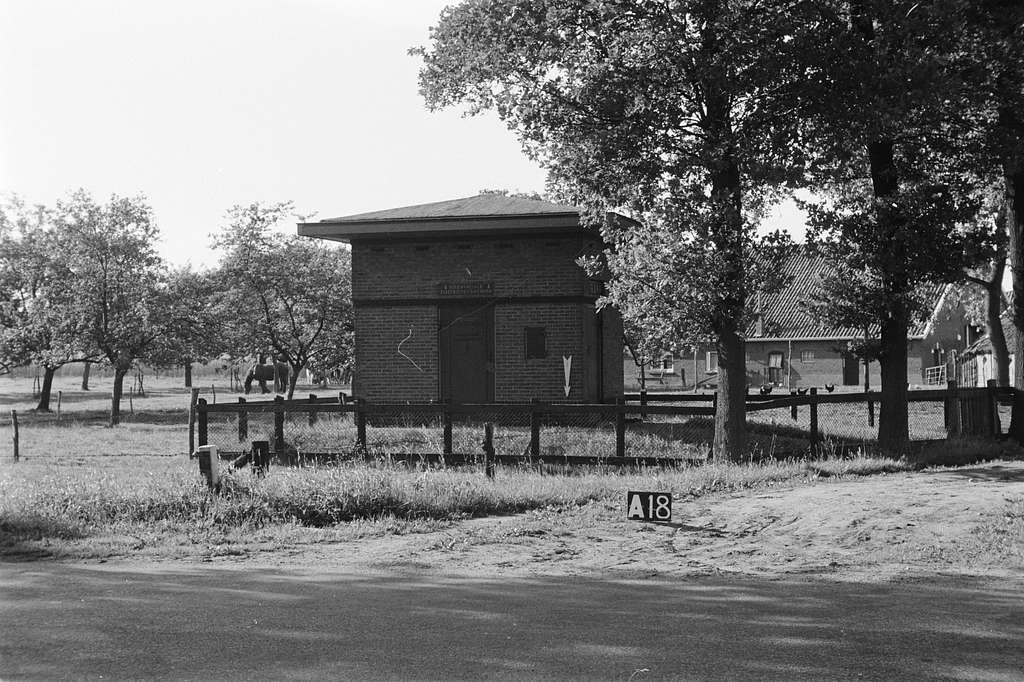
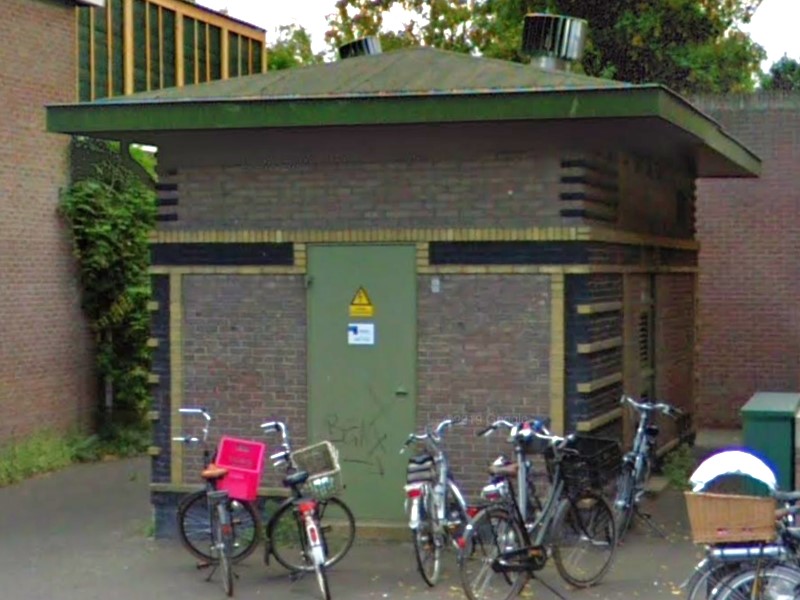
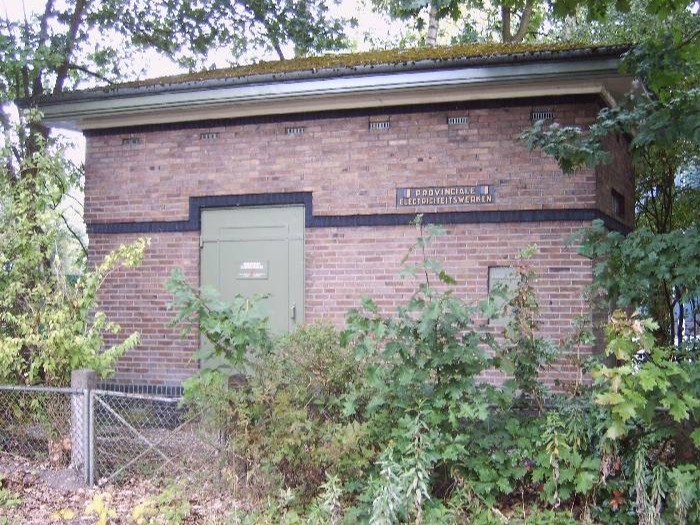
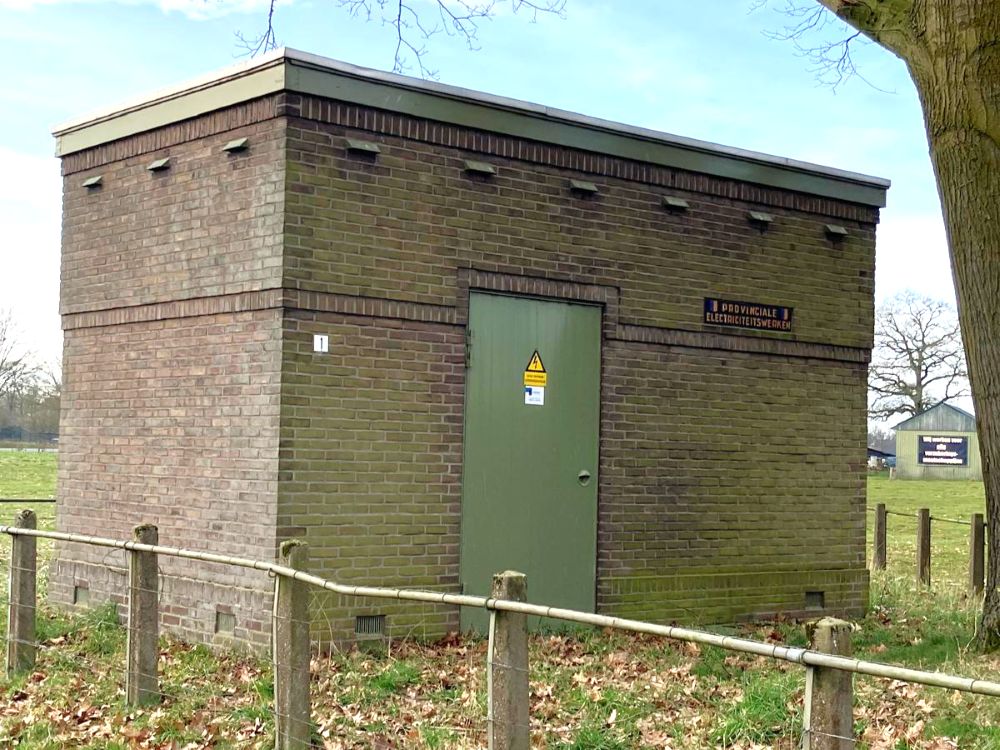
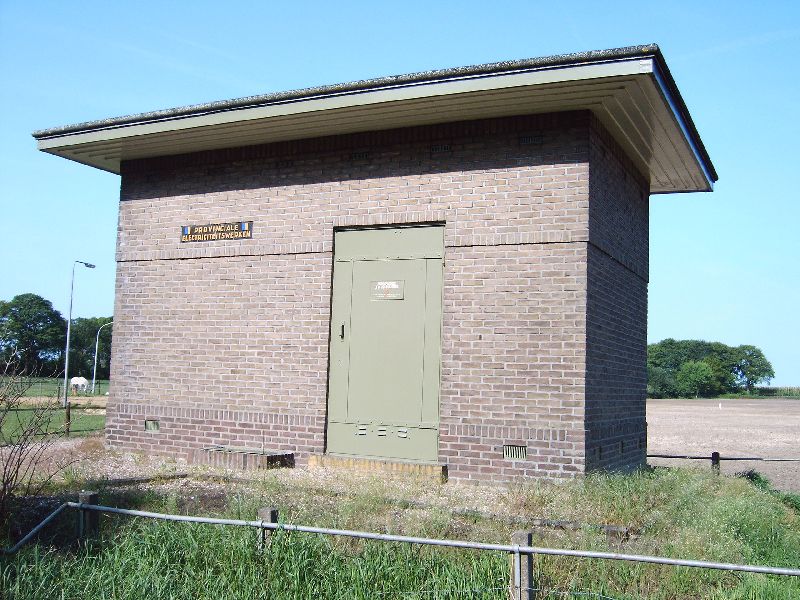
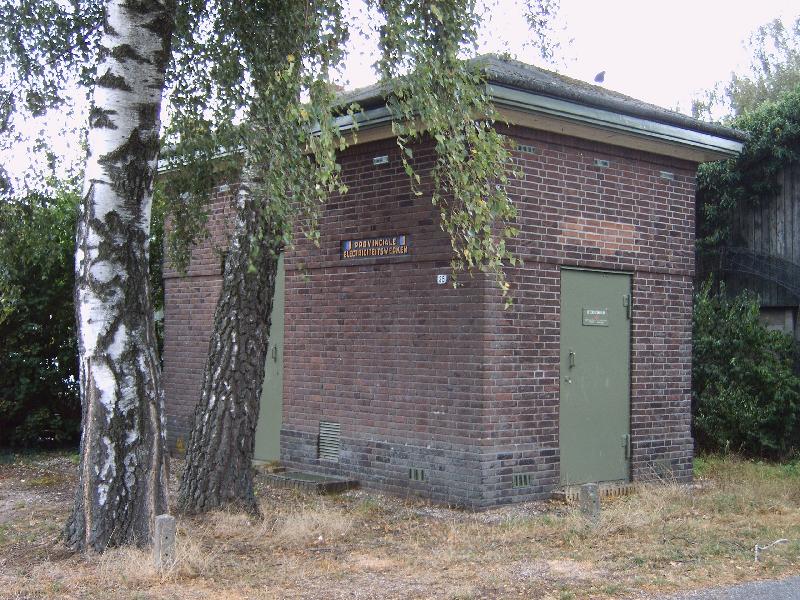
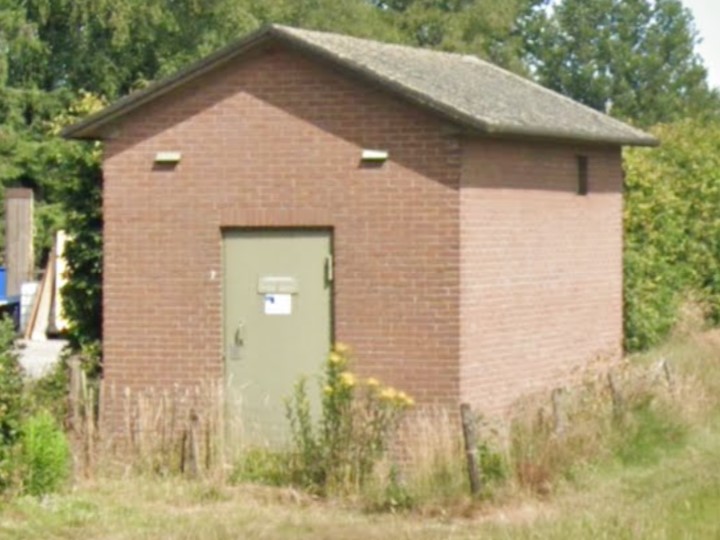
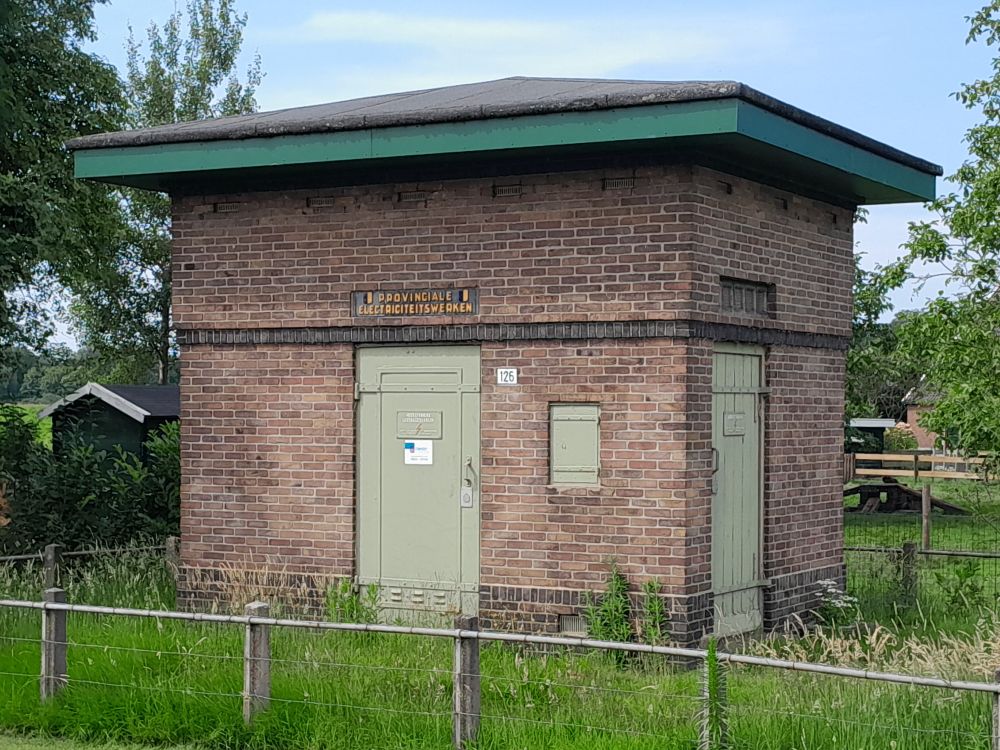
    Dozens of transformer substations, also known as ‘trafohuisjes’, are spread across the municipality of Aalten. These substations are designed to convert (transform) high voltage (10,000 Volts) into a lower voltage (230/400 Volts) that can be used in our homes and businesses.

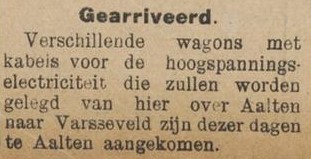
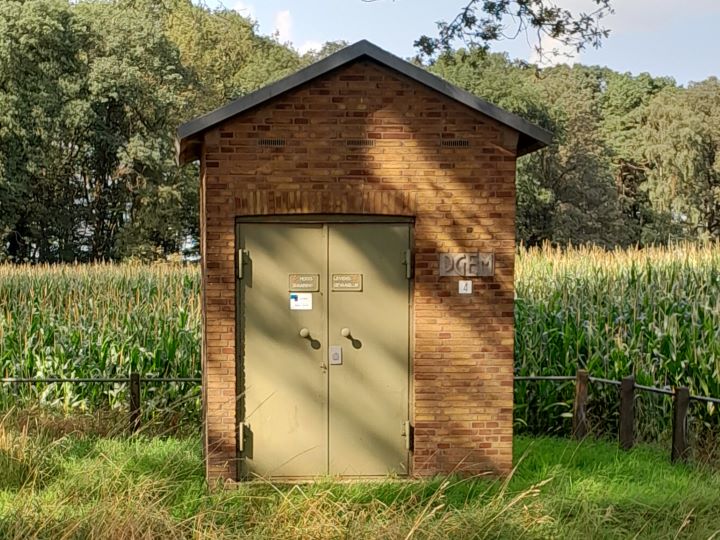
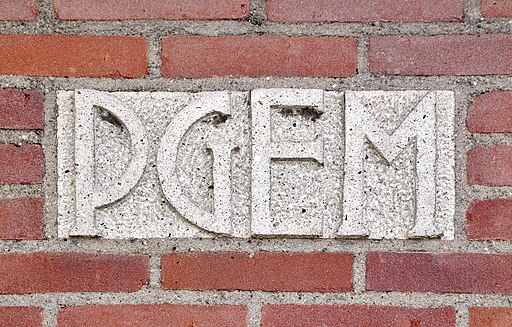
    The first transformer substations were built in the early 1920s by the Provinciale Gelderse Electriciteits Maatschappij (PGEM). In 1994, PGEM merged into Nuon and was split up in 2009. The current grid operator is called Liander.

    Design

    The oldest transformer substations were designed by Gerrit Versteeg (1872-1938), who was the in-house architect of PGEM at the time. They incorporate influences from the Hague School, the Amsterdam School, and Frank Lloyd Wright.

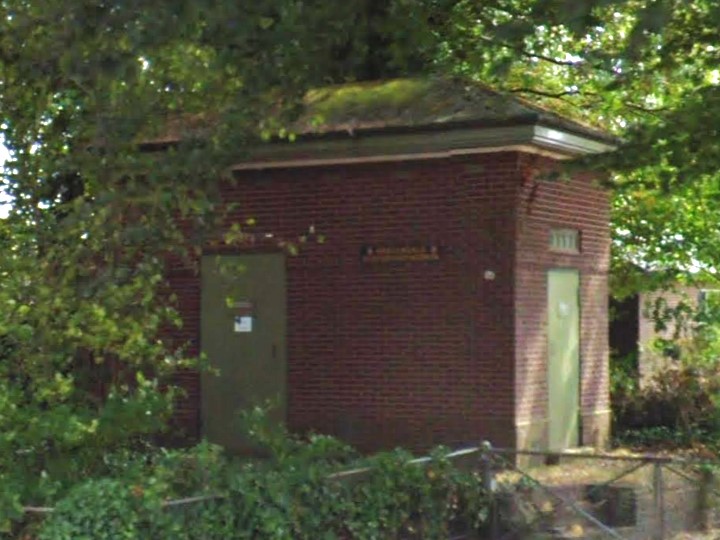
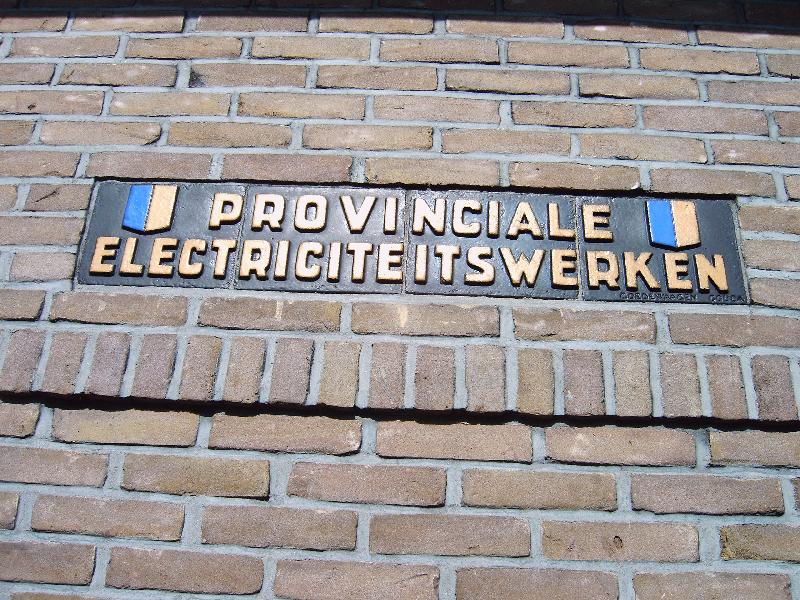
    The buildings are often distinctive brick structures, usually with a rectangular floor plan and a single story with a hip roof, gable roof, or flat roof. The doors are frequently made of green-painted steel. The substations feature an inlaid nameplate made of concrete or tiles (from the Goedewaagen company in Gouda).

    Cultural-historical value

    The older transformer substations have a significant visual value. From a cultural-historical perspective, the buildings commemorate the electrification of the municipality of Aalten. Newer substations (from approximately the early 1980s onwards) usually have a purely functional design and are therefore not of interest from a cultural-historical point of view.

    Many historical transformer substations in the Netherlands have been designated as (municipal) monuments. As of yet, no transformer substation is included on the monument list of the municipality of Aalten.

    List of transformer substations in Aalten

    Below is a list of all transformer substations in the municipality of Aalten, as far as we are aware (April 2025). A number of older substations may be of cultural-historical value and could potentially qualify for protected status. Substations built up to and including 1980 are also displayed on the map.

    AdresKern/BuurtschapBouwjaar
    Admiraal de Ruyterstraat 1 TRAalten1978
    Ambachtsstraat 1 TRAalten1982
    Andromeda 32 TRAalten1972
    Bevrijding 1 TRAalten1977
    Bodendijk 54 TRAalten1975
    Boomkampstraat 1 TRAalten1966
    Bredevoortsestraatweg 65 TRAalten1978
    Bredevoortsestraatweg 94 TRAalten1939
    Bredevoortsestraatweg 118 TRAalten1976
    Broekstraat 17 TRAalten1988
    De Hare 5 TRAalten1981
    Dennenoord 7 TRAalten1970
    Dinxperlosestraatweg 44 TRAalten1964
    Dinxperlosestraatweg 54 TRAalten1980
    Dinxperlosestraatweg 62 TRAalten1971
    Dinxperlosestraatweg 79 TRAalten1930
    Frankenstraat 6 TRAalten1966
    Grevinkweg 2 TRAalten1975
    Grote Maote 170 TRAalten1983
    Haartsestraat 6 TRAalten1923
    Het Verzet 28 TRAalten1981
    Karel Doormanstraat 14 TRAalten1969
    Keizersweg 51 TRAalten1963
    Kemenaweg 50 TRAalten1972
    Koopmanstraat 85 TRAalten1984
    Lage Blik 26 TRAalten1983
    Lage Veld 32 TRAalten1974
    Meiberg 23 TRAalten1960
    Mercurius 5 TRAalten2011
    Mercurius 7 TRAalten1972
    Molenkamp bij 35Aalten1963
    Neptunus 16 TRAalten1972
    Nijverheidsweg 42 TRAalten2011
    Nijverheidsweg 61 TRAalten1985
    Nijverheidsweg 87 TRAalten1966
    Oranjelaan 7 TRAalten1940
    Orion 31 TRAalten1971
    Piet Heinstraat 46 TRAalten1927
    Prinsenstraat 31 TRAalten1966
    Ringweg 19 TRAalten1952
    Rondweg Zuid 1 TRAalten2011
    Stationsstraat 8 TRAalten1974
    ’t Slaa 31 TRAalten1990
    Tramstraat 1 TRAalten1968
    Tubantenstraat 2 TRAalten1971
    Varsseveldsestraatweg 82 TRAalten1965
    Vierde Broekdijk 19 TRAalten1997
    Vlierbeslaan 22 TRAalten1979
    Vondelstraat 11 TRAalten1968
    Barloseweg 6 TRBarlo1977
    Lichtenvoordsestraatweg 83 TRBarlo1934
    ’t Villeken 9 TRBarlo1952
    Bekendijk 12 TRBredevoort2011
    Izermanstraat 2 TRBredevoort1972
    Kleine Gracht 1 TRBredevoort1950
    Landstraat 1 TRBredevoort1952
    Prins Mauritsstraat 13 TRBredevoort1925
    Stadsbroek 71 TRBredevoort1994
    Boterdijk 7 TRDale1970
    Romienendiek 7 TRDale2018
    Buninkdijk 4Haart1967
    Griesdijk 2Heurne1960
    Hondorpweg 7 TRHeurne1967
    Dinxperlosestraatweg 102 TRIJzerlo1966
    Dinxperlosestraatweg 122IJzerlo1970
    Klokkemakersweg bij 1IJzerlo1980
    Kruisdijk 35 TRIJzerlo1940
    Gendringseweg 4Lintelo1980
    Gendringseweg 23 TRLintelo1950
    Heuvelweg 1 TRLintelo1933
    Kolenbroekweg 1Lintelo1950
    Schooldijk 7 TRLintelo1950
    Sondernweg 21 TRLintelo1952
    Varsseveldsestraatweg 126 TRLintelo1931
    Brussendijk 2 TRDe Heurne1939
    Caspersstraat 10 TRDe Heurne1965
    Giebinkslat 6 TRDe Heurne1966
    Lage Heurnseweg 29 TRDe Heurne1980
    Aaldersbeeklaan 53 TRDinxperlo1970
    Aaldershuuslaan 2 TRDinxperlo1972
    Aaldershuuslaan 56 TRDinxperlo2011
    Aaltenseweg 61 TRDinxperlo1973
    Alfred Mozerhof 7 TRDinxperlo1966
    Anholtseweg 6 TRDinxperlo1952
    Anholtseweg 38 TRDinxperlo1993
    Beggelderdijk 16 TRDinxperlo2011
    Bernard IJzerdraatstraat 30 TRDinxperlo1973
    De Klumpender 10 TRDinxperlo1982
    De Maten 9 TRDinxperlo1979
    De Ruiterij 20 TRDinxperlo1975
    Ds. van Dijkstraat 15 TRDinxperlo1968
    Europastraat 2 TRDinxperlo1971
    Helmkamp 25 TRDinxperlo1988
    Het Slat 5 TRDinxperlo1966
    Hogestraat 32 TRDinxperlo1950
    Industriestraat 1 TRDinxperlo1951
    Industriestraat 3 TRDinxperlo1958
    Industriestraat 8 TRDinxperlo1957
    Industriestraat 12 TRDinxperlo1978
    Julianastraat 43 TRDinxperlo1966
    Keminksweide 68 TRDinxperlo1972
    Kerkhofplein 3 TRDinxperlo1939
    Keupenstraat 17 TRDinxperlo1972
    Meniststraat 7 TRDinxperlo1971
    Nassaustraat 20 TRDinxperlo1970
    Nieuwstraat 8 TRDinxperlo1980
    Nieuwstraat 52 TRDinxperlo1979
    Terborgseweg 94 TRDinxperlo1970
    Welinkweg 39 TRDinxperlo1957
    Weversstraat 3 TRDinxperlo1939
  • Tram line Lichtenvoorde–Bocholt

    Tram line Lichtenvoorde–Bocholt

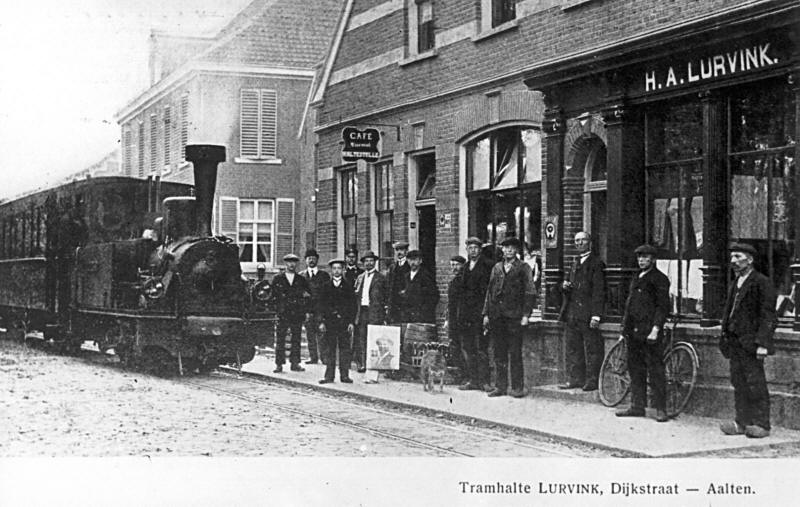
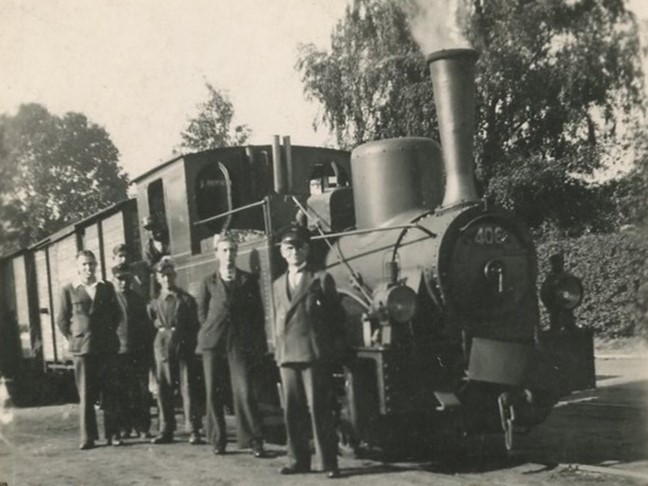
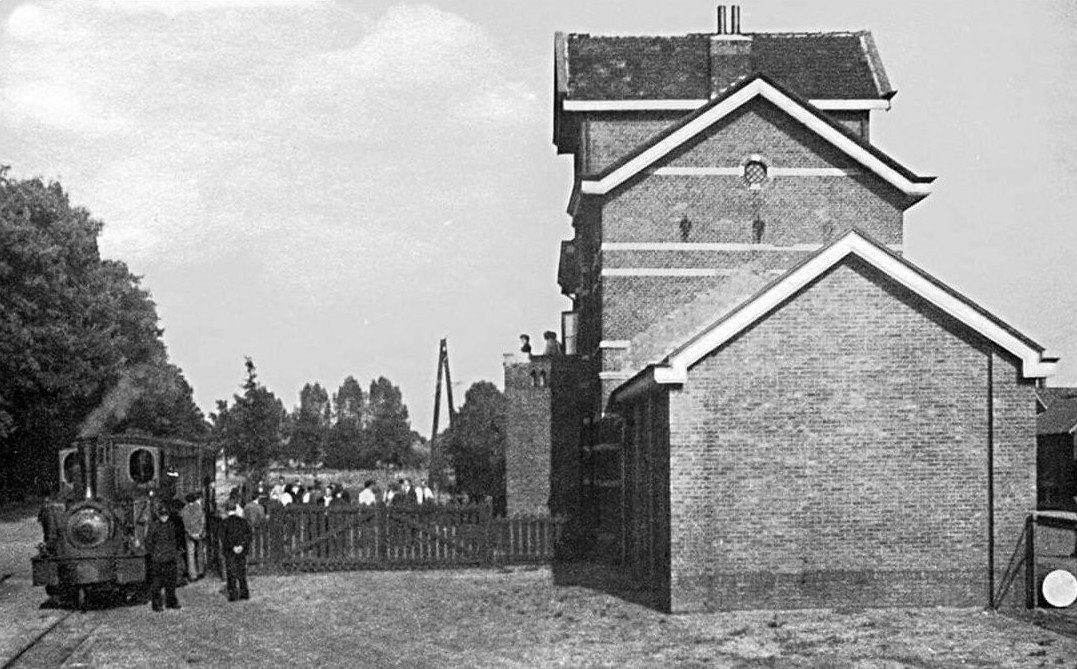
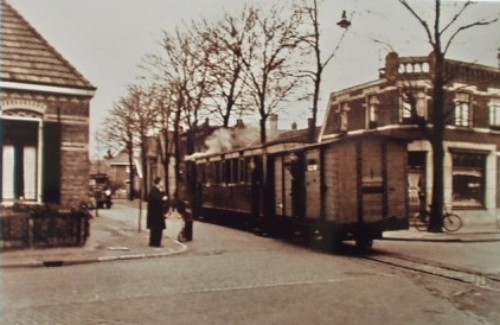
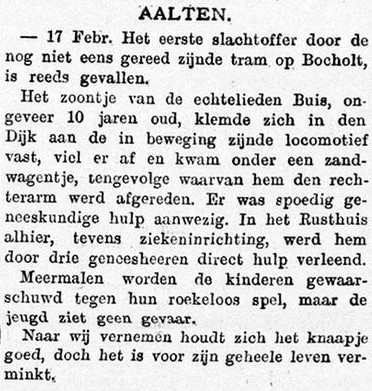
    In 1910, a tram line was opened from Lichtenvoorde to Bocholt, via Bredevoort and Aalten. In 1953, the tram line was discontinued and the tracks were broken up.

    Around the turn of the 20th century, hundreds of Aalten residents crossed the border every day to work in one of the textile factories in the neighbouring German city of Bocholt. In all weathers, they travelled on foot, by bicycle, or by horse and carriage. Some took up to three hours to cover the (roughly) ten kilometres between home and work, both in the morning and in the evening!

    Plans

    As early as 1880, there were plans to extend the Lichtenvoorde–Groenlo tram line to Aalten, Varsseveld, and Terborg. By 1893, there were plans for a horse-drawn tram line from Groenlo to Lichtenvoorde, Bredevoort, Aalten, and Dinxperlo/Bocholt. In 1899, the final plan was eventually drawn up for two steam tram lines: from the Lichtenvoorde-Groenlo station to Zeddam and to Bocholt. To this end, the Geldersch-Westfaalsche Stoomtram-Maatschappij (GWSM) was established in 1905, with its head office in Lichtenvoorde.

    The Bocholter Volksblatt wrote on 1 October 1907:

    Holländische Arbeiter in Bocholt

    “Yesterday evening, a local citizen on his way back from Aalten to Bocholt, as he informs us as a loyal subscriber, took the pleasure of counting the workers returning by bicycle from Bocholt to the border. On his way from the Kreuzkapelle to the Holtwicker Bach, he counted no fewer than 276 cyclists; he also encountered a large wagon which was also transporting workers, estimated at perhaps 40–50. In this respect, therefore, the Bocholt–Aalten light railway certainly does not have such bad prospects for ridership, especially since there will undoubtedly be many more workers who wish to come here for work.”

    A year later, on 4 November 1908, the same newspaper wrote:

    Dampfeisenbahn Bocholt–Aalten

    “After long negotiations, the Bocholt manufacturers and other interested parties have finally succeeded, through the subscription of large sums of money, in ensuring that the Bocholt–Aalten light railway is now being built. It has now been entered into the commercial register of the local district court under Geldersch-Westfälische Dampfeisenbahn-Gesellschaft AG in Lichtenvoorde in the Kingdom of the Netherlands, with a branch office in Bocholt. Hundreds of Dutch workers are employed in the local factories, who have had to cover the approximately 3-hour journey to Holland on foot or by bicycle, every morning and evening, in wind and weather. Construction of the railway will be commenced immediately.”

    Festive Opening

    In 1909, construction of the tram line began. However, the work suffered significant delays as a result of a major flood near Bredevoort that year. Finally, the tram line was festively opened on 29 April 1910.

    It soon became apparent that only the Aalten–Bocholt section was a successful part of the GWSM. However, due to the outbreak of World War I, the border crossing was closed, making it impossible for transport to continue from Aalten to Bocholt. When this route was resumed in 1915, there were far fewer passengers than before, and it was therefore shut down completely in 1916.

    From the 1920s onwards, passenger services between Aalten and Lichtenvoorde were largely operated by motor trams. This continued until 1933, when buses from the Veldhuis company began operating. After the 1930s, only freight transport proved successful (with the exception of the Aalten–Bocholt section).

    In 1953, the tram line came to an end and the rails were broken up.

    Features


    FunctionTram line
    Opening1910
    Discontinuation1953

    Sources


    Stops

    Below is a list of stops between Lichtenvoorde and Bocholt that were located within the municipality of Aalten (click here for a list of all stops):