Bredevoortsestraatweg 109, Aalten (no longer extant)
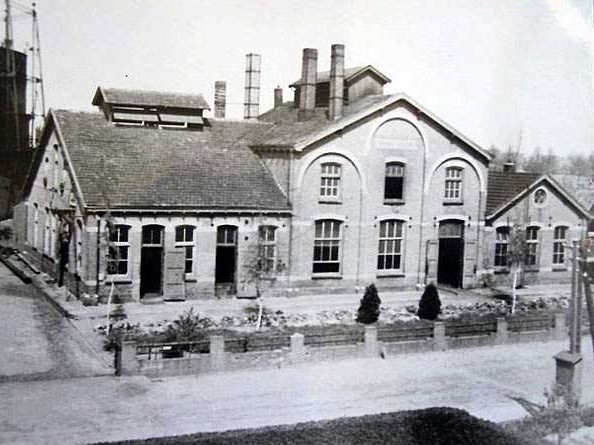
At the beginning of the twentieth century, there was a growing demand for modern energy supplies in the Netherlands. Until then, many households and businesses relied on oil and paraffin lamps for lighting, and on wood or coal for heating and cooking. Gas lighting was seen as a major advancement.
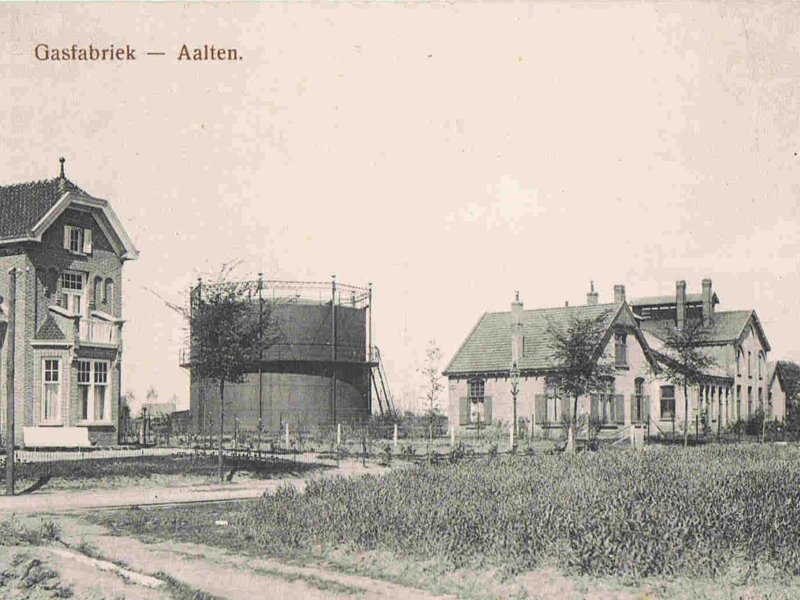
As in many other places, it was decided to build a gasworks in Aalten to provide households, businesses, and street lighting with gas. The arrival of the plant marked a significant step in the modernisation of local infrastructure, though it also brought its share of challenges.
The Production Process
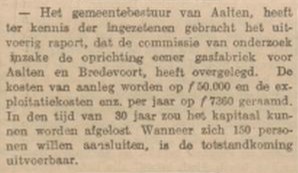
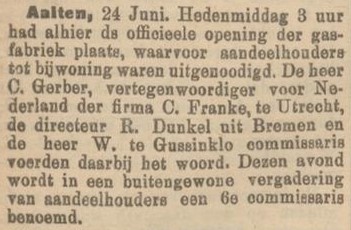
In 1905, the decision was made to build a ‘coal gas plant’ in Aalten. Two years later, in 1907, it was put into operation. The plant produced gas through the dry distillation of coal. This process involved heating coal in the absence of oxygen, releasing gas that could be captured for distribution.
The raw gas contained various impurities, such as tar, ammonia, and sulphur compounds. These were removed through condensation and chemical purification. The purified gas was then stored in a large gas holder (gasometer) and guided through a network of underground pipes to homes and businesses, where it was used for lighting, cooking, and heating.
Installation of the Gas Grid
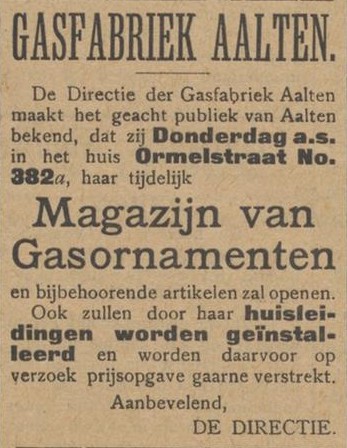
The installation of the gas grid caused considerable disruption. Streets frequently had to be dug up to lay the pipes, leading to many complaints from residents.
Until the end of 1908, people complained about the poor state of the roads and the inconvenience caused by the works. Nevertheless, the use of gas quickly became popular, and the gasworks grew into an essential utility within the municipality.
In 1919, the municipality of Aalten took over the gasworks for a sum of ƒ 115,000, plus ƒ 29,602.87 for infrastructure such as piping and gas meters.
Gas Tokens
Until the 1950s, some households had a gas meter that operated with special gas tokens. This system, intended to prevent payment arrears, was also used in Winterswijk. The Aalten gas token was a zinc coin with a value of 10 cents. When the gas ran out, a new token had to be inserted into the meter.
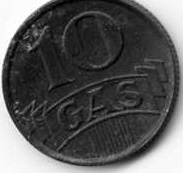
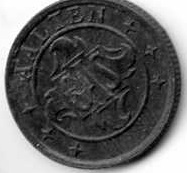
With the arrival of the geyser (water heater), this system fell into disuse. The pilot light of these appliances had to burn continuously, which was not permitted in combination with a coin meter. Around 1955–1958, gas tokens disappeared completely, partly due to the introduction of the national natural gas grid.
The End of the Gasworks
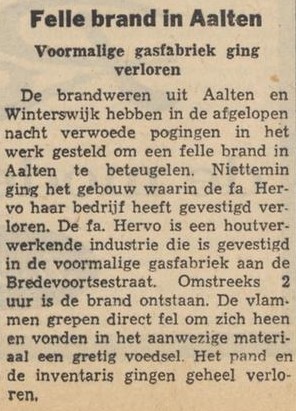
The discovery of the natural gas field in Slochteren marked the end of local gasworks, including the one in Aalten. The building subsequently served various temporary functions, such as a technical school and later a furniture factory (Fa. Hervo), until the premises were destroyed by fire in 1964.
After its closure, the soil was found to be severely contaminated with hazardous substances such as sulphur and cyanide. The remediation of the site was only fully completed decades later, in 2009.
Tram Stop
There used to be a tram stop at the gasworks on the Lichtenvoorde-Bocholt line.
Owners
Overview is incomplete.
| Year | Plot | Owner | Description |
|---|---|---|---|
| m² |
Archives
Address directory 1934
Aalten C429 > Bredevoortschestraat 109
Gasworks
Features
| Cadastral no. | I-12882/13058 |
| Function | Gasworks |
| Year of construction | 1907 |
| Destroyed by fire | 1964 |
Sources
- Aalten Vooruit
- Address directory Aalten (1934)
- Dagblad Tubantia, 7 August 1964
- Graafschapbode, 8 March 1935 (Delpher)
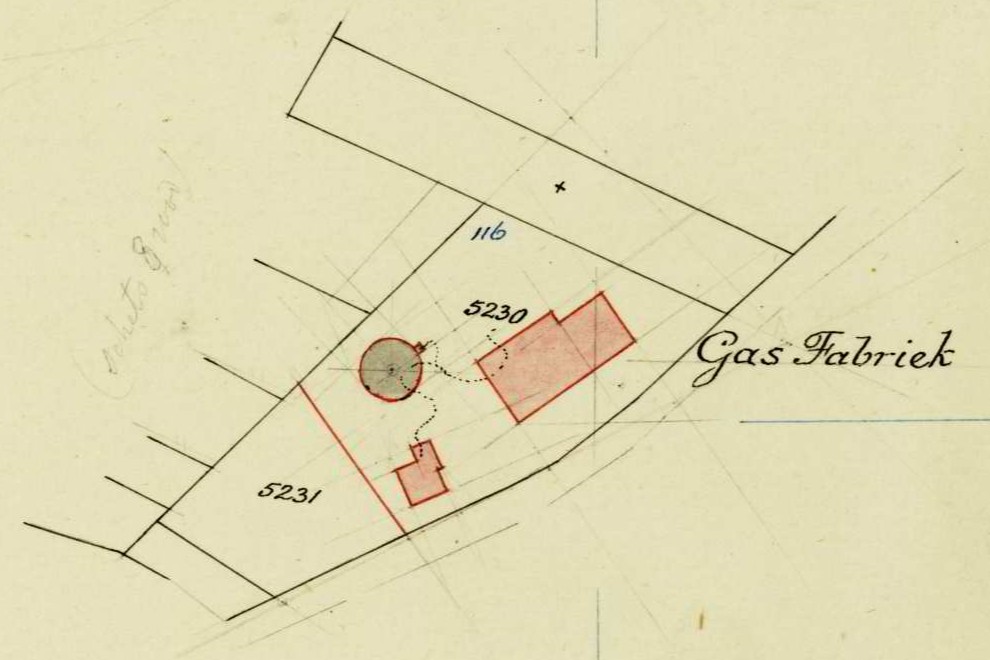
- Cadastral map
- Wikipedia