Hofstraat 12, Aalten

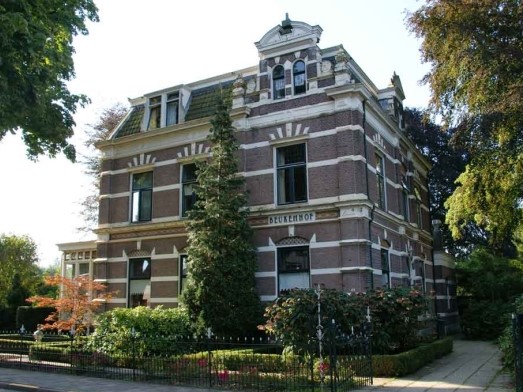
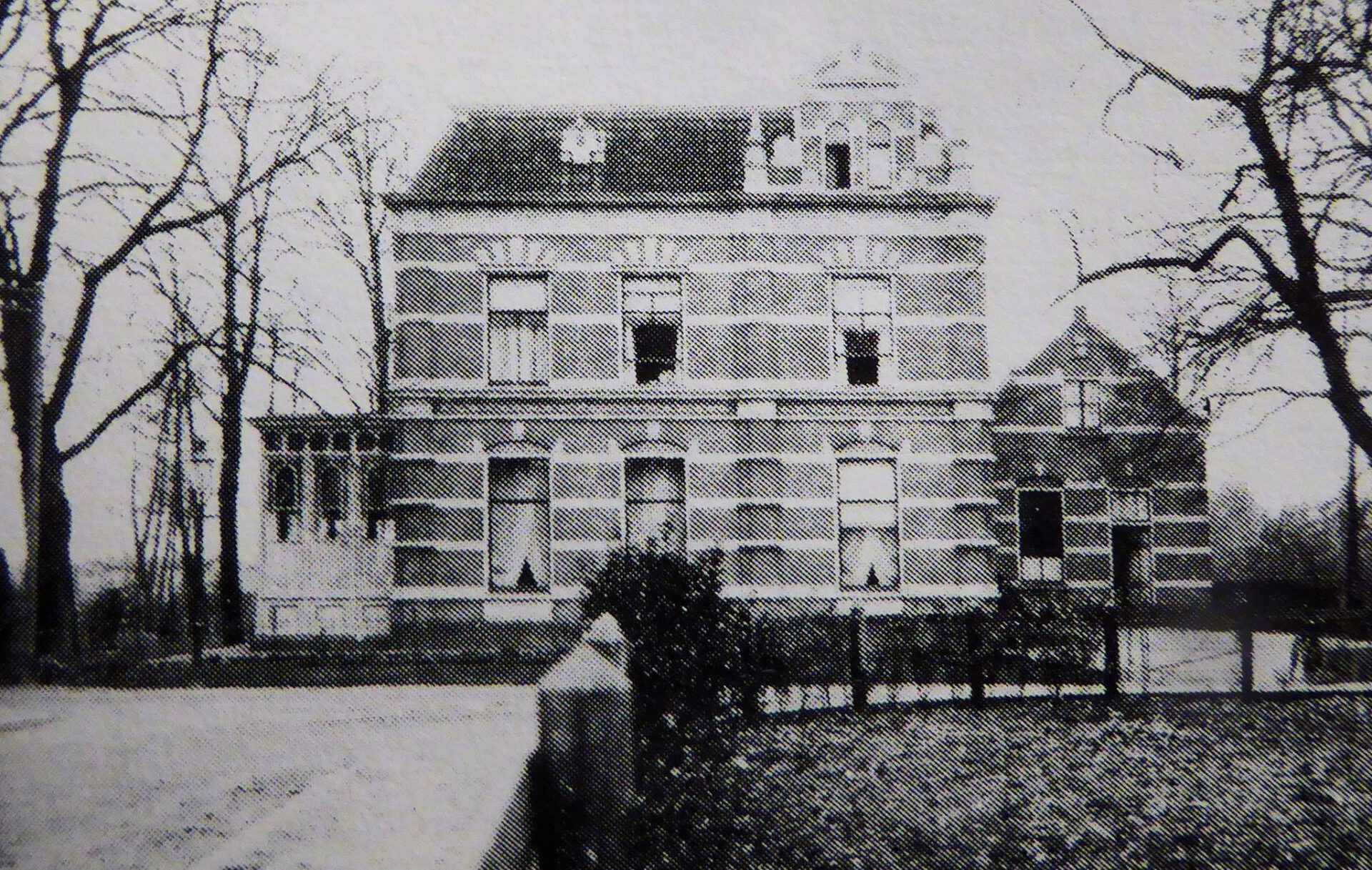
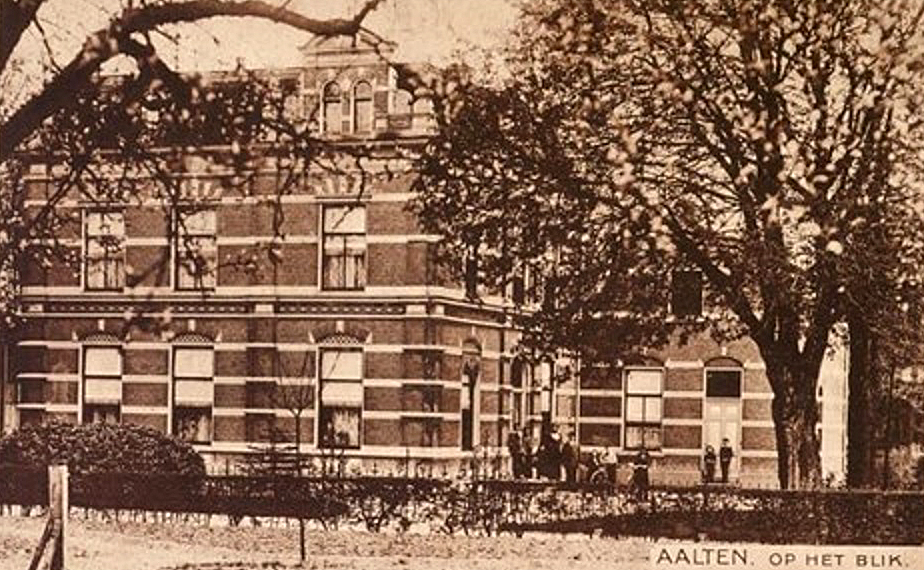
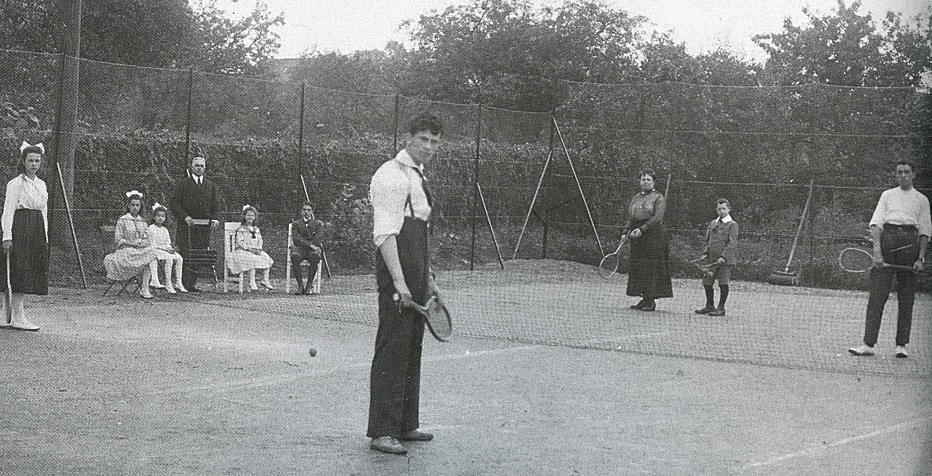
This director’s villa was built in 1893–1894 by textile manufacturer Herman Driessen, concurrently with the former steam weaving mill situated next door. In later years, the stately villa served as a foster home for Estinea for a long time. Behind the house once lay what was likely the first tennis court in Aalten.
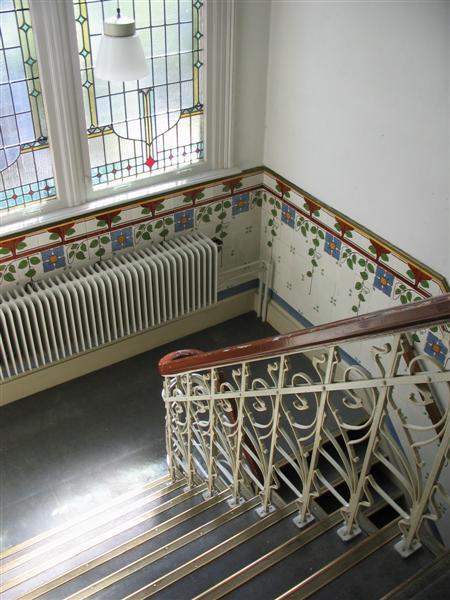
The villa is constructed in a Neo-Renaissance style and features 10 bedrooms across the first and second floors. It is a national monument and retains many monumental details, including a very fine staircase with original Art Nouveau-patterned tiles and various original stained-glass windows. This characteristic property is currently in private hands and is undergoing restoration.
In 2015, Jalf Flach wrote to Oud Aalten:
“I recently rediscovered a text I wrote 25 years ago following an interview with Mrs Bella Driessen. In 1893, the Hofstraat was still called ‘Het Blik’, and in that year, a steam weaving mill and a house were erected there, which would be occupied by members of the Driessen family for the next 75 years. It was not until 1953 that the house was named ‘Beukenhof’ by one of its residents. But by then, the house already had an eventful history behind it.
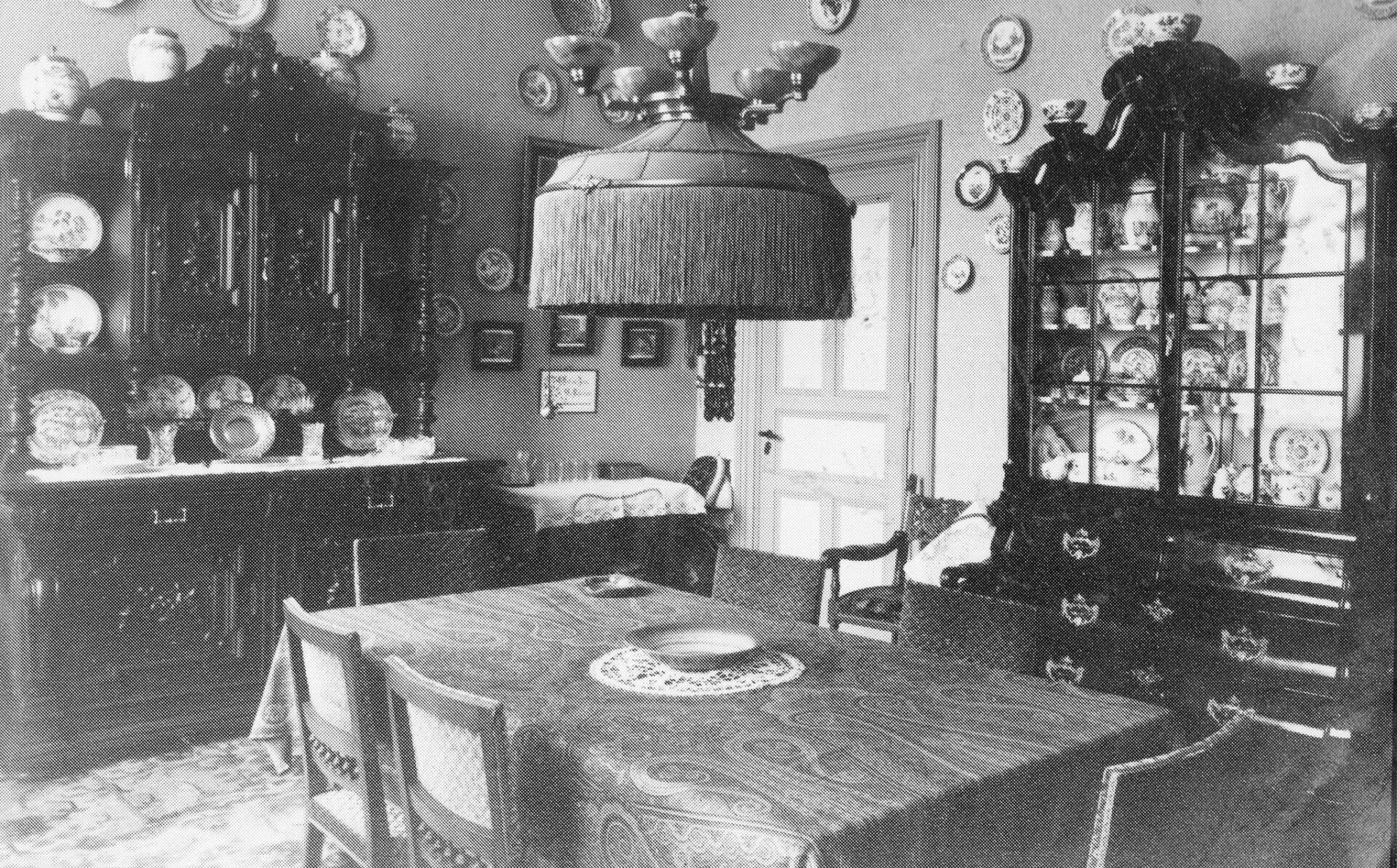
Bella Driessen lived in the house from her early childhood until 1969, when the factory closed and the house changed hands. That is a period of over 60 years. In those days, the Beukenhof was a true patrician residence, as is evident from the interior photograph she kindly lent me. In later years, she occupied the small house that had been built onto the main building, which, much to her sorrow, was demolished in 1976 when the house was converted into a foster home. That brought an end to what was colloquially and irreverently referred to as ‘Bella’s pimple’.
Mrs Driessen’s stories about the war years were fascinating. There were a couple of magnificent stained-glass windows in the stairwell. One depicted the weir on the Smees, and the other, the cathedral of Malmédy, from where her mother originated. After a German soldier had first shot through them because of a breach of blackout regulations, they were completely destroyed during a bombing raid on Aalten. For the remainder of the war, planks were nailed over them, and the residents, billeted German soldiers, and evacuees had to find their way in the dark.
After the war, simpler stained-glass windows were installed, which still adorn the staircase in an Art Nouveau style today and, together with the beautiful tiles and wrought-iron bannisters, give the building a unique character.”
Owners
Overview is incomplete.
| Year | Plot | Owner | Description |
|---|---|---|---|
| m² |
Residents
Population register 1890-1900
Herman Anton Frans Carel Maria Driessen (Aalten, 22-09-1831), manufacturer
Anna Maria Theodora Mühren (Neuenkirchen/D, 14-10-1840)
Population register 1900-1910
Herman Anton Frans Carel Maria Driessen (Aalten, 22-09-1831), manufacturer
Anna Maria Theodora Mühren (Neuenkirchen/D, 14-10-1840)
Population register 1910-1920
Josephus Walter Julius Driessen (Aalten, 07-01-1870), manufacturer
Maria Anna Elisa Josepha Beckmann (Malmédy, 12-05-1872)
Address directory 1934
D691 > Hofstraat 12
Address directory 1967
Hofstraat 12
Sources