

March 30th, 1945
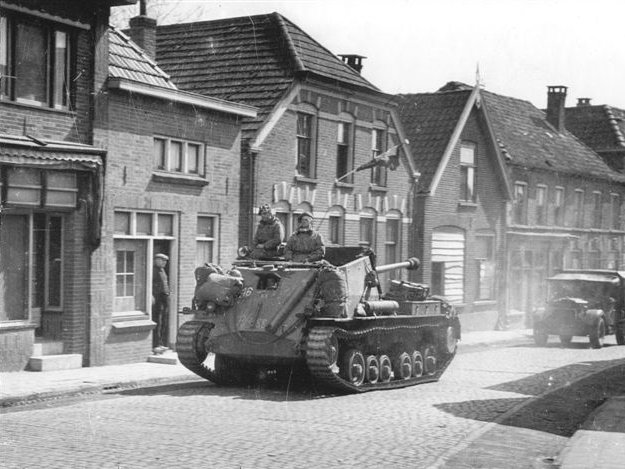
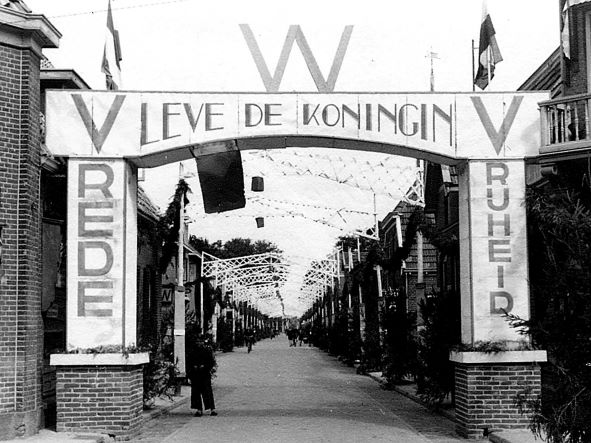
At the end of the Second World War, on Good Friday, March 30, 1945 , Aalten was liberated by British troops. This liberation was part of the large-scale Allied advance through the eastern Netherlands, immediately after crossing the Rhine during Operation Plunder. The liberators belonged to the 1st Battalion Grenadier Guards and the 3rd Battalion Irish Guards, both part of the 32nd Guards Brigade within the Guards Armoured Division of the British Army. 1
Advance to Aalten
At the end of March 1945, the Guards entered the Achterhoek from Germany. The Grenadier Guards formed the vanguard and advanced along the Bocholtsestraatweg towards Aalten and then on to Enschede, with the Irish Guards as mechanized infantry in their wake. 2 The advance was hampered by destroyed bridges, minefields and fierce resistance from retreating German units.
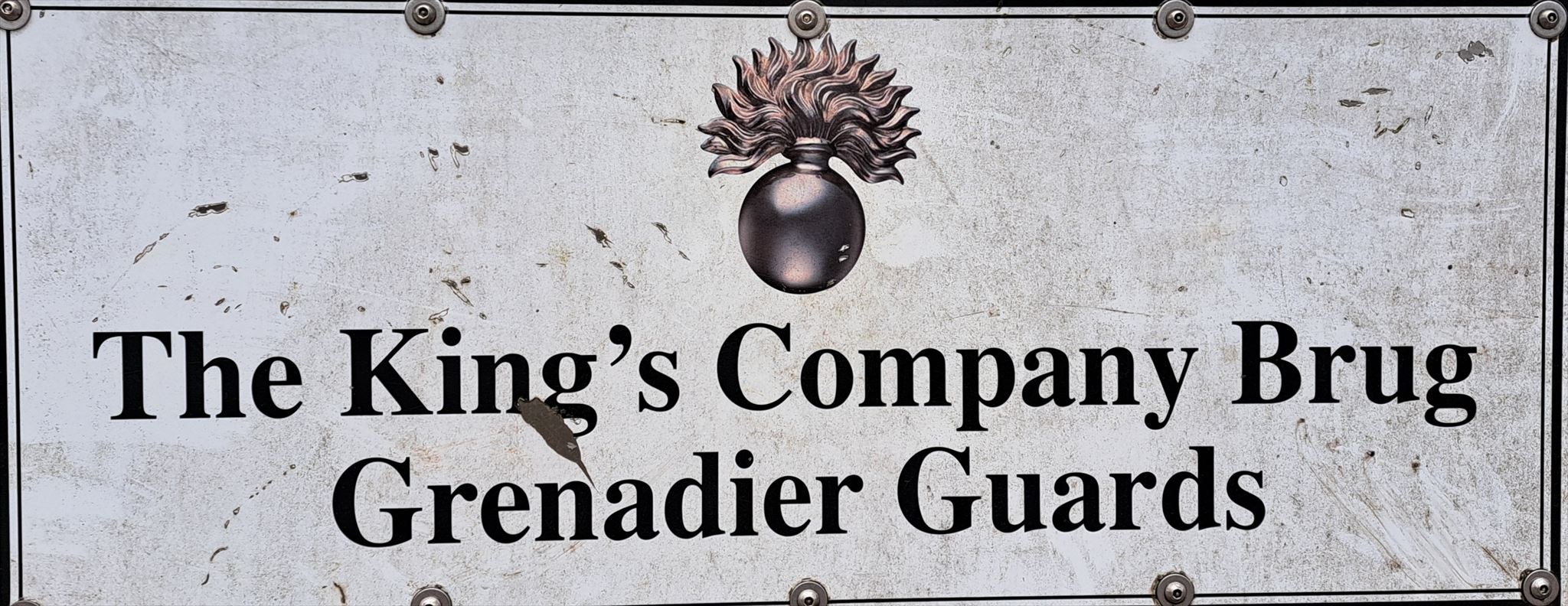
The King’s Company of the Grenadier Guards was ordered to advance towards the centre of Aalten via the so-called ‘centre line’. However, important bridges turned out to have been blown up by the Germans. The bridge on the Bodendijk was partly still intact and Major Baker, commander of the King’s Company, led his men over it. 3
When they arrived at the railway, the men encountered fierce resistance and were bombarded with mortar fire and grenades. The fight with the enemy had disastrous consequences for the liberators: several soldiers were killed, including platoon commander Andrew Duncan. 4
Around midnight, another two soldiers of the Irish Guards were killed because their vehicle hit a mine in the then Dijkstraat (now Plein Zuid). The explosion led to a fierce fire in which the old café Vultink burned down completely. The next day, March 31, 1945, two engineers of the Royal Engineers were killed while clearing mines. 5
Losses and cemetery
Of the total of 13 British soldiers who died, 12 are buried in the Berkenhove general cemetery in Aalten. Platoon commander Andrew Duncan is buried in the Reichswald Forest War Cemetery near Kleve. Thanks to historical research, photos of twelve of these soldiers have now also been found. This literally gave the liberators a face. 6
After the liberation
Immediately after the liberation, the Aaltensche Courant appeared again. Shortly after the liberation on April 4, three boys, eight-year-old Wim Schenk, his six-year-old brother Henk and five-year-old Wim Wisselink found a projectile in a dry ditch on the Bocholtsestraatweg. They decided to test the projectile and threw it against the wall of a house. The three children were killed. 7
In honour of the efforts of the King’s Company, the bridge over the Keizersbeek was named the King’s Company Bridge. The ceremony took place on May 5, 2008 and was attended by, among others, veteran Walter Price, who actually served in this unit in 1945. 8