


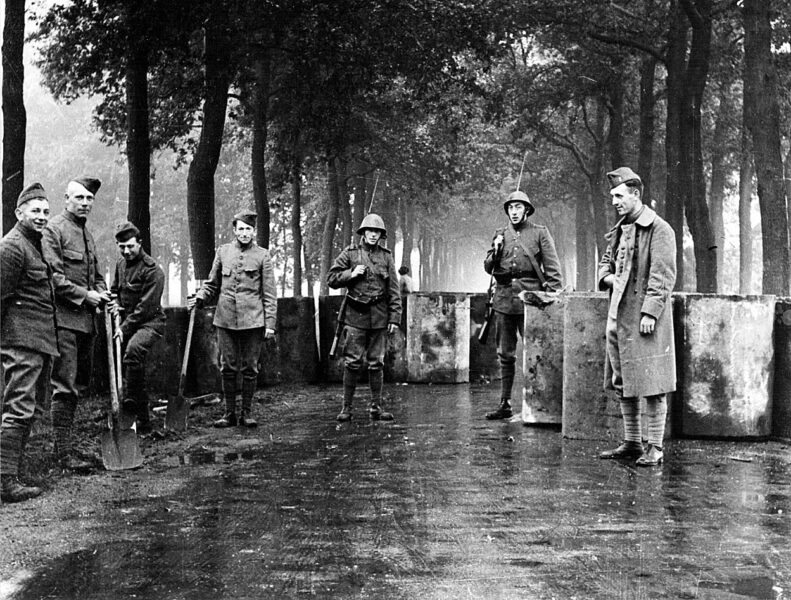
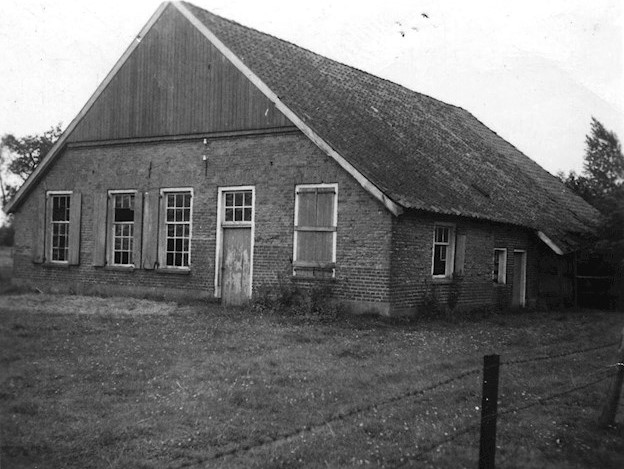
In April 1939, a border guard detachment of 36 men was stationed in Aalten, housed in farms. Sand filled tubes are placed here and there as obstacles. Around 1 September, at the beginning of the Second World War, several hundred residents of Aalten left by train for the various garrison places. On 9 May 1940, the municipal architect was instructed to install barricades on several roads.
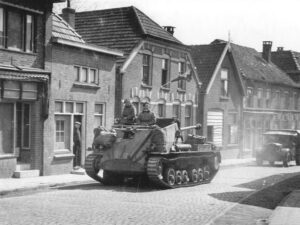
On 10 May, German army units thundered into Aalten. The soldiers stationed around farms offer no resistance. A few days later, Dutch prisoners of war are seen being transported to Germany in open trucks. Four people from Aalten are killed at the Grebbeberg. A group of five hundred returned prisoners of war are enthusiastically welcomed in the party building and then travel on by train.
Two hundred and fifty Rotterdam children stayed here in the summer months. This was also the case in 1941. A lot of (young) people go to work in Germany because it earns well. There is already a lot on the coupon. Food production comes under control, for which Aalten is divided into three districts, each under a local office holder.
People in hiding
In the summer of 1942, the first people in hiding came to Aalten to evade the Arbeidseinsatz. Shortly before, the first group of employees of Dutch Button Works in Bredevoort had themselves photographed neatly in their suits with a view to employment in Germany. A group from the Driessen textile factory is also deployed.
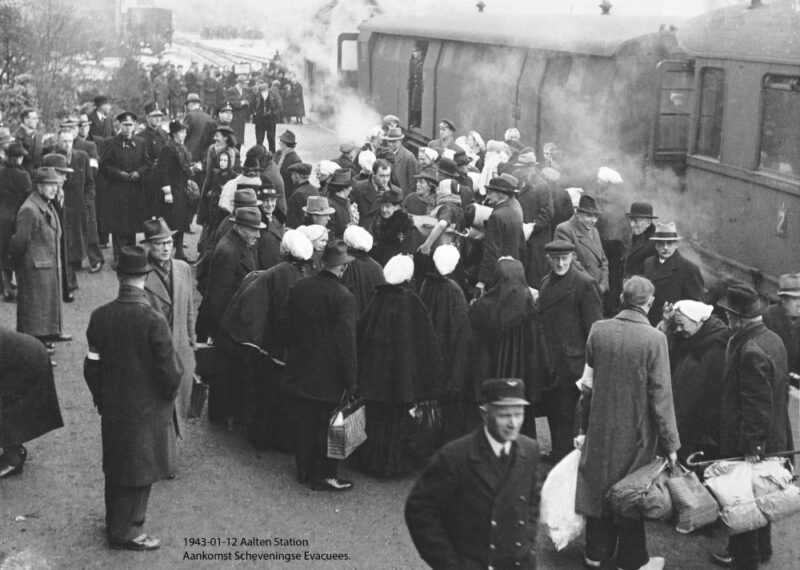
About five hundred Scheveningen evacuees found shelter here in January 1943. Almost all of them belong to the Reformed Church. In Winterswijk there are eight hundred, all Reformed. Once every three weeks a Scheveningen pastor stays here who also leads a church service.
Hostages
The Germans increased the pressure to get men to dig. The most intimidating thing was the detention of 12 hostages on October 18. The next day, 550 men leave for Zevenaar. Ten days later, another seven men are taken hostage and 250 people report. The pastors and R.C. clergy had made an appeal to ‘show mercy and charity towards those who are in immediate danger of death’.
By circular, a representative group of municipal residents insists on a repayment scheme. It will come. A pastor in Zevenaar will be there at all times for support and spiritual care. But there is also a clandestine stencil circulating with the call to ask oneself ‘whether it is responsible to cooperate in the enemy’s defences, as a result of which many more than eleven human lives (…) will soon be lost.’
The last months
A few moments from the last three dark months: Individual food collectors keep coming, but a committee ‘Aid to the West’ also manages to collect a few cartloads of mainly grain. Doctor Der Weduwen succeeds in transferring sick people from camp Rees to the emergency hospital in Avondvrede on the Hogestraat. Serious cases go to the hospital set up in the boys’ boarding school in Harreveld. Der Weduwen is killed when his car is shot at from the air.
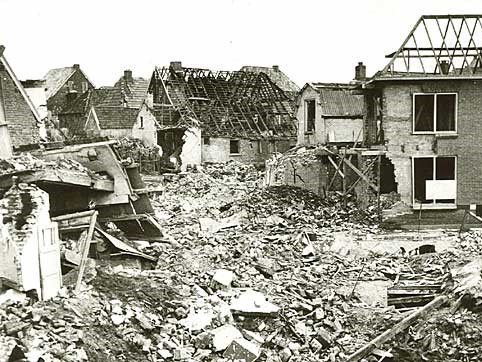
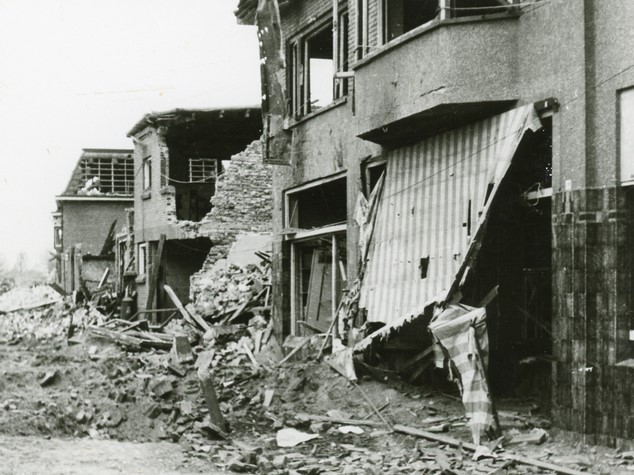
There are deaths in bombing raids on the R.C. church and rectory, on farms between Grevinkweg and Elshoekweg, on the corner of Prinsenstraat/Bredevoortsestraatweg and on 24 March most heavily in a bombing raid aimed at the textile factory Gebr. Driessen and the Aalten Tricotage Factory, eighteen dead. The material damage is great every time.
A drama is taking place around a resistance group that is hiding in the abandoned farm ‘De Bark‘. Close to the door, in ‘Somsenhuus‘, Germans were billeted while seven Allied pilots were in hiding there. The total number of soldiers in Aalten at this time is estimated at about four thousand.
Liberation
In the last days of March, it is clear that the denouement is near. How hard will there be fighting? Many leave the village, others seek protection in their shelter. There were still German soldiers roaming around. Then, on Good Friday, March 30, early in the morning, the English tanks rolled into Aalten from Germany. Here and there, Germans still put up fierce resistance. Ten British were killed on that day, in Barlo seven people were killed in a grenade hit in an air-raid shelter. Sadness and joy, Aalten has been liberated.
Sources
- ‘Aalten in Wartime’, J.G. ter Horst – Messink & Prinsen, 1985, ISBN: 9090008802