


On the early morning of January 12, 1770, the neighbors of the Vosheurne farm in Lintelo were startled by a disturbing report. “The aunt is dead, she is very bloody, she may well have smashed her head,” resident Harmen Brunsink shouted. Extensive forensic investigation by the Court of Bredevoort revealed a story of a family conflict that degenerated into murder and would end with a gruesome execution.
Tensions in the House
Hendersken Tannemaat, born in 1705, had lived on the Vosheurne her entire life. Her niece, Gijsberta Deemshof, born in 1739 in Doesburg as the daughter of Hendersken’s sister Johanna, was raised by her ‘moeje’ (aunt) Hendersken from the age of three. In 1761, Gijsberta married Harmen Brunsink, born in 1729 at the Bekink farm in IJzerlo. After their marriage, Harmen moved in with Gijsberta and her unmarried aunt at the Vosheurne.
Initially, Hendersken lived with the young couple in exchange for board. In June 1768, however, she transferred all her possessions to Harmen and Gijsberta in exchange for room and board and all necessary care for the rest of her life. This was a common arrangement at the time between elderly people and their children—in this case, her niece and husband. Harmen and Gijsberta solemnly promised to fulfill this obligation.
However, the relationship between Harmen and the aunt deteriorated over the years, and tensions arose in the house. The aunt reportedly told Harmen several times that she wanted to undo the agreement “because you treat me so poorly!”
A Mysterious Death
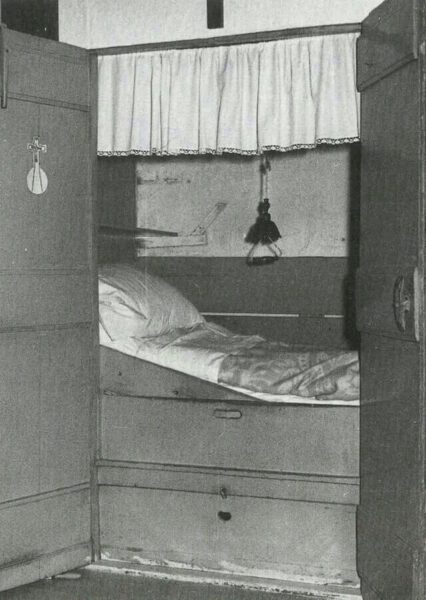
On that fateful morning of January 12, 1770, Harmen frantically gathered the neighbors because the aunt was dead. It was customary in this region for neighbors to be called upon in the event of a death to arrange practical matters, such as the funeral and the ‘verhennekleden’—undressing the deceased and shrouding them in grave clothes. When the neighbor women entered the bedroom, they found Hendersken dead in her box bed, her hands folded over her chest. Her nose and arms were blue, and when her cap fell off, they discovered flour in her hair and blood seeping down her neck.
Gijsberta stated that she had used the flour to staunch the bleeding. Harmen added that the bruises were likely because the aunt suffered from scurvy, and that Hendersken had probably hit her head on the sharp edges of the bed plank. But the story did not add up. The neighbors did not trust it and brought the matter to the attention of the Court of Bredevoort.
The Investigation
Two days after Hendersken’s death, court officials arrived at the Vosheurne with two surgeons. Upon arrival, it appeared the body had already been coffined. In the presence of Harmen and Gijsberta, the surgeons examined the body. They discovered several severe injuries and bruises to the head. The injuries made it clear that an accident was out of the question. Suspicion immediately fell on Harmen and Gijsberta, who lived with Hendersken at the Vosheurne and could not provide a convincing account of what had happened.
Both suspects denied any involvement and claimed they had found Hendersken dead on the floor in front of her box bed that morning. They claimed to have placed her on the bed, sprinkled flour on her head to stop the bleeding, and put on her cap. However, their statements contradicted each other. Harmen had told the neighbors that he had found Hendersken dead in bed, not on the floor.
Voluntarily and without resistance, they went to Aalten, where they were taken into custody for further questioning. When the numerous head wounds were discussed, Harmen stated that these might have been the result of an epileptic seizure. Hendersken supposedly hit her head against the bed plank, the flax comb chair, the small chests, a trunk, or the beer stand. He also suggested that someone from outside the house could have broken in, as the house was in poor condition.
Further Investigation
On January 16, the Court, assisted by a doctor, a surgeon, and a prosecutor, returned to the Vosheurne with the suspects. Hendersken’s bedroom was meticulously examined.
The box bed showed a large bloodstain on the bed plank at the head end, as if the blood had splashed against the plank. But it had no sharp edges, as Harmen had claimed. Due to long-term use, the plank was actually rounded, and no sharp edges were found inside the box bed either. Other furniture in the room—small chests, a trunk, and a flax comb chair—showed no traces of blood. Nothing was found under the box bed either.
The doctor and the surgeon then examined the body even more closely. They stated primarily that there was a slight bruise on the nose, as well as severe bruising on both elbows, arms, and hands, beneath which coagulated, extravasated blood was found. These bruises could only have been caused by an external factor.
Not only on the right side of the head, at the level of the temple, were the external coverings and fleshy parts bruised, wounded, and destroyed down to the bone, but similar bruises and wounds were visible on the left side, albeit to a lesser extent. Two openings or wounds were discovered on the left side of the skull and one on the right, each about the size of a shilling. Upon loosening the external parts, it appeared that the skull had a fracture on the right side and that on the left side, the end of the skull bone was severely bent downwards and partially broken.
After sawing through and removing the skullcap, several ruptures were found. Due to these fractures and bone pressed outwards, the brain, particularly on the left side, was severely damaged. On both sides of the head, especially the left, extravasated blood was present on and under the dura mater and also within the brain itself. Furthermore, all blood vessels were completely filled with blood. This combination of injuries had inevitably caused her death.
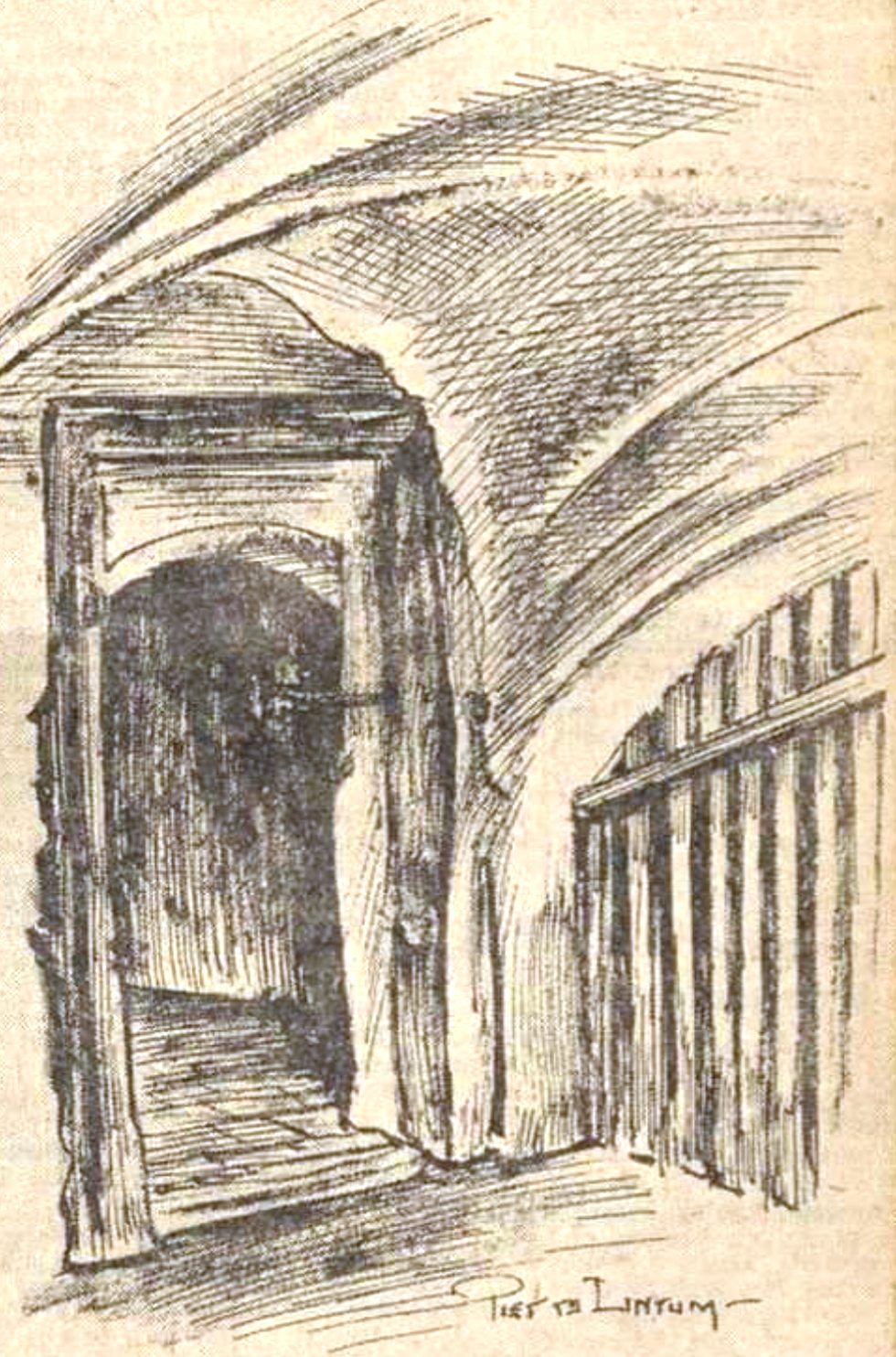
Although the suspects continued to maintain their innocence, the suspicions raised against them were only strengthened by these findings. From the situation on-site and the condition of the corpse, there was no longer any doubt that a murder had been committed. Such a thing could not happen unnoticed in a small cottage like that of the suspects, while they claimed to know nothing. The suspects were then transferred to the prison in the Ambtshuis in Bredevoort.
Harmen’s Confession
During the subsequent interrogations, Harmen and Gijsberta initially stuck to their story: Hendersken had died in an accident. But the evidence against them mounted. On January 19, a week after the murder, Harmen broke under the pressure and confessed what had really happened: He stated that he acted alone, without the help of his wife. He had previously said to his wife in bed: “There lies such a small pebble, I shall strike her five or six times on the head with it, then she will be gone, then the quarreling will be out of the house, then we can live in peace and unity.”
Around four hours before sunrise, he had risen, lit the lamp, went to Hendersken’s room, and hung the lamp on a nail above the box bed. Upon entering the room, the aunt woke up from the light. Thereupon, Harmen jumped into bed with her, sat astride her, held her head with his left hand, and struck her five or six times on the head with the pebble with his right hand, until she lay dead under his hands.
Gijsberta reportedly tried to stop him, but without success. When the aunt was dead and bleeding heavily, he ordered his wife to sprinkle flour on her head and wash off the blood. Afterwards, he called the neighbors. The stone with which he had struck her, he threw into the ditch behind the oven, near the spot where they fetched water.
Statement of Gijsberta
Gijsberta made her confession on January 20 and 22. She stated regarding her unhappy marriage: “Oh, how unfortunate I am! I married my husband against the wishes of my entire family, and from the beginning of our marriage, he has lived poorly with me.”
In the early morning of January 12, her husband, before he even rose, had said to her: “I will no longer have the quarreling in the house, I want to take decisive action, I shall get a pebble, and give the Aunt but one blow to the head with it, then she will be gone, and then the quarreling will be out of the house.” She was very upset by this, but he tried to reassure her, kissed her, and said: “Do not be dismayed, let me take decisive action, she is an old person, then we can have a peaceful life.”
He even came to her bed with gin and said: “You must drink plenty of gin, and you must be half-drunk, otherwise you would be too dismayed; we must now bite through a sour apple; but you must never betray me, even if I should happen to die, and you get another husband, then you must never say to him that I murdered your own blood.”
She then said to him: “Could you bring yourself to kill my own flesh and blood; if it comes down to it, then I must say it,” to which he had replied: “I will nevertheless take decisive action, I want the quarreling out of the house.”
When her husband was already in the aunt’s room and began striking her, he called Gijsberta to come there. She then went to the room, grabbed his linen smock to pull him away from the aunt, and said: “Fie, fie, what are you doing!” She added that her husband had forced her to be present, saying: “otherwise you might go and report me later.”
Gijsberta also stated that she had long been afraid to lie in bed with him, fearing he would attack her with a knife. That night, too, a knife lay in his trousers in front of the bed. She therefore also said to him: ”I am afraid that you will do me harm.” To which he assured her: “Oh no, I will never do you harm.”
She also confessed that her husband could not bear it if she was kind to the aunt, and that she had had constant sorrow with her husband since the aunt lived with them.
Gijsberta stated from the outset that she did not help carry out this gruesome deed. She also did not know what her husband used to beat the aunt to death, only that in the morning, while fetching water in the ditch in front of the house by the willows, she saw a gray pebble lying in the water that had not been there before.
Both suspects finally confessed that the aunt had never suffered from epilepsy. The neighbors and friends had also never heard of it, except only after her death.
The Verdict
The Court of the Lordship of Bredevoort ruled that everything indicated that Harmen Brunsink, on the night of January 11 to 12, 1770, had murdered Hendersken Tannemaat, a defenseless person estimated to be nearly seventy years old, lying on her bed in his house, in a gruesome manner, deliberately and with premeditation. Gijsberta was charged with failing to dissuade her husband, where possible, from this abhorrent intention.
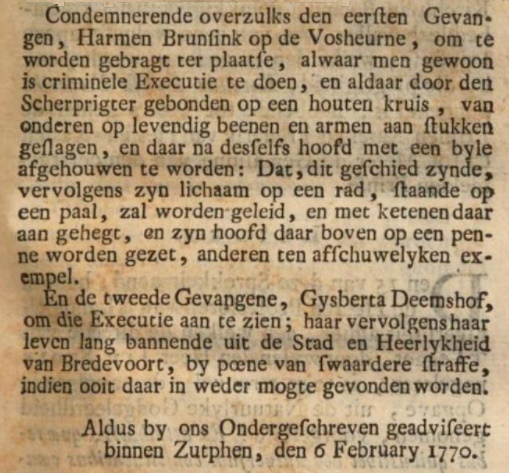
Harmen was sentenced to death: “to be brought to the place where criminal executions are customarily performed, and there to be bound by the executioner on a wooden cross, to have his legs and arms broken to pieces from the bottom up while alive, and thereafter to have his head severed with an axe. That, this having been done, his body shall subsequently be laid upon a wheel, standing on a post, and fastened thereto with chains, and his head set upon a spike above it, as a hideous example to others.” This punishment is called breaking on the wheel.
On February 10, the residents of Dinxperlo were summoned to the Hollenberg to erect the post and the wheel for the execution and to make the noose. Most refused or did not show up and were fined 30 thalers per person. 18 persons consented and erected the post and the wheel.
The sentence was carried out on the Hollenberg on February 12, 1770.
Gijsberta escaped the death penalty but was required to witness her husband’s execution. Subsequently, she was banished for life from the city and Lordship of Bredevoort. She remarried in 1776 in Silvolde to Jacob Kok and reportedly died in 1813.
Sources
- Nieuwe Nederlandsche jaerboeken, of Vervolg der merkwaerdigste geschiedenissen, die voorgevallen zyn in de Vereenigde Provincien […]. Fifth volume. MDCCLXX, published by the heirs of F. Houttuyn in Amsterdam, P. van der Eyk and D. Vygh in Leiden, 1770 (link)
- ORA Bredevoort