Category: Healthcare & Wellbeing

  • Gasthuis (Almshouse) Bredevoort

    Gasthuis (Almshouse) Bredevoort

    For centuries, the Gasthuis (also referred to as the Armenhuis or almshouse) served as a refuge for the poor, the sick, and the elderly in Bredevoort. From 1641 until approximately 1930, the institution occupied various locations within the city walls. The current Gasthuisstraat owes its name to this establishment.

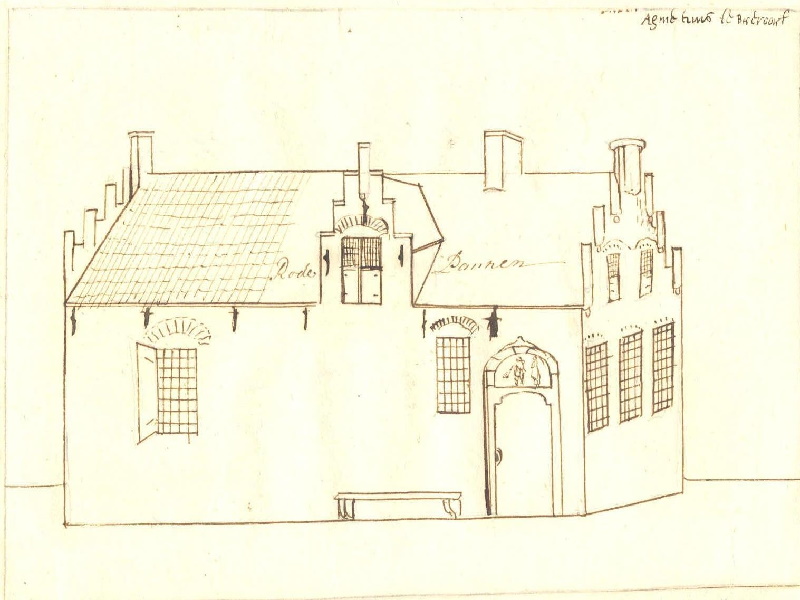
    The house of Misslich (Agnietenhuis)
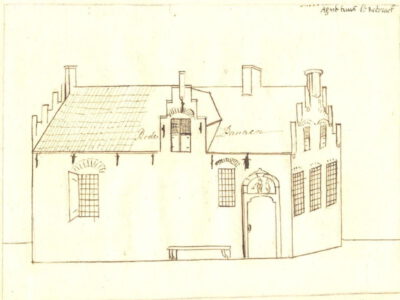
    The earliest known mention of an almshouse in Bredevoort dates to 1641. It occupied the old borgmanshuis (a fortified town house) and the orchard behind it, formerly belonging to Wolf Mislich, then Governor of the Lordship of Bredevoort. In 1639, Mislich drafted a will bequeathing his house and entire estate—valued at 15,000 guilders, a significant fortune at the time—to the poor relief of Bredevoort.

    Following his death in 1639, the will was executed, giving rise to the local saying: “De armen van Bredevoort bunt rieke” (The poor of Bredevoort are rich).

    The House of Misslich, also known as the Agnietenhuis, was presumably located in the vicinity of the later Ambthuis. Rental income from the property benefited the poor, and besides the Widow Mislich, two other families lived in the main house, while three smaller dwellings in the backyard were occupied by the needy.
    ‘t Walletje

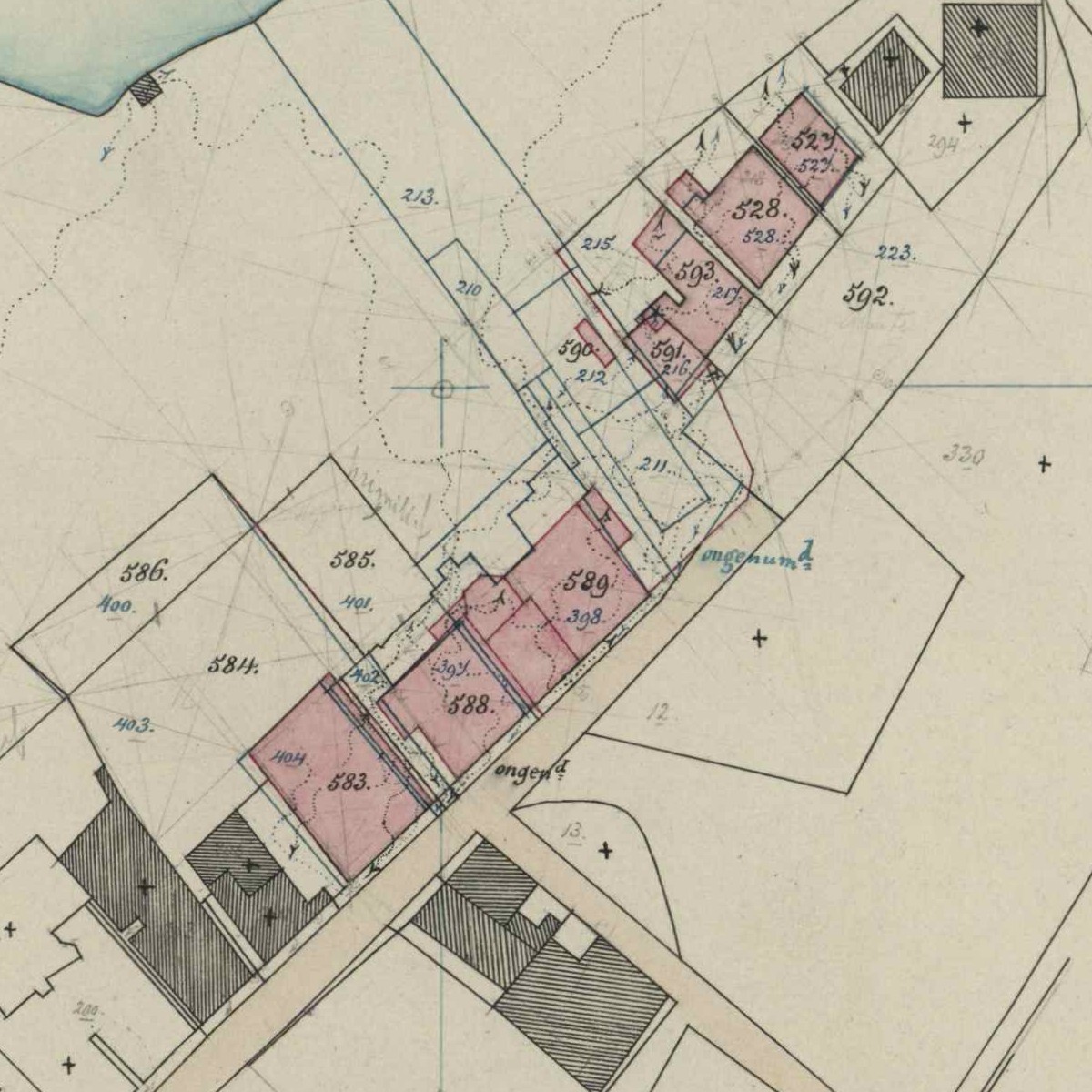
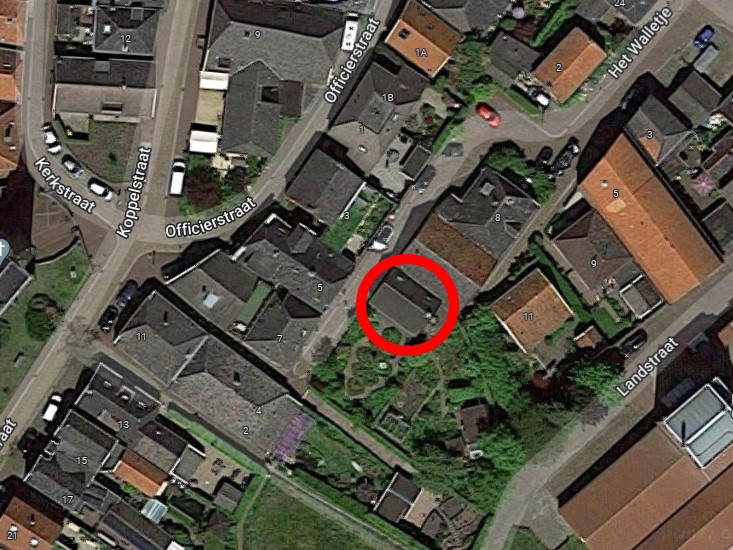
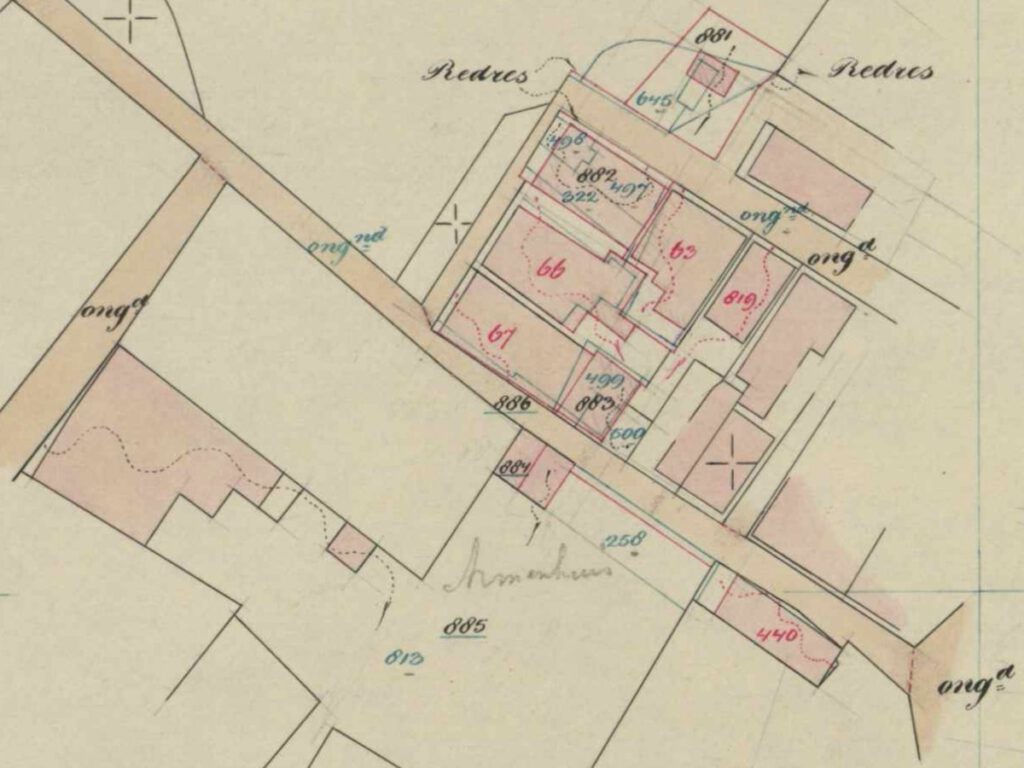
    Around 1800, records regarding the Mislich house become silent. An 1832 cadastral map shows the ‘Armen Gasthuis van Bredevoord’ located at ’t Walletje, in the extension of the Vismarkt (cadastral plots B126-B129). This complex consisted of four dwellings, ranging in size from 22 to 26 m².

    Gasthuisstraat

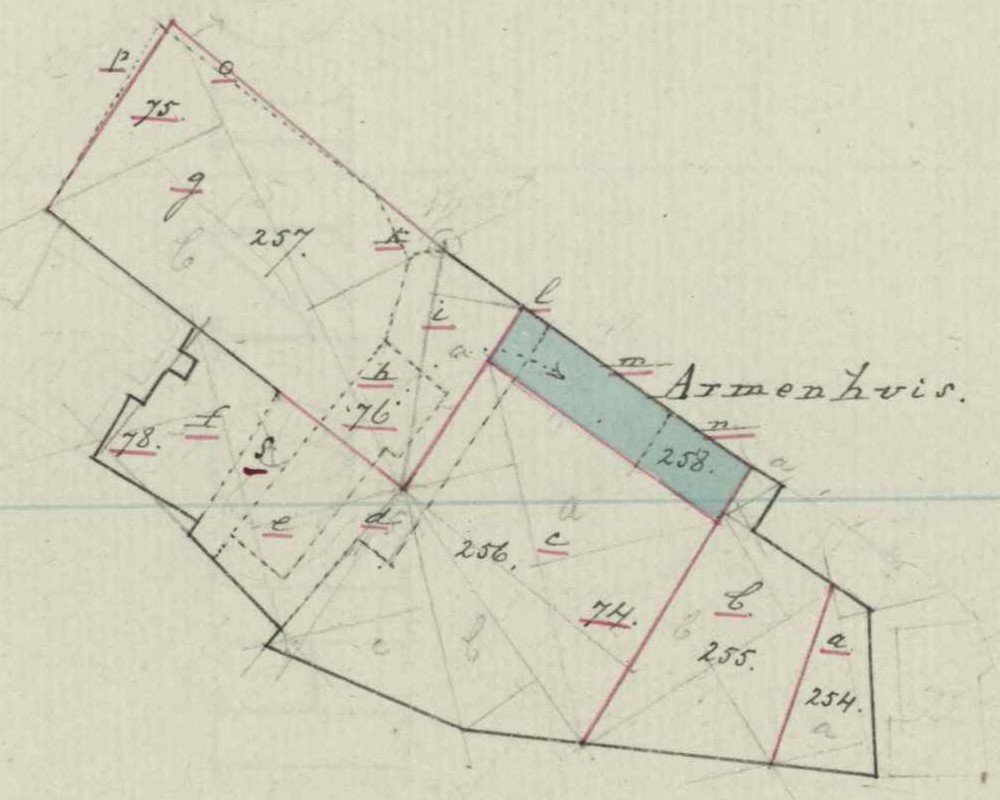
    The third and final almshouse was built in 1844 on the Gasthuisstraat and consisted of eight dwellings. The land was purchased from the Hof van Barnsveld, a former borgmanshuis.

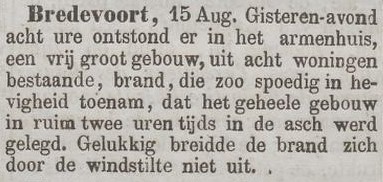
    On 14 August 1879, this building burned down completely, though it was subsequently repaired. In 1911, the almshouse underwent a thorough renovation, though it remained incomplete; the houses were eventually sold off and demolished one by one. In 1897, the Sint Bernardus building was purchased, where nursing care was provided around the turn of the century.
    Residents

    Population registers recorded each household on separate cards. Below is an overview of the inhabitants of the almshouse on the Gasthuisstraat over time:

    Period 1838-1850

    282828282828
    Maria Catharina Harmsen
    (Winterswijk, 26-01-1787)
    Johanna Hendrika Lindeman
    (Bredevoort, 04-12-1786)
    Andries Willemsen
    (Bredevoort, 14-08-1790)
    Janna Geertruid Meinen
    (Bredevoort, 06-01-1789)
    Jan Hendrik Duenk
    (Bredevoort, 17-10-1810)
    Fredrik Boom
    (Bredevoort, 24-03-1797)

    Period 1850-1860

    2828a28b28c28d28e28f28g
    Janna Geertruid Meinen
    (Bredevoort, 06-01-1789)
    Johanna Hendrika Lindeman
    (Bredevoort, 04-12-1786)
    Hendrikus Kempink
    (Bredevoort, 16-09-1815)
    Jan Hendrik Duenk
    (Bredevoort, 17-10-1810)
    Fredrik Boom
    (Bredevoort, 24-03-1797)
    Toni Blekking
    (Aalten, 15-07-1798)
    Andries Willemsen
    (Bredevoort, 14-08-1790)
    Gerrit Jan Sikking
    (Bredevoort, 14-10-1792)
    Hendrika Aleida Kalf
    (Aalten, 23-05-1822)
    Jan Willemsen
    (Bredevoort, 28-02-1802)

    Period 1860-1870

    2828a28b28c28d28e
    Hendrikus Kempink
    (Bredevoort, 16-09-1815)
    Jan Hendrik Duenk
    (Bredevoort, 17-10-1810)
    Hendrika Aleida Kalf
    (Aalten, 23-05-1822)
    Toni Blekking
    (Aalten, 15-07-1798)
    Jan Willemsen
    (Bredevoort, 28-02-1802)
    Gerrit Jan Sikking
    (Bredevoort, 14-10-1792)
    Grada Meinen
    (Aalten, 11-12-1797)

    Period 1870-1880

    30/130/230/330/430/530/630/730/8
    Mina Helmig
    (Bredevoort, 05-07-1824)
    Christina ten Pas
    (Winterswijk, 21-08-1812)
    Hendrikus Kempink
    (Bredevoort, 16-09-1815)
    Hendrika Aleida Kalf
    (Aalten, 23-05-1822)
    Jan Hendrik Duenk
    (Bredevoort, 17-10-1810)
    Janna Geertruid te Slaa
    (Winterswijk, 05-04-1802)
    Jan Willemsen
    (Bredevoort, 28-02-1802)
    Berendina Villekes
    (Bredevoort, 26-06-1800)
    Johanna Ribbink
    (Winterswijk, 01-08-1810)
    Theodora Berendina Grotenhuis
    (Henxel, 01-01-1829)
    Berendina Hijink
    (Lichtenvoorde, 19-06-1834)
    Derk Willem Bloemers
    (Woold, 10-02-1821)

    Period 1880-1890

    38/138/238/338/438/538/638/738/8
    Johanna Ribbink
    (Winterswijk, 01-08-1810)
    Berendina Hijink
    (Lichtenvoorde, 19-06-1834)
    Theodora Berendina Grotenhuis
    (Henxel, 01-01-1829)
    Christina ten Pas
    (Winterswijk, 21-08-1812)
    Jan Hendrik Duenk
    (Bredevoort, 17-10-1810)
    Derk Willem Bloemers
    (Woold, 10-02-1821)
    Gerritjen Duenk
    (Lichtenvoorde, 28-01-1824)
    Frans Julius Römer
    (Mittweida/D, 02-11-1815)
    Willemina Kwak
    (Wisch, 04-04-1829)
    Berendina Villekes
    (Bredevoort, 26-06-1800)
    Mina Helmig
    (Bredevoort, 05-07-1824)
    Hendrika Harmina Schoppers
    (Dale, 09-11-1821)
    Geertruid Kobus
    (Winterswijk, 02-08-1842)
    Jan Hendrik Grotenhuis
    (Henxel, 22-07-1832)
    Gerritjen Dina Scholtz
    (Aalten, 31-12-1834)
    Janna Berendina Dreijers
    (Aalten, 25-05-1833)

    Period 1890-1900

    30/130/230/330/430/530/630/730/8
    Johanna Ribbink
    (Winterswijk, 01-08-1810)
    Berendina Hijink
    (Lichtenvoorde, 19-06-1834)
    Geertruid Kobus
    (Winterswijk, 02-08-1842)
    Janna Berendina Dreijers
    (Aalten, 25-05-1833)
    Jan Hendrik Duenk
    (Bredevoort, 17-10-1810)
    Mina Helmig
    (Bredevoort, 05-07-1824)
    Gerritjen Duenk
    (Lichtenvoorde, 28-01-1824)
    Gerritjen Dina Scholtz
    (Aalten, 31-12-1834)
    Janna Geertruid te Wieske
    (Winterswijk, 11-11-1840)
    Gerrit Hendrik Mengerink
    (Neede, 07-01-1851)
    Harmen Jan Piek
    (Aalten, 09-03-1826)
    Maria Hendrika Slats
    (Aalten, 03-05-1823)
    Geertruid Kobus
    (Winterswijk, 02-08-1842)
    Gerrit Hendrik Piek
    (Vragender, 24-08-1834)
    Gerrit Hendrik Piek
    (Vragender, 24-08-1834)
    Janna Berendina Dreijers
    (Aalten, 25-05-1833)

    Period 1900-1910

    2727/327/427/527/627/7
    Janna Berendina Dreijers
    (Aalten, 25-05-1833)
    Harmen Jan Piek
    (Aalten, 09-03-1826)
    Maria Hendrika Slats
    (Aalten, 03-05-1823)
    Geertruid Kobus
    (Winterswijk, 02-08-1842)
    Gerrit Hendrik Piek
    (Vragender, 24-08-1834)
    Gerritjen Dina Scholtz
    (Aalten, 31-12-1834)
    Tonia Gesiena Oonk
    (Miste, 05-09-1869)
    Jan Derk Wilterdink
    (Miste, 02-11-1860)

    Period 1910-1920

    28/528/7
    Geertruid Kobus
    (Winterswijk, 02-08-1842)
    Gerritjen Dina Scholtz
    (Aalten, 31-12-1834)

    Owners

    Overview is incomplete.

    YearPlotOwnerDescription
    1832B-76Anthony Lurvink, merchant690 m² house, sched & garden
    1847B-258the Reformed Diaconate of Bredevoort199 m² almshouse & garden

    Sources


  • St Bernardus

    St Bernardus

    ‘t Zand 23, formerly ‘t Zand 15, Bredevoort

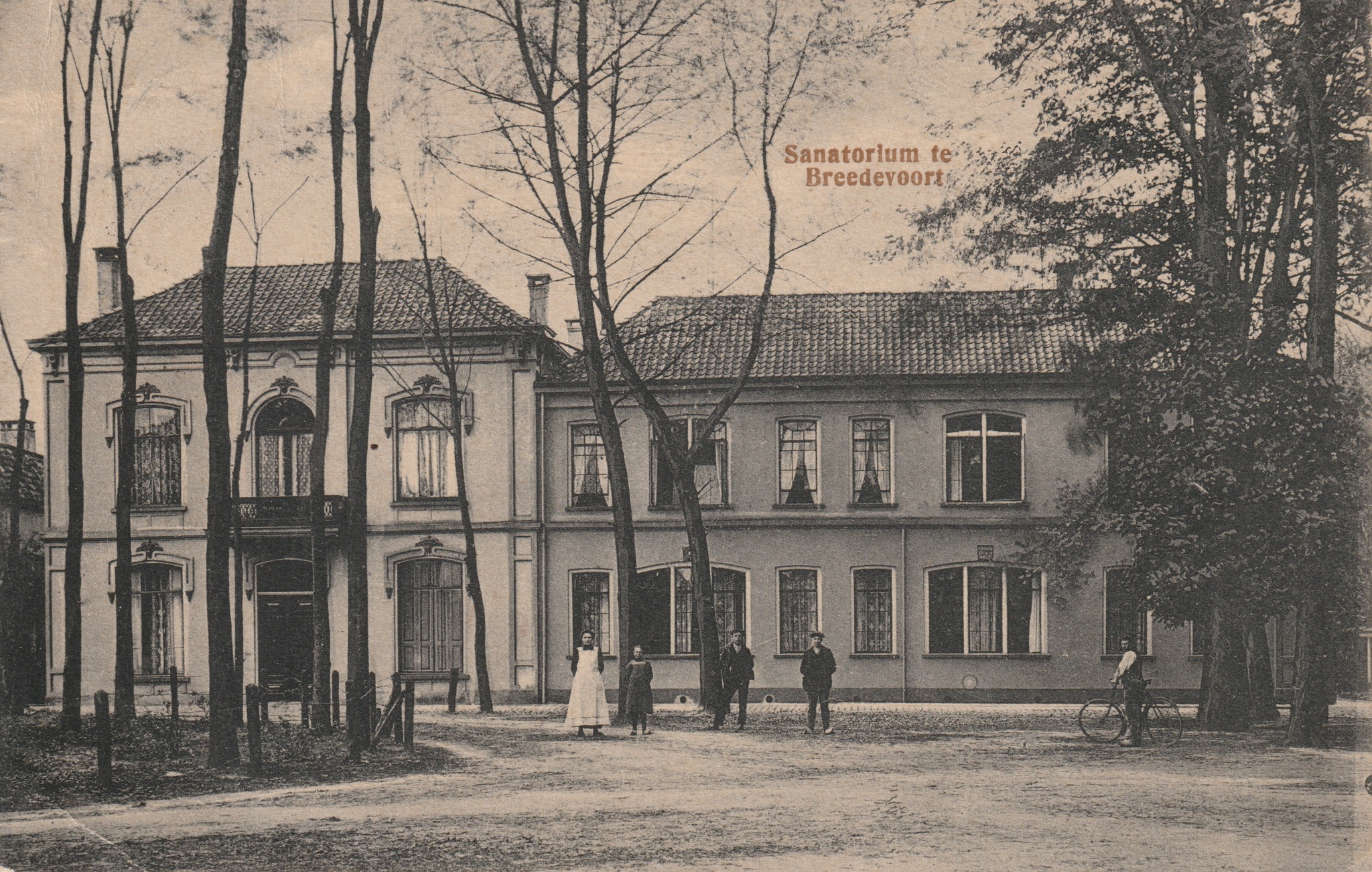
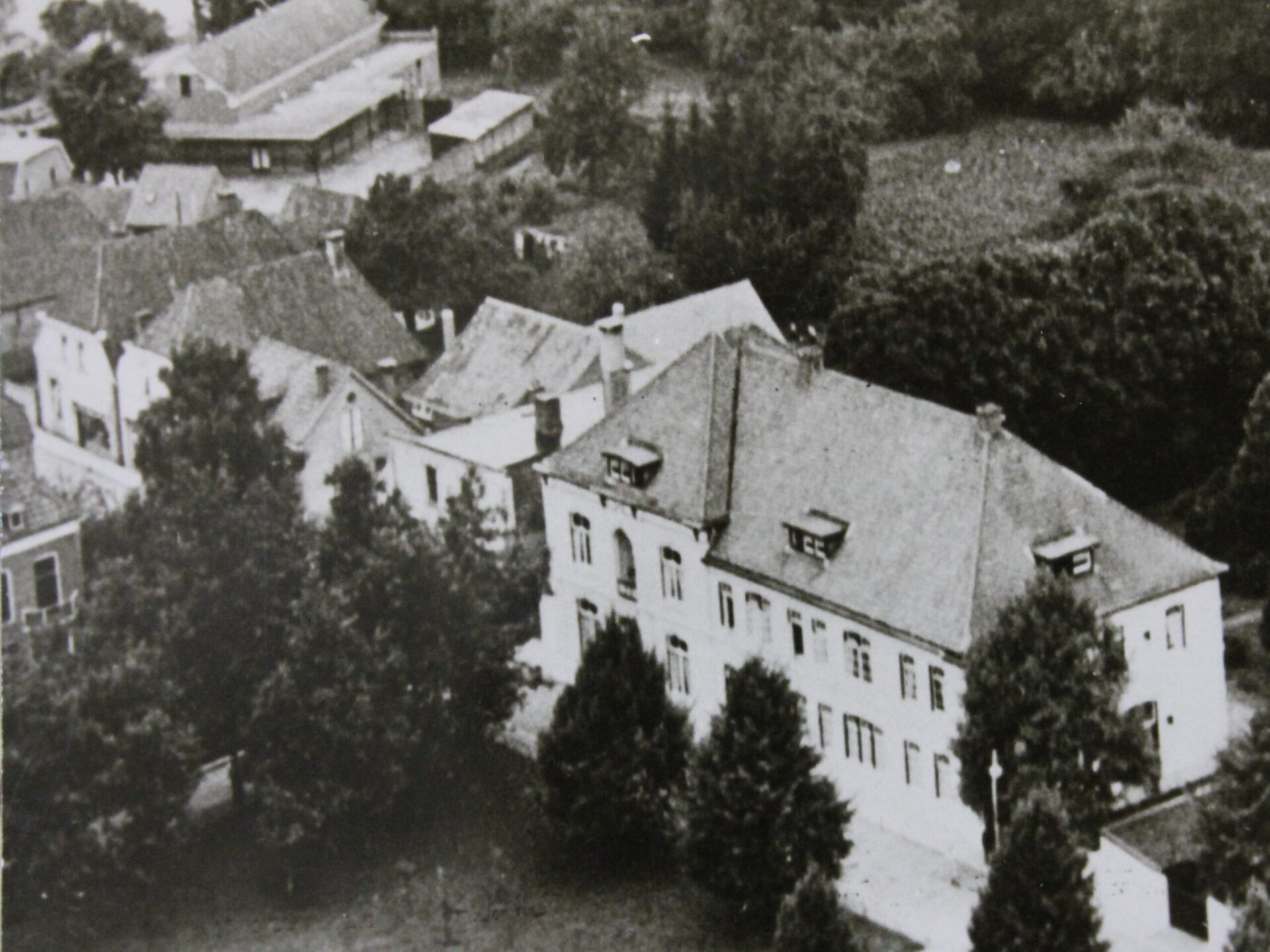
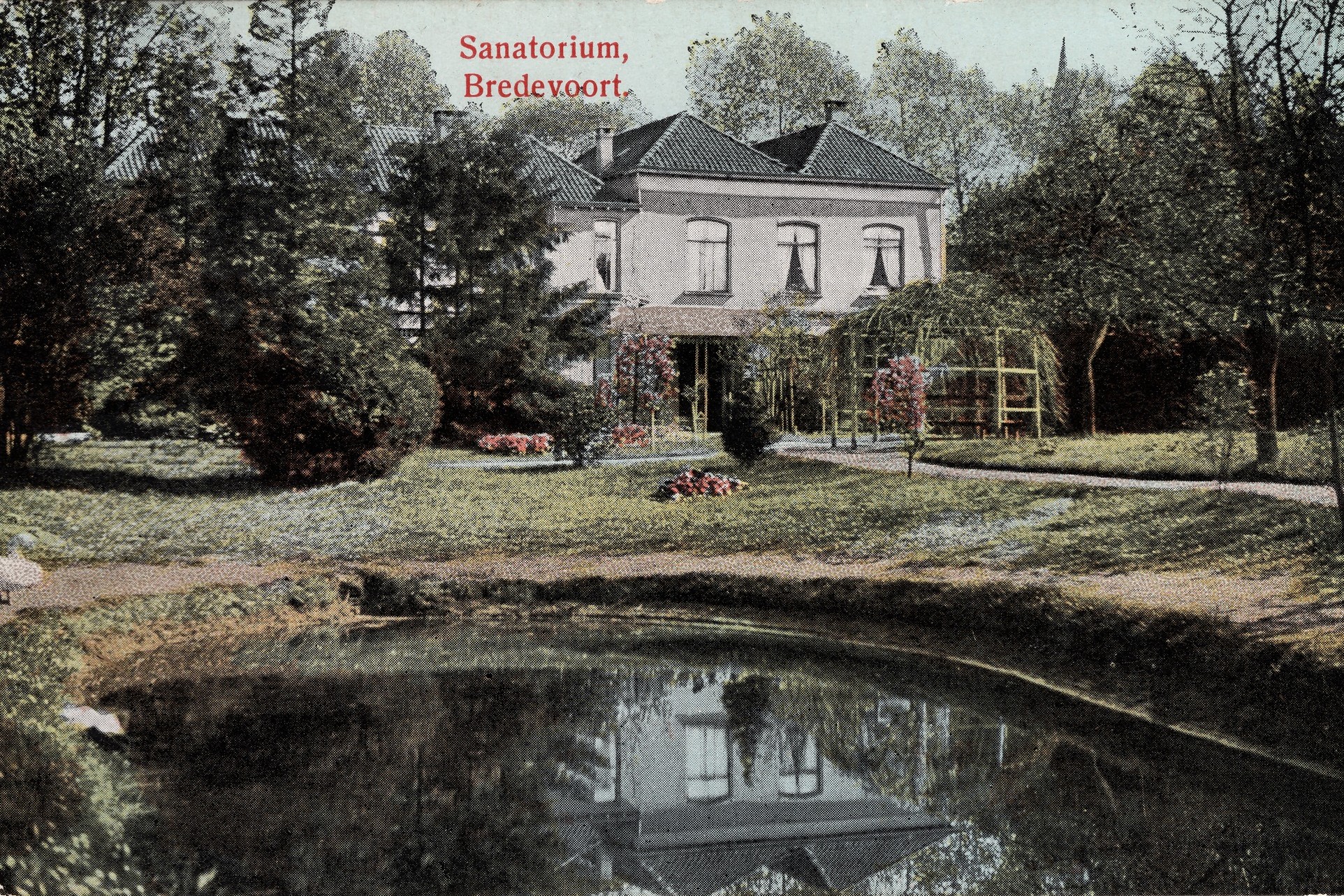
    St Bernardus House is a distinctive building on ’t Zand, the central square of Bredevoort. The building has a rich history, having served as a residence, a sanatorium, and a nursing home.

    The building was originally commissioned by Jan Satink, a lieutenant colonel in the States Army, Regiment of Nationals. It was erected on the site where the outer bailey of Bredevoort Castle once stood. In 1800, the house passed into the possession of the Roelvink family through inheritance. Arnoldus Florentinus Roelvink, a scion of this family, served as the mayor of Bredevoort from 1813.

    In 1897, the building was purchased by Father Bernardus Mulders. The priest was a man of means and acquired the former steward’s house with his own funds. His goal, he wrote, was to offer “his poor children” a Catholic education. Because Catholic schools were costly at the time, he devised a clever solution: he brought nuns to Bredevoort, who established a convent and a sanatorium in the steward’s house. Nuns were an economical option as they received no salary, having dedicated their lives to God.

    Under the management of the Franciscan Sisters of Thuine, the ‘R.K. Sanatorium St. Bernardus Gesticht’ (Roman Catholic St. Bernardus Sanatorium Institute) was established. He named the convent-sanatorium after his own patron saint, Saint Bernard of Clairvaux. With the profits from the sanatorium, the priest started a primary school: the Sint Joannesschool.

    The sanatorium was intended for wealthy patients, as the nursing costs were high, ranging from f 1.50 to f 2.20 per day. Medical expenses and pharmacy costs were charged at 10 guilders per month. Second-class patients paid f 7.50.

    From 1907, people came to Bredevoort from all over the country to recover in the sanatorium. They often stayed for months. During the day, they would lie in bed in an open-air pavilion (lighal), even in winter, completely wrapped up. In the garden of Sint Bernardus—now the Vestingpark (Fortress Park)—there were at least ten of these pavilions, with their open sides facing the sun. Two of these have been preserved and are now designated as national monuments (rijksmonumenten).

    The sanatorium remained in use until 1933. Afterwards, the building was repurposed as a nursing home for the elderly. In 1938, the Sisters of Thuine were succeeded by the Sisters of St. Joseph from Amersfoort. The last sisters left Bredevoort in 1985.

    In 1988, a large-scale renovation and expansion of the building was carried out by the Stichting Verzorgingstehuis St. Bernardus (St. Bernardus Nursing Home Foundation). The nursing home eventually moved to the newly rebuilt Ambthuis in 2008.

    Since 2020, the building has had a new destination: it is used as the boutique hotel & brasserie De Heerlyckheid.


    Owners

    Overview is incomplete.

    YearPlotOwnerDescription
    1832B-209
    B-208
    Arnoldus Florentinus Roelvink,
    mayor of Aalten and
    Bredevoort in Bredevoort
    550 m² house & garden
    220 m² house & garden
    1877B-397
    B-380
    Bernard Andries Roelvink,
    clerk at the cantonal court
    235 m² house & garden
    552 m² house & garden
    1887B-588
    B-589
    Leonard Roelvink, mayor240 m² house & yard
    280 m² coach house, kitchen, stables & yard
    1898B-588
    B-589
    Hermann Schepers, schoemaker240 m² house & yard
    280 m² coach house, kitchen, stables & yard
    1901B-734R.C. church of Bredevoort21.023 m² house, sheds, yard & garden
    1909B-792R.C. church of Bredevoort13.373 m² house, hospital,
    shed & garden
    1952B-979R.C. church of Bredevoort13.538 m² house, stables,
    hospital & garden
    1988B-1265St. Verzorgingshuis Sint Bernardus 2.760 m² “BWT”

    Features


    Cadastral no.B-1963
    FunctionResidential property,
    Sanatorium,
    Retirement home,
    Hospitality
    Year of construction1764
    MonumentMunicipal
    monument

    Residents

    Period 1823-1850

    Bredevoort 45

    Arnoldus Florentinus Roelvink (Borculo, 23-12-1789), mayor
    Elzabé Maria Theodora ten Cate (Neede, 21 juli 1798)

    Bredevoort 46

    Theodora Sophia Roelvink (Bredevoort, 09-11-1760)

    Period 1838-1850

    Bredevoort 77

    Arnoldus Florentinus Roelvink (Borculo, 23-12-1789), mayor
    Elzabé Maria Theodora ten Cate (Neede, 21 juli 1798)

    Bredevoort 78

    Theodora Sophia Roelvink (Bredevoort, 09-11-1760)

    Period 1850-1860

    Bredevoort 77

    Arnoldus Florentinus Roelvink (Borculo, 23-12-1789), mayor
    Elzabe Maria Theodora ten Cate (Neede, 21 juli 1798)

    Bredevoort 78

    Theodora Sophia Roelvink (Bredevoort, 09-11-1760)

    Period 1860-1870

    Bredevoort 77

    Elzabe Maria Theodora ten Cate (Neede, 21 juli 1798)

    Bredevoort 78

    ?

    Period 1870-1880

    Bredevoort 84

    Elzabe Maria Theodora ten Cate (Neede, 21 juli 1798)

    Bredevoort 85

    Leonard Roelvink (Bredevoort, 30-04-1833), mayor
    Christina Paschen (Winterswijk, 27-03-1848)

    Period 1880-1890

    Bredevoort 101

    Elzabe Maria Theodora ten Cate (Neede, 21 juli 1798)

    Bredevoort 102

    Leonard Roelvink (Bredevoort, 30-04-1833), mayor
    Christina Paschen (Winterswijk, 27-03-1848)

    Period 1890-1900

    Bredevoort 85a

    Heinrich Nuijken (Gahlen/D, 11-09-1833)
    Anna Velthacke (Vreden/D, 16-05-1834)

    Bredevoort 85

    Christina Paschen (Winterswijk, 27-03-1848)

    Next residents:

    Hermann Schepers (Weseke/D, 17-08-1828), schoemaker
    Elisabeth Dieckmann (Alpen/D, 24-12-1840)

    Period 1900-1910

    Bredevoort 83a

    Heinrich Nuijken (Gahlen/D, 11-09-1833)
    Anna Velthacke (Vreden/D, 16-05-1834)

    Next residents:

    Catharina Niemeijer (Salzbergen/D, 28-11-1856)

    Here follows a long list of nurses and schoolteachers.

    Continued list of residents:

    Bredevoort 83a > 084

    More (a.o.) foster sisters, teachers, sisters of charity, as well as patients.

    Bredevoort 83 > 85

    Hermann Schepers (Weseke/D, 17-08-1828), schoemaker
    Elisabeth Dieckmann (Alpen/D, 24-12-1840)

    Period 1910-1920

    Bredevoort 84 > 60

    ?

    Bredevoort 85 > 61

    Hermann Schepers (Weseke/D, 17-08-1828), schoemaker
    Elisabeth Dieckmann (Alpen/D, 24-12-1840)

    Address directory 1934

    Bredevoort 60 > ‘t Zand 15

    St Bernard’s Institution

    Address directory 1967

    ‘t Zand 23

    St Bernard’s Institution

  • Johannes der Weduwen

    Johannes der Weduwen

    ‘Doctor of the resistance’

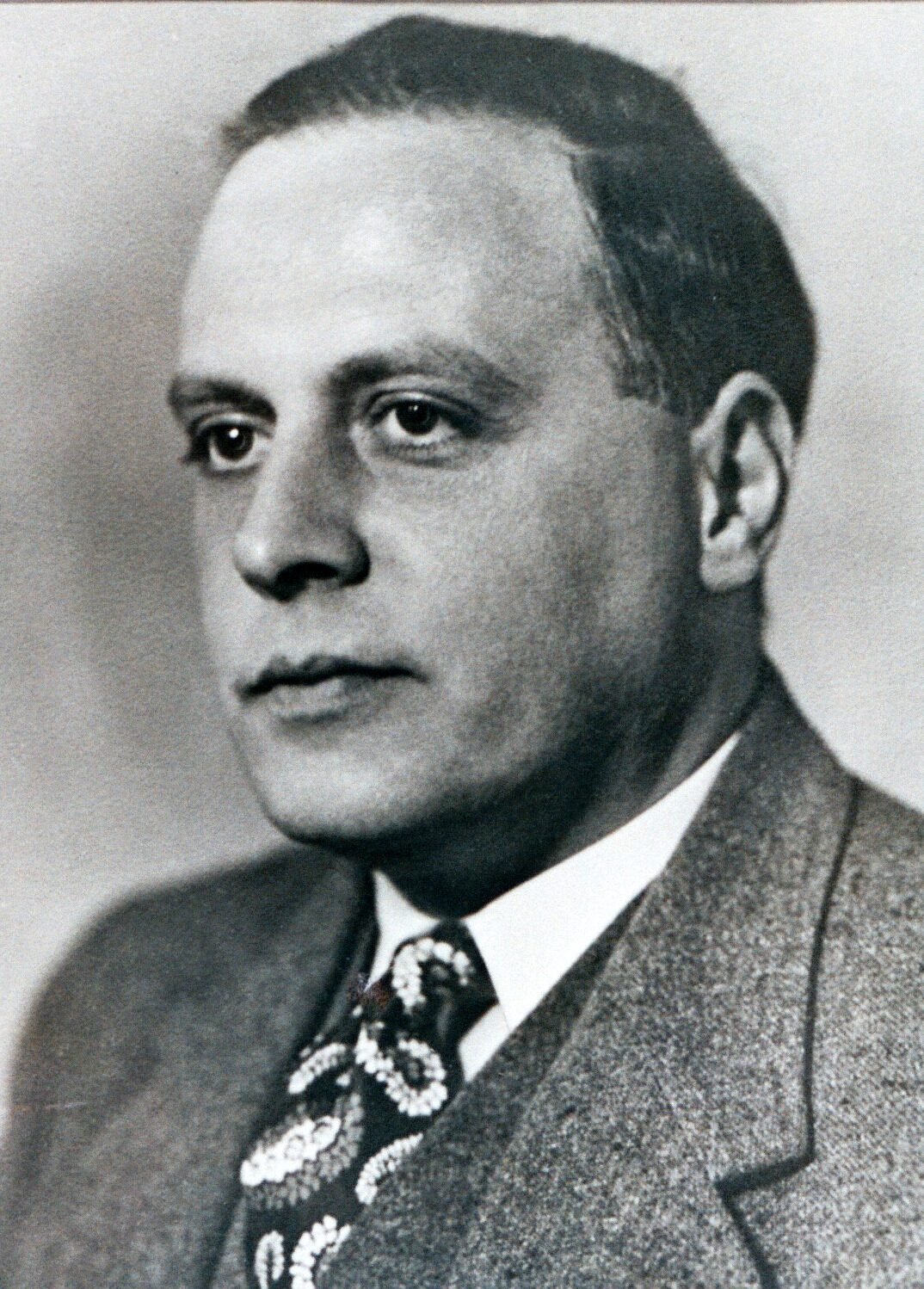
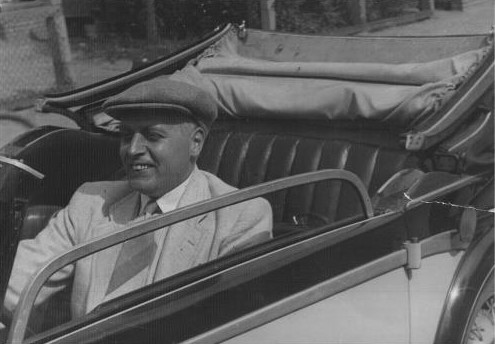
    Johannes (Joop) der Weduwen was a popular general practitioner in Aalten. On January 23, 1945, he came near Apeldoorn to die after being shot at by an Allied plane, at least according to the German authorities.

    Joop der Weduwen was born on May 17, 1902 in Aalten. He studied at the Gymnasium in Doetinchem, later at the University of Utrecht, where he took his medical exam and then obtained his doctorate in medicine. He showed himself to be a worthy successor to his father and established himself here as a doctor.

    From the beginning of the war, Joop der Weduwen became involved in the resistance in the Achterhoek. He actively offered help to people who were wanted by the Germans. His family included two young men who refused to do labor service. If English planes were shot down and the crew was injured, he offered them medical assistance. For a robbery at the distribution office in Borculo , his car was ‘stolen’. He helped Jewish people in hiding on various farms in the area. He also played a role in the abandonment of the Jewish baby ‘Wíllem Herfstink’ at the house of resistance leader ‘Uncle Jan’ Wikkerink.

    Assistance to forced labourers

    In the last winter of the war, Joop der Weduwen felt closely involved with the forced labourers who had to do their slave work under inhumane conditions, especially in Camp Rees . That camp was just across the border in Germany. As a representative of the Dutch Red Cross, he negotiated with Peter Röhrig, the commander known as the executioner of Rees to remove the sick and wounded.

    He tried to transfer as many people as possible to Aalten, where ‘Huize Avondvrede‘ on the Hogestraat had been set up as an emergency hospital. Many were also transported by car from the GP to the Emergency Hospital in Harreveld. Some sick people stayed at his home temporarily and then went into hiding.

    On 19 January 1945, Doctor Der Weduwen, accompanied by two SS men from the Rees camp, left for The Hague for an official meeting with high-ranking German officers and the mayor there. On behalf of the Red Cross, he pleaded for better conditions for the forced labourers, many of whom came from The Hague and Rotterdam. The men had to spend the nights on the bare floors in draughty and damp wooden sheds, had meager clothes and hardly got anything to eat. To improve their inhuman existence somewhat, he asked for straw bags, among other things.

    Fateful return journey

    During the return trip to Aalten, on January 23, 1945, the car he was in was fired upon by an Allied fighter plane near Apeldoorn around five o’clock in the afternoon, at least according to the German authorities.

    His lifeless body was found badly mutilated in a dry ditch, where he had tried to take cover. He had lost a lot of blood and had died on the spot. The car was undamaged. There were strong rumors that the Germans deliberately attacked him because he had become too troublesome. Joop der Weduwen was 43 years old.

    Willem van Houtum, Apeldoorn’s war chronicler, wrote about it in his diary on 23 January:

    “A doctor from Aalten, who interfered a lot with the condition of the deportees in Rees, died of German indifference. The doctor left for The Hague last Friday with two Germans in a car. He wanted to plead with high authorities for the improvement of the treatment of our compatriots in Rees and so on. It was to no avail. As a result, they returned on Tuesday. They were shot at by an English plane on the concrete road near Hoog Soeren. The doctor got out of the car in a hurry to take cover but collapsed badly injured. The two Germans took away the wallet, wallet and so on and drove on to the Ortskommandant in Apeldoorn. He refused to transport the doctor because it was a civilian. So the two Krauts drove on to Aalten and handed over the wallet and so on to the doctor’s wife. This in turn could not provide transport either. She called in the help of a family member in Apeldoorn. With the help of the police, he succeeded in having the body (the doctor had died of excessive blood loss) transferred to Aalten. Due to the many shelling, the concrete section of the Amersfoortseweg near Hoog Soeren is already popularly called ‘Dodenweg’.”

    Police report

    Tuesday 23 January 1945, 17.00 hours, report no. 23.
    Informs Zegers in Nieuw Millingen that a man has just been shot dead by guns. A car is also on fire. Criminal Investigation Department, Feldgendarmerie, Pol. Officer and L.B.D. notified. The body is picked up by the L.B.D. (= Air Protection Service) and transferred to the hospital on the Sprengenweg.

    Wednesday 24 January 1945, 5.45 p.m., report no. 24.
    With regard to the mutation of the report of the order police of 23-01-1945 at 17.00 hours, detective Adema reports that the body of the said person was picked up by the L.B.D. and laid out in the morgue of the hospital on the Sprengenweg. It has been identified as Dr. Johan der Weduwen, living at Landstraat 4, in Aalten. His brother-in-law Wissink, living at Stationsstraat 25 here, has been informed of this, who takes care of warning the family and the funeral.

    Funeral

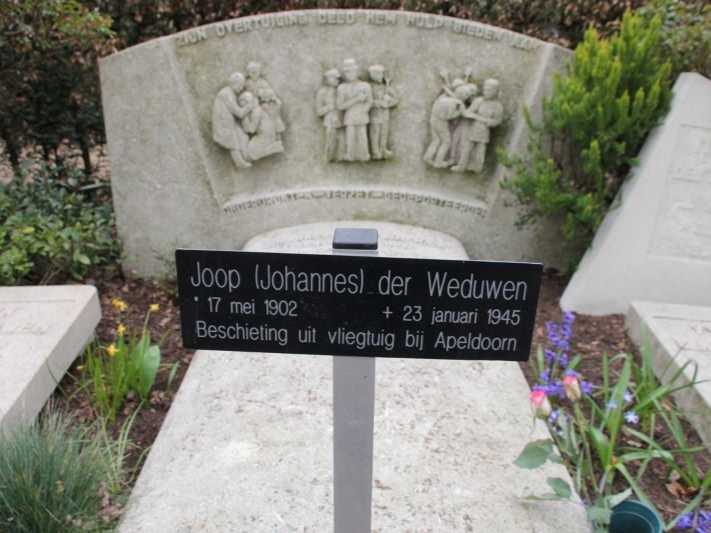
    On Saturday, January 27, Joop der Weduwen was buried with great interest to Berkenhove cemetery in Aalten. The procession counted at least 1000 people. Previously, a funeral service had been held in the Old Helena Church under the leadership of Rev. J.D. Stegeman, emeritus pastor in Aalten. On behalf of the forced labourers, Mr Dijkgraaf from The Hague spoke a word of thanks and farewell.

    Friends, patients and villagers had a special memorial stone made in front of his grave in gratitude and to honor him. The text on the monument reads: “His conviction made him offer help to the oppressed – resistance – deportees.”

    His name is also mentioned on the memorial stone for the fallen in the organized resistance on the Markt in Aalten, next to the Old Helena Church.

    On March 31, 2023, a Stolperstein was laid in front of the house where Joop der Weduwen lived, Landstraat 41 in Aalten.

    Sources