
Category: Taxes

  • Liberal Gift of 1748

    Liberal Gift of 1748

    The Liberal Gift was a one-time tax introduced in the Republic of the Seven United Netherlands in September 1747 to cover the escalating defense costs caused by the war with France.

    Background

    During the War of the Austrian Succession (1740–1748), the Republic was involved in a conflict against France and Spain as an ally of Great Britain and Austria. The military threat increased significantly in 1747 when French troops occupied large parts of the Southern Netherlands and even parts of the Republic, including Zeeland and Maastricht.

    The Republic was poorly prepared for a large-scale war and was in a deep financial crisis. To finance the military expenditures, a one-time tax was established: the Liberal Gift, also known as the fiftieth penny.

    What was the Liberal Gift?

    The tax was called a ‘liberal’ or ‘voluntary’ gift, but in practice, it was not entirely optional. Every household—both poor and wealthy—was expected to contribute. The wealthy had to pay two percent of their assets (hence the name fiftieth penny). Those who possessed less than 500 guilders could determine for themselves how much they ‘furnished’ (gave). Residents had to declare under oath how much they owned. The contribution to the Liberal Gift could then be paid in four installments.

    Registration of the Liberal Gift in Aalten and Bredevoort
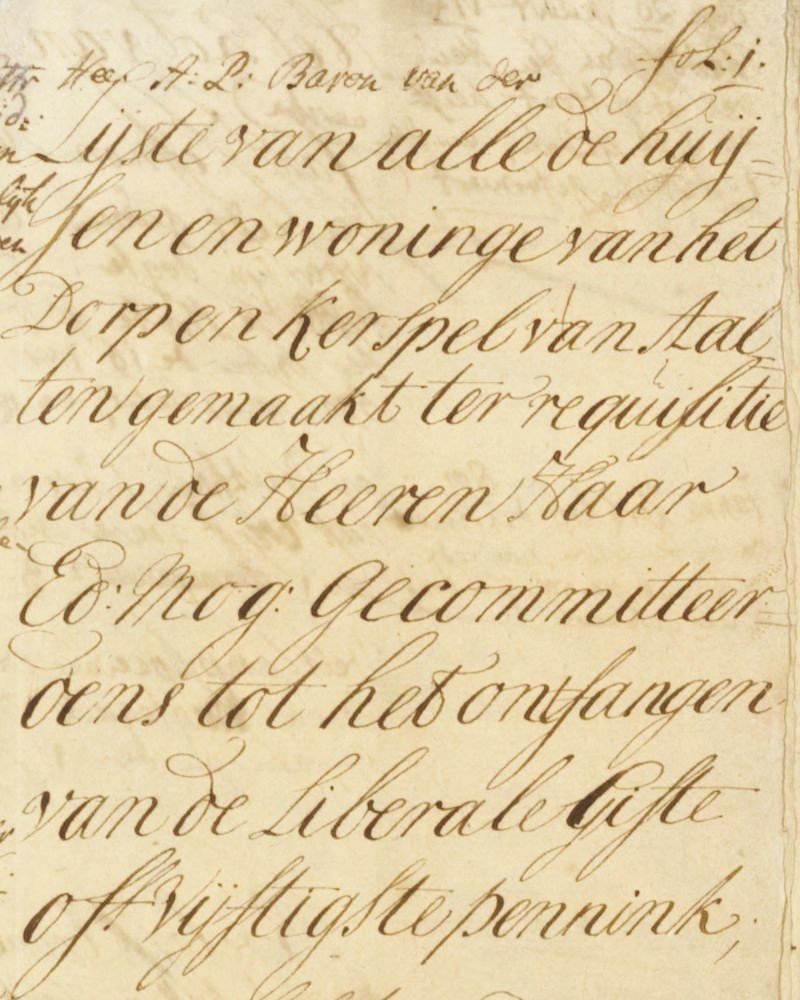
    The collection of the Liberal Gift took place in 1748 and was meticulously recorded in special registers (tax rolls). In the parish of Aalten, the registration was organized by village and rural districts, and further subdivided by ‘rot’ (district). The tax roll for the town of Bredevoort is likewise subdivided by district.

    In the tax rolls, information was recorded per house, such as:

    • Names of the residents
    • (Sometimes) the farm name
    • Number of resident children (above and below 16 years of age)
    • Assets (more or less than 500 guilders)
    • Whether they paid anything and in which installments this was fulfilled

    Scans of the tax rolls for the collection of the Liberal Gift in the lordship of Bredevoort can be consulted here.

    Historical value

    Thanks to this detailed registration, the Liberal Gift offers a unique insight into the composition of households and the prosperity of former Aalten residents in 1748. It not only shows where people lived—down to the district or farm level—but also provides an impression of the economic conditions within the community.
  • Verponding

    Verponding

    The verponding was a tax on real estate introduced in Gelderland in 1651 to replace the older schildschatting. This tax was levied on lands, farms, houses, and mills that generated income, with the aim of strengthening provincial finances. Wastelands, such as uncultivated common lands (markegronden), were exempt from this levy. The verponding remained in effect as a tax system in Gelderland until 1805.

    Administration and Registration

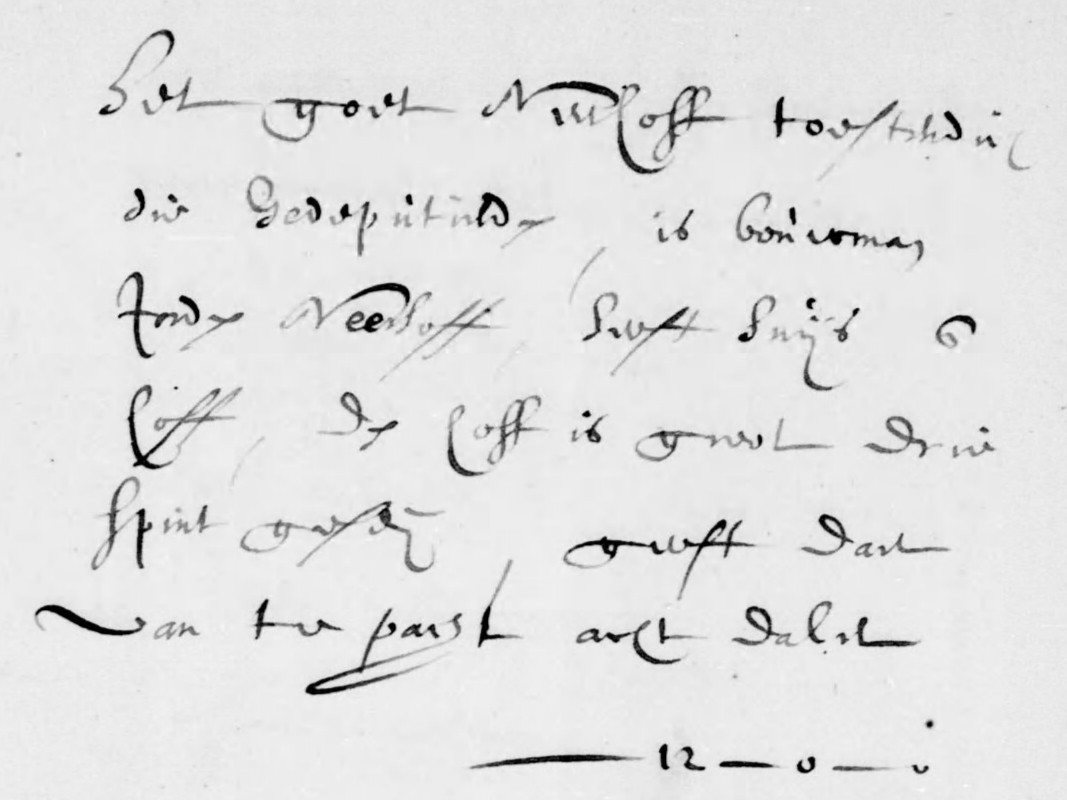
    The term ‘verponding’ or ‘pondschatting’ likely refers to a tax assessment originally expressed in the unit of account ‘pond’ (pound). Data regarding the verponding was recorded in so-called verpondingskohieren (tax registers). These registers were compiled by local officials, such as bailiffs, sub-bailiffs, and rotmeesters, who were responsible for recording all real estate and its estimated value. The registers provide valuable historical information regarding the number of houses per location and their owners: nobility, church, or citizens. Additionally, they contain data on the size of holdings, lease structures, and ownership relationships.

    Calculation

    In the Quarter of Zutphen, to which Aalten and Bredevoort belonged, the amount of the verponding was determined based on the lease or rental value and the burdens resting on a property. For lands and farmsteads, the tax amounted to a sixth penny (or 1/6) of the taxable lease value; for houses and mills, this was a ninth penny (1/9) of the taxable rental value. If a property was not leased or rented but used by the owner themselves, the value was determined based on comparable properties that were leased or rented. Everyone was obliged to provide correct information and to show any lease contracts; negligence could result in a fine.

    Collection and Payment

    The collection of the verponding followed a strict schedule: the assessment, also known as ‘maning’ (summons), took place in November, and payment was to be completed before the end of February. The tax could be calculated in various ways, and several deductions were possible, for example, for maintenance. Taxpayers received ‘maancedulen’ (payment notices) stating the amount due. The collected pennies were transferred by the collectors to the receiver of the Quarter. Furthermore, the district, the city, and the Quarter could levy additional surcharges (opcenten) on top of the base amount.

    Verponding Register of 1647

    The Verponding Register of 1647 is a frequently used source for historical research. At the time the verponding registers were compiled, Gerhard Kreynck (1612-1692) was the mayor of Zutphen. Kreynck had a great interest in historical documentation and made copies of important archives, including the verponding register, city accounts, and fief registers.

    The Verponding Register of 1647 was transcribed in an abbreviated form by Kreynck around 1650, which later became known as the Kreynck Transcript. The historical significance of the register lies in the fact that it is one of the first systematically established tax registers in Gelderland. The register provides insight into the economic situation of the region in the mid-17th century. The original register has been preserved and can be found in the National Archives in Arnhem.

    Sources and Literature


    • Zutphen Heritage Centre.
    • Genealogiedomein: images and transcriptions of the verponding registers for Aalten and Bredevoort.
    • R. Wartena et al., Farm Names in the Achterhoek. From the verponding register of c. 1650, Kreynck transcript, publication East Gelderland Journal for Farm Research (link).
    • H.K. Roessingh, How are the Gelderland verponding registers from the mid-17th century structured? Sources for local historical research, Contributions and Communications of Gelre LXIII (Arnhem 1968/1969), pp. 61-71.
    • H.K. Roessingh, Sheaf tithes, seed tithes, and money tithes in Gelderland in the 17th and 18th centuries, Contributions and Communications of Gelre LXIII (Arnhem 1968/1969), pp. 72-98.