
The tragic fate of Gesina te Winkel
On the night of October 28, 1799, the lifeless body of 47-year-old Gesina te Winkel was found on the heath, near the border between the Aalten rural district of Haart and the German town of Barlo. She lay only a few minutes from her home and had multiple stab wounds. What had happened to her?
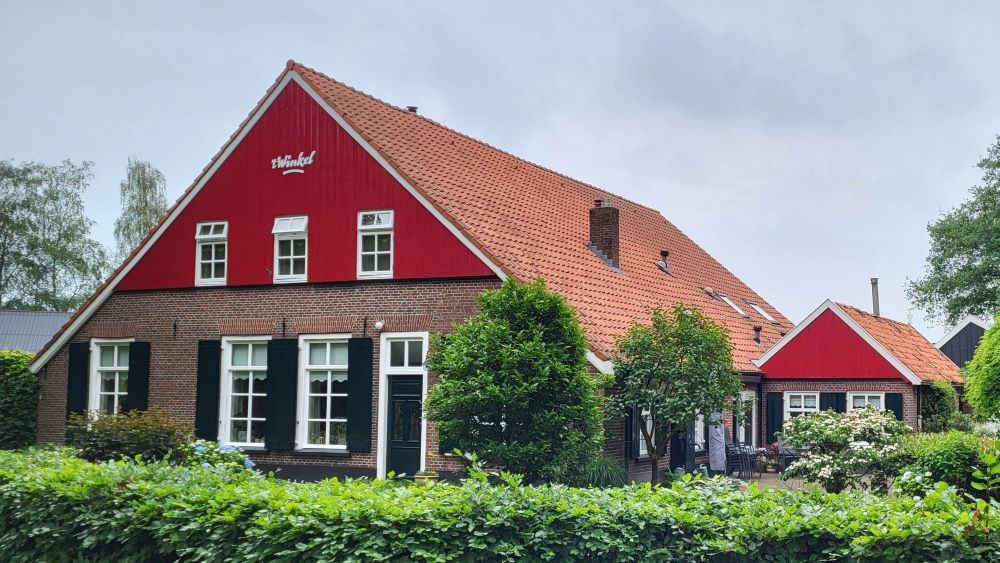
Gesina te Winkel was baptized in Aalten on April 30, 1752, as the daughter of Barent te Winkel and Enneken Dierkink.1 On April 20, 1777, she married Adolphus (Alof) Lensing2, who was later also called te Winkel. The couple lived at Gesina’s parental home, the ‘t Winkel farm in the Haart, only 800 meters away from the border with the then Bishopric of Münster, which is now part of the German state of North Rhine-Westphalia.
The disappearance
On Sunday, October 27, 1799, around four o’clock in the afternoon, Gesina left home alone with a sandwich in her hand. She was on her way to the Möllers family to pick up some items of clothing. The Möllers lived just across the border in the Münsterland, about a fifteen-minute walk from ‘t Winkel.
When it began to get dark and Gesina had not yet returned, her husband Alof and their children began to worry. Where was she? Alof decided to go to the Möllers family’s house. He found three women there by the fire, who told him they had not seen Gesina that day.
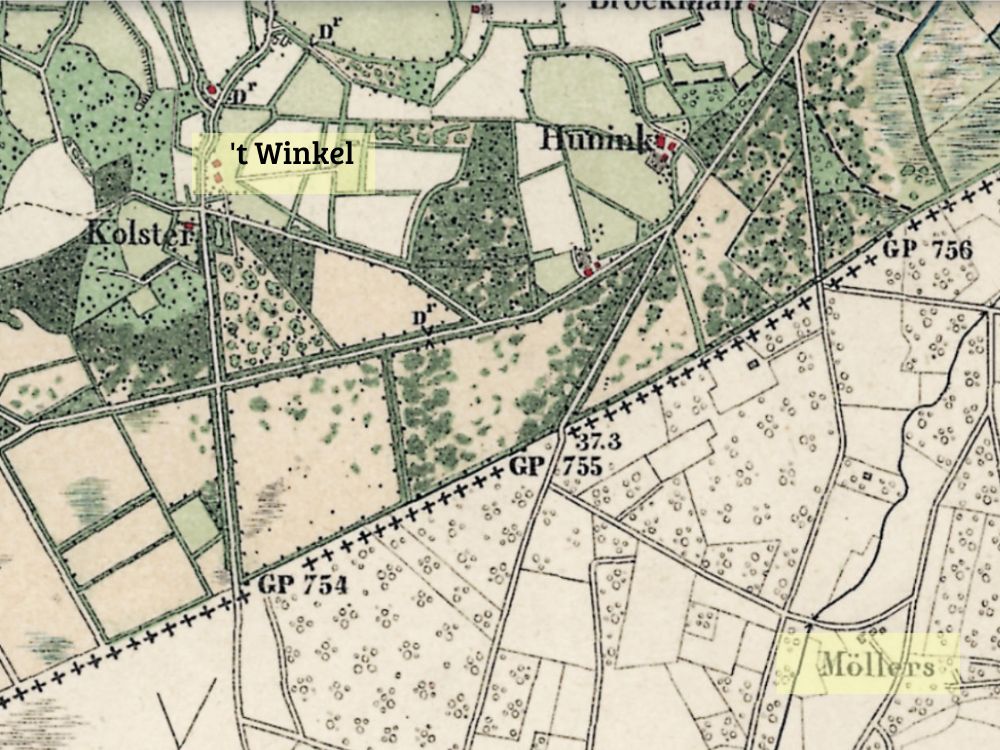
Returning home, Alof wondered if his wife had encountered someone on the way or perhaps visited a neighbor. Upon arriving home, it turned out she was still not back. He then went out to search again, this time on the heath. When he could not find her there, he went to the Möllers’ house once more. The residents were already in bed, and when Alof knocked and asked about his wife again, the man and woman called out to him from bed that they had heard nothing of Gesina and that she had not been there that day.
Alof involved his nearest neighbor Hendrik te Kolste and the servant of his brother at Drenthel Schoppe, Harmen Swietink, in the search. Together they went out onto the heath once more to look for Gesina.
The discovery
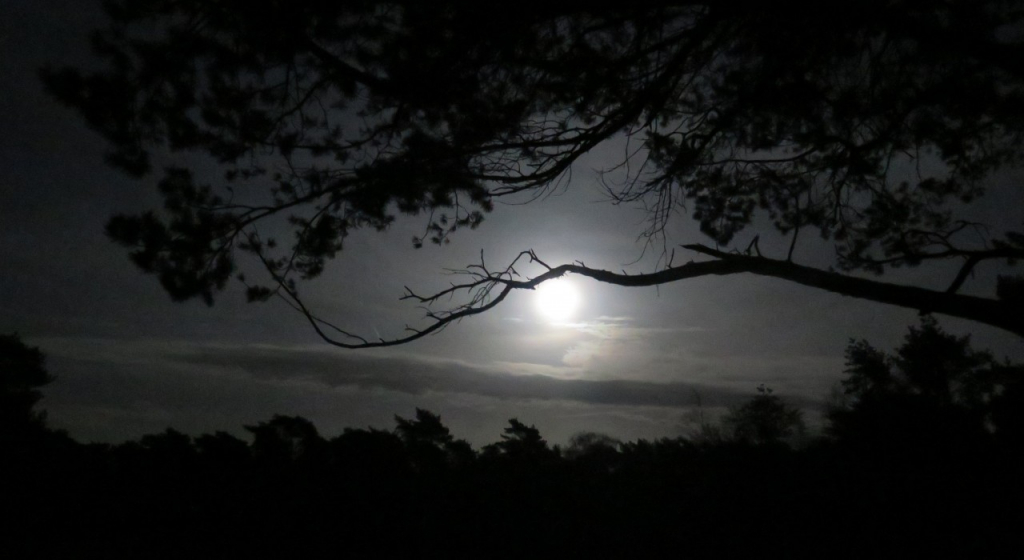
By then it was pitch dark on the heath and they could see very little. Around midnight, one of them suddenly discovered something white. It turned out to be Gesina’s cap, with her lifeless body beside it. She was lying on her side; her feet were still warm, but the rest of her body was cold. She was found only five to ten minutes from her home. Alof had a cart brought and took her body home on it. He thought she had probably become unwell on the way and died as a result.
The judicial investigation
The following morning, Monday, October 28, Garrit Rensink, residing at the Beestmans Huisje farm in the Haart, reported to the court of the Seigniory of Bredevoort that the wife of his neighbor Alof te Winkel had been found dead on the heath the previous night.
Thereupon the court, accompanied by surgeon Steven Schaars, proceeded to ‘t Winkel. Upon examination of the body, it was determined that the woman had multiple stab wounds – three on her left side and two on her right side, presumably inflicted with a bayonet or a triangular object.
Apparently, they were not yet entirely convinced of the cause of death, because two days later the court went to ‘t Winkel again with Schaars for further investigation. During this, the deceased, who had already been placed in a coffin, was removed from the coffin and examined, whereby Schaars determined that the lower ribs on the right side were broken and that the wounds inflicted upon her had caused her death.
During interrogation, Alof, Hendrik, and Harmen stated that they initially thought they had found Gesina’s body on Dutch territory, but also that they had not been able to determine this properly due to the darkness. Upon further recollection, however, they were almost certain it must have been on Münster territory.
Hendrik and Harmen further stated that, as far as they knew, Alof te Winkel and his wife had a good relationship and that there was no question of disagreement or quarreling. They also stated that Gesina never quarreled with anyone, and that she “despite her years, looked very well.”
Arnoldus Obrink, a cooper in the Hoekstraat in Aalten, stated that he had seen Gesina around four o’clock that Sunday afternoon. He was walking on the road from Hunink to Aalten and Gesina was taking the road to the Münsterland, about 300 paces from her house. He had even spoken briefly with her while she was eating a sandwich. Furthermore, he had seen no one else in the vicinity.
An unconfirmed rumor
A rumor soon spread that Gesina had indeed been at the Möllers’ house that Sunday. According to the stories, a 13-year-old son of the family had been playing carelessly with a loaded gun, after which it accidentally went off and hit Gesina. It was even claimed that traces of the shot could still be seen in the chimney or near the hearth. However, there was no evidence for this rumor.
File to Bocholt
Because there was a strong suspicion that Gesina’s violent death had occurred on Münster territory, the drost of Bredevoort, Willem Paschen, sent a copy of the file to the court of Bocholt so that they could investigate this case further.5 Unfortunately, it is not known to us how this case ended. The tragic murder of Gesina te Winkel remains a mystery.
Funeral
In the Burial Register of the Dutch Reformed Congregation in Aalten, it is noted under October 1799: “deceased the 28th – Alof te Winkel his wife – buried the 31st” 6
Sources
- Baptismal Register of the Dutch Reformed Congregation of Aalten (1735-1761) ↩︎
- Marriage Register of the Dutch Reformed Congregation of Aalten (1773-1811) ↩︎
- Topotijdreis ↩︎
- gorssel.nl ↩︎
- Judicial Archive of the Seigniory of Bredevoort – Access Number 3017 – Inventory Number 32 Contentious Jurisdiction – Visitations and statements regarding accidental deaths Period 1737 – 1807 (scans 1816-1823) ↩︎
- Burial Register of the Dutch Reformed Congregation of Aalten (1762-1811) ↩︎