


Emigrants from Aalten to the US
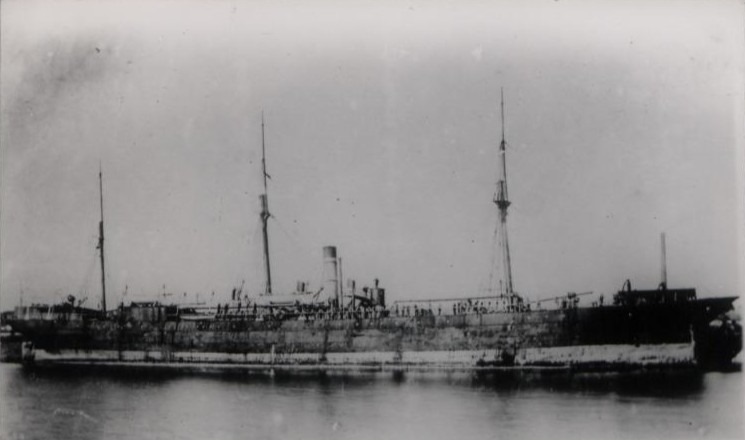
In the summer of 1869, a life-changing adventure began for more than a hundred Aalten residents. On board the steamship Nestorian, bound for Quebec, were hundreds of emigrants, including families from Aalten and the surrounding area. For them, this was the beginning of a new life in America, far away from the agricultural crisis and the limited future opportunities in the Achterhoek.
The Nestorian was an iron steamship of the Allan Line (officially the Montreal Ocean Steamship Company), built in 1866 in Glasgow. The ship was about 97 meters long and 12 meters wide. For extra safety, the ship had three masts with sails, in case the steam engine failed. There was room for 115 passengers in first class and 600 in third class (the tween deck).
The choice for the Allan Line and Québec
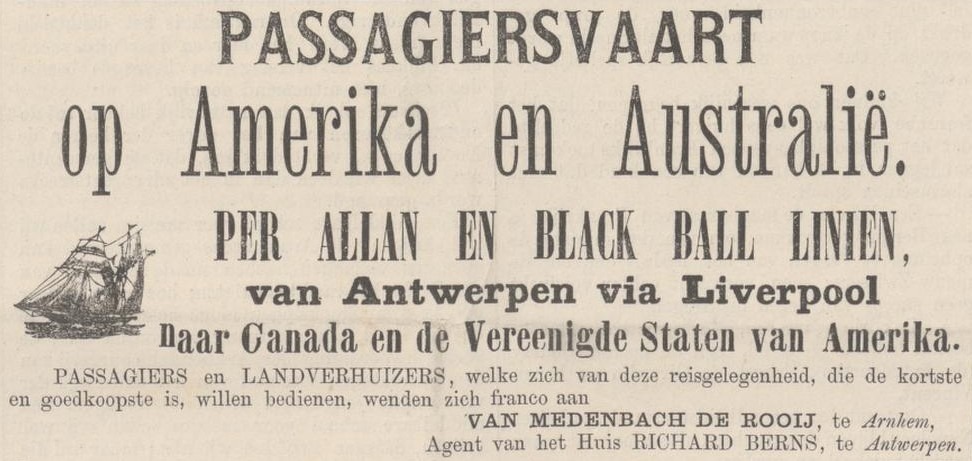
Around 1869, the Allan Line advertised intensively in Dutch regional newspapers. Local intermediaries, such as in Arnhem, acted as sub-agents for the main agency in Antwerp. The shipping company convinced Achterhoekers with two strong arguments:
- The shortest sea route
By sailing to Quebec instead of New York, emigrants spent less time on the open ocean. Once the ship reached the Straits of Belle Isle, they sailed the rest of the way on the sheltered Saint Lawrence River. - The cheapest option
Between 1860 and 1890, Liverpool was a popular port of departure for European emigrants due to its lower rates. Poorer emigrants were willing to tolerate the inconveniences of shipping through England in order to save on the transatlantic ticket. A ticket for the crossing (tween deck/steerage) cost about 60 to 80 guilders around 1869.
The journey and the route
Including the journey from the Achterhoek and the transfer in England, an emigrant was on the road for about 2.5 to 3 weeks. Here’s what their trip must have looked like:
To Antwerp
Achterhoek emigrants first traveled by horse and cart to a suitable pick-up point, such as Zevenaar or Arnhem. From 1855 it was possible to travel from there to Antwerp. In Antwerp, the emigrants were received by the agent of the Allan Line.
The crossing to England
In Antwerp they changed to a boat to Hull (England), a crossing of 12-24 hours. From Hull they took the train to Liverpool (4-6 hours). At that time, Liverpool was the heart of the flow of emigrants to America, with offices of shipping companies, agents and emigrant houses where travelers could wait for their departure.
Where to stay in Liverpool
Representatives of the Allan Line picked them up on arrival in Liverpool and took them to guest houses, often owned by the shipping company. Emigrants spent one to ten days there, waiting for their ship to the US or Canada.
Departure from Liverpool
The Nestorian departed from the Prince’s Landing Stage in Liverpool. The crossing from Liverpool to Quebec took an average of 10 to 12 days.
Stay on board the Nestorian
Although the Nestorian was known as a solid and fast steamship, luxury was hard to find. Most emigrants from the Achterhoek traveled in the ‘tween deck (steerage), where families slept in large, stuffy rooms in wooden cages with straw mattresses.
The ticket price included the legally required rations (soup, potatoes, bread and salty meat). Passengers had to bring their own tin plate, cup and cutlery.
The days were filled with card games, singing, praying, and talking about the future in America. There was a ship’s doctor on board, but resources were limited. Seasickness was universal, and infectious diseases spread quickly in the poorly ventilated dormitories. In outbreaks, the sick were isolated.
Arrival and onward to Wisconsin
On July 19, 1869 , the Nestorian reached the port of Quebec. The passenger list included well-known names from Aalten such as Eppink, Huinink, Jentink, Neerhof and Wassink. However, the journey was not over yet.
From Quebec, the emigrants traveled west to Sarnia (Ontario) by Grand Trunk Railway . There they transferred to a steamer that transported them across the Great Lakes (Lake Huron and Lake Michigan). This trip took 1 to 2 days, depending on the weather and connections.
Eventually, they set foot in the harbor of Sheboygan, Wisconsin. Most emigrants from Aalten settled in this region. In later years, some of these families moved further west to the fertile lands of Iowa and Minnesota, among others.
Also read:
Sources
- Ancestry.com – New York Passenger Lists (1820-1957)
https://www.ancestry.com/search/collections/7914/?name=_Neerhof&count=50 - Bonsor, N.R.P. (1955) – North Atlantic Seaway: An Illustrated History of the Passenger Services Linking the Old World with the New. Part 1, p. 311
- Merseyside Maritime Museum
- Emigration to USA and Canada
liverpoolmuseums.org.uk/archivesheet13 - Photograph of the Nestorian
liverpoolmuseums.org.uk/artifact/photograph-of-nestorian-allan-line
- Emigration to USA and Canada
- National Archives (USA) – Microfilm T715
archives.gov/research/immigration/19th-century - Olive Tree Genealogy – Ships to New York (1850-1874)
olivetreegenealogy.com/ships/tousa_ny185074.shtml - Swierenga, R.P. (1997) – Going to America: Travel Routes of Zeeland Emigrants
swierenga.com/Middelbg_pap.html