Category: Society

  • The Thomson-van Hopbergen family

    The Thomson-van Hopbergen family

    A military family with Scottish roots in Bredevoort

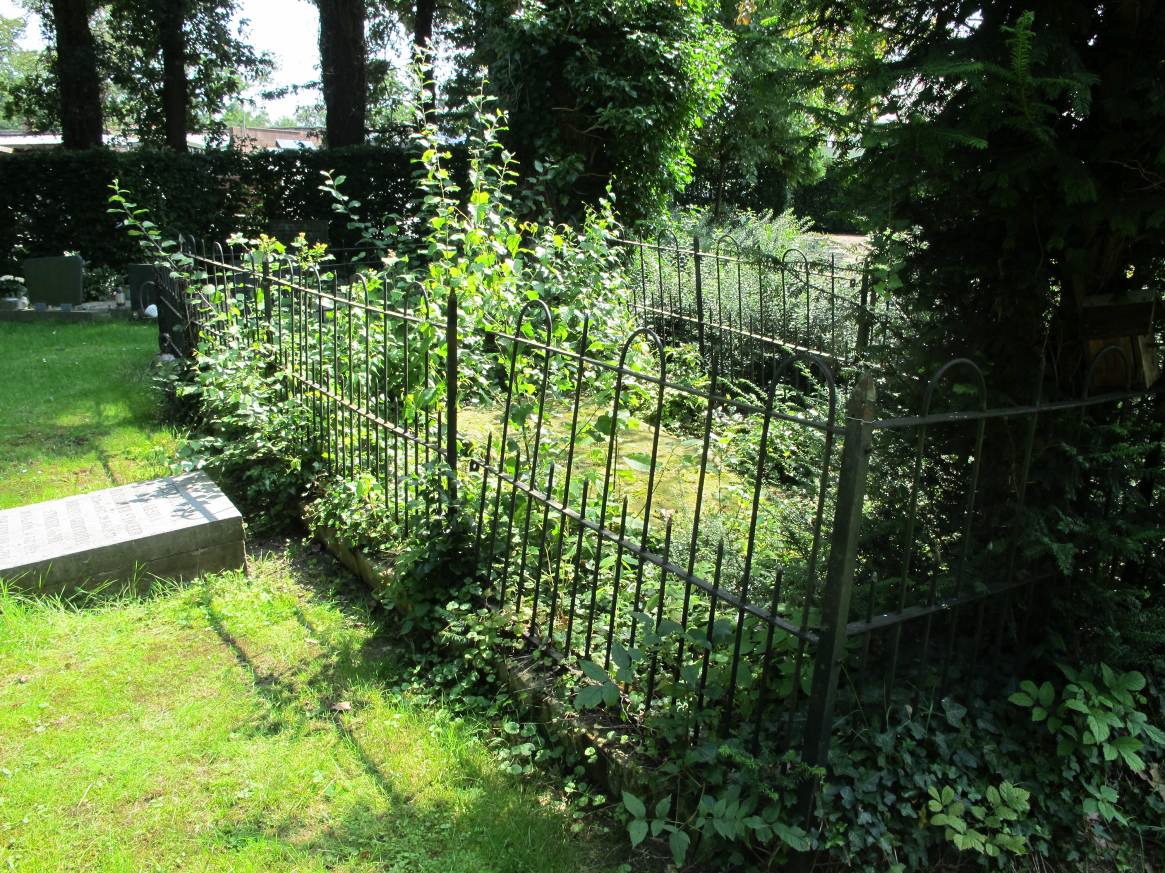
    The family grave of the Thomson-van Hopbergen family is located at the General Cemetery on the Prins Mauritsstraat in Bredevoort. Although the tombstone has been marked by erosion, the monument is a reminder of a family that played a prominent role in Dutch military history, national politics and literature.

    The legacy of the Scottish Brigade

    The family’s roots lie in the Scottish Brigade, a unit of British soldiers hired by the United Provinces in the 17th and 18th centuries. After their military service, many of them settled permanently in the Netherlands, including James Thomson. He was married to Mary Rinck; their children were baptized in Tournai and Breda at the beginning of the 18th century. The military tradition in the family continued into the 20th century.

    Location in Bredevoort

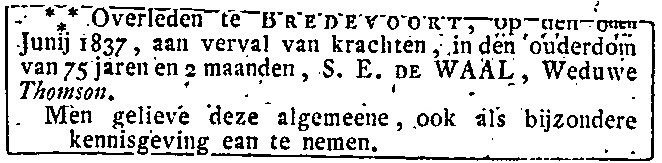
    The bond with Bredevoort arose in the early nineteenth century through a grandson of the ancestor, also named James . This retired captain, born in 1759 in Nijmegen, lived there on the Prinsenstraat with his wife Susanna Elisabeth de Waal. James died in 1828 and Susanna in 1837. The house with its contents was valued at ƒ 3,805,-.

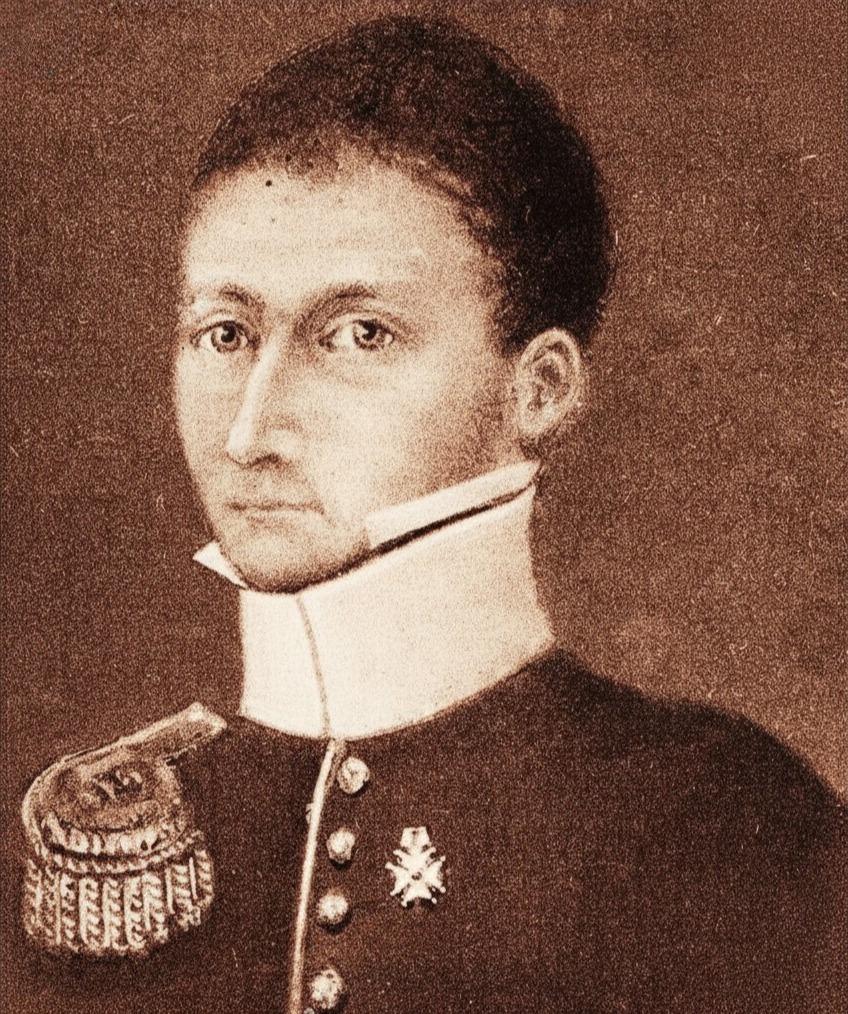
    Their son, Jan Jacob Thomson (1784–1858), born in Maastricht and living with his family in Fort Crèvecoeur near ‘s-Hertogenbosch, was the sole heir. Jan Jacob was a lieutenant colonel and had made a career during the Napoleonic Wars. For his efforts during the Battle of Waterloo in 1815, in which he was wounded, he was made a knight in the Military Order of William.

    In 1837 Jan Jacob entered into a second marriage with the 26 years younger Louiza Wilhelmina van Hopbergen (1810–1906) from Bredevoort. She was a daughter of the retired lieutenant Diederik Christoffel Hendricus van Hopbergen, also living on the Prinsenstraat. The family settled in Bredevoort.

    Jan Jacob Thomson died on 11 October 1858 and was buried in the family grave in Bredevoort. Louise also found her final resting place there.

    Louise’s brother Jacobus Wilhelmus van Hopbergen was also a lieutenant colonel and lived at Markt 18 in Aalten after his retirement.

    Offspring and social functions

    Several family members born in Bredevoort held social functions:

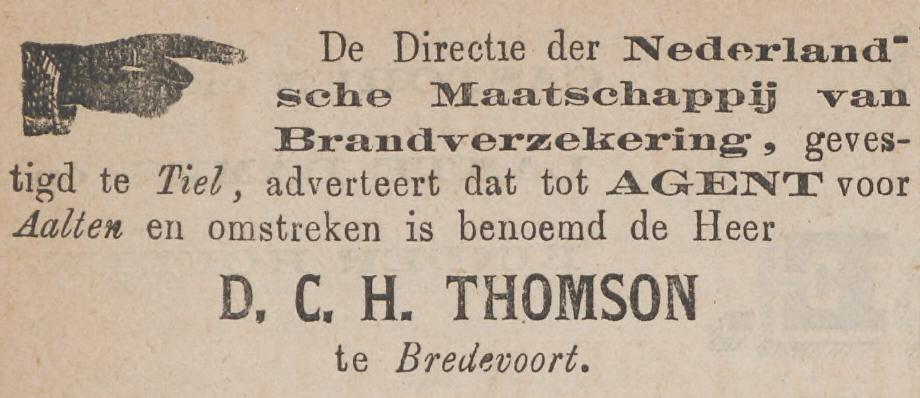
    Diderik Christoffer Hendrikus Thomson (1840–1891) became a letter collector (holder of the local post office) in Bredevoort and will also have been buried in the family grave.

    His son Jan Jacob Thomson (1882–1961) gained fame as a ‘poet-minister’. He was a pastor at the Dutch Protestant Union in Varsseveld and left behind an extensive oeuvre of poetry collections and literary-historical studies. After a turbulent and poetic life, he died in Baarn in 1961 and was buried there.

    Jacque Willem Lodewijk Thomson (1846–1914) was mayor of the municipality of Appeltern from 1877 until his death.

    Louis Thomson: Soldier and statesman

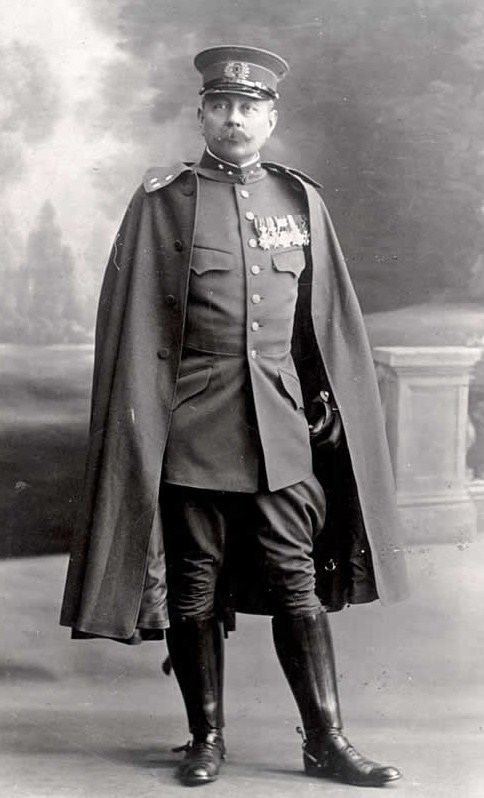
    One of the most striking descendants of the family is Lodewijk Willem Johan Karel Thomson (1869–1914), a grandson of Lieutenant Colonel Jan Jacob. Lodewijk was a military cartographer, was sent to Batavia and Aceh, was a military attaché during the Boer War in South Africa and a member of the House of Representatives.

    In 1914 he was sent to Albania, where he was killed in action in Durrës on 15 June 1914. Thomson was the first Dutch soldier to die during a peacekeeping mission. He was buried in Groningen.

    Heritage in decline

    Today, the funerary monument on the Prins Mauritsstraat is in a state of disrepair. Due to erosion and overdue maintenance, the inscriptions on the stone are becoming increasingly difficult to read. However, the grave is a monument to the connection of small Bredevoort with the great world history.
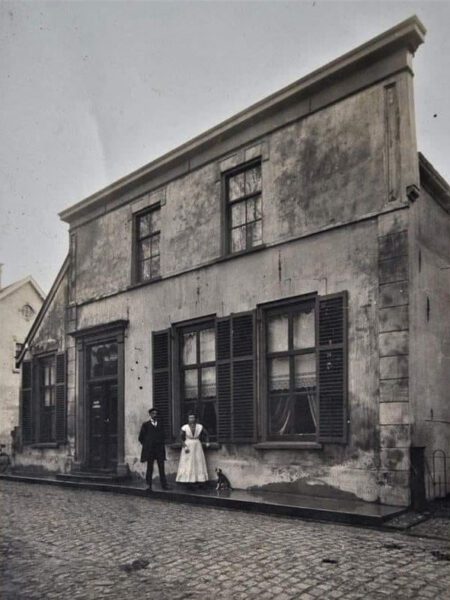
    Post Office Bredevoort, 1918, with Hendrik Christiaan den Hartogh and Antonia Theodora Krosenbrink
    Post office Bredevoort, 1918

    Sources


  • Where did your ancestors live?

    Where did your ancestors live?

    Do you have family history in Aalten or Bredevoort? Are you curious about the address where your ancestors lived, were born or died? With the help of old archives and handy search methods, you can link historic house numbers to contemporary addresses. We’ve put together a step-by-step guide to help you get started!

    In some old archives, the addresses of people were recorded. In the past, addresses consisted of the name of the core or hamlet, followed by a house number. Partly because these house numbers have been changed several times over time, they cannot be directly compared with the current street name-house number combinations. 1

    Below we explain step by step how you can trace an old address and how you can then trace it back to a contemporary location. Success not guaranteed!

    Step 1: Find the old address

    There are various (online) sources in which you can find out where a person lived, where he or she was born and where the death took place. Please note that some data is not yet public due to privacy laws. 2

    WieWasWie.nl

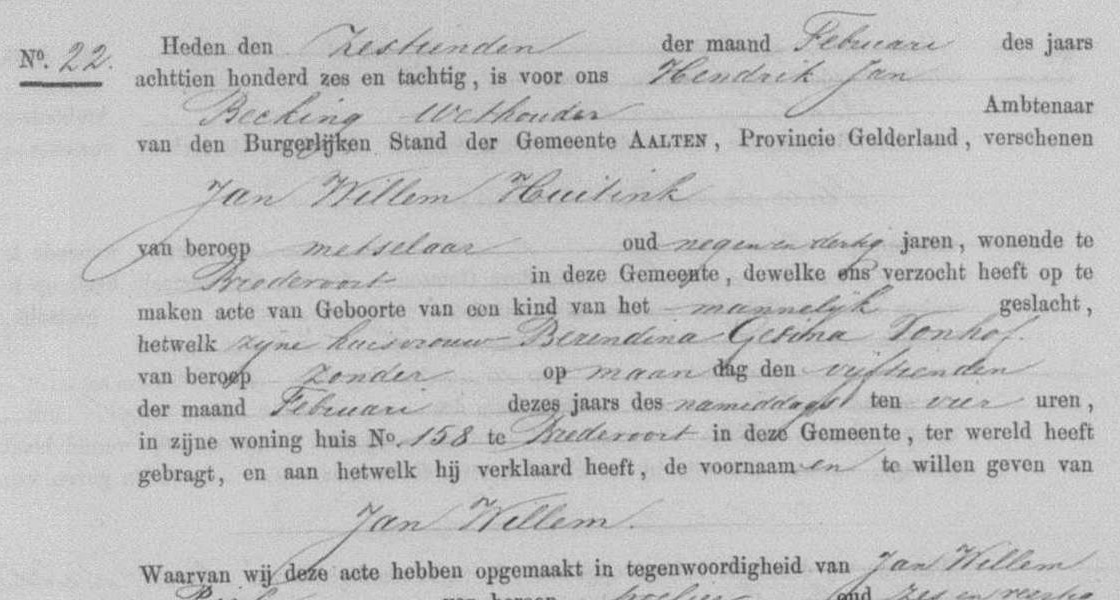
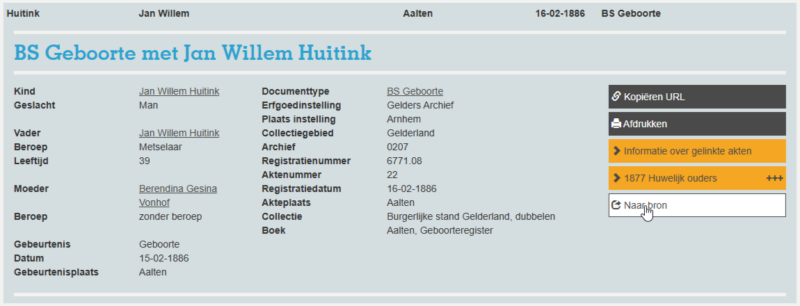
    The website WieWasWie.nl (‘Who Was Who’) contains information about births, marriages and deaths, among other things. But did you know that the search results often also contain a link to a scan of the original deed, including the address at the time?

    1. Go to: WieWasWie.
    2. Search by name and filter the results if necessary.
    3. Click a relevant result, and then click Go to source on the right.

      WieWasWie.nl
    4. View the scan and note the house number.
    5. Sometimes a series of scans will be displayed and you will have to look up the correct record in them. At the top of your screen is the Deed Number. Search the scans for the relevant deed and write down the house number.
    6. Continue to Step 2.

    Heritage Centre Achterhoek and Liemers (ECAL)

    On the ECAL website you can find scans of family cards from population registers in the Achterhoek. The public archive contains scans from the period from around 1823 to 1910.

    1. Go to ecal.nu.
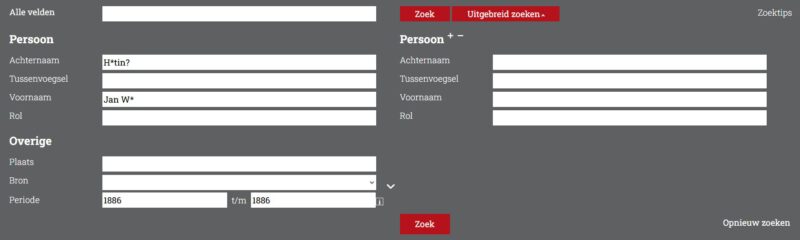
    2. Enter the Last Name and First Name . Tip: Use wildcards to find any spelling variants as well. 3
    3. Enter the year of birth in both fields under Period and click on ‘Search’.
    4. If necessary, filter by City (note: Aalten, Bredevoort and hamlets fall under ‘Aalten’).
    5. The right-hand column shows the period to which the family card relates. This is important because house numbers can vary from period to period.
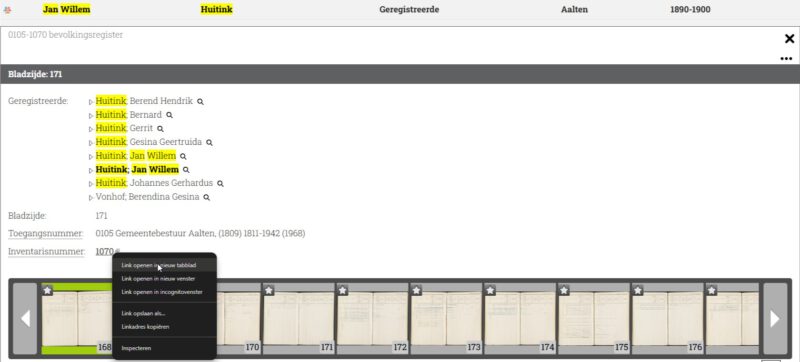
    6. Also check which core or hamlet the map relates to: Click on the relevant line and then on the Inventory number (right mouse button, new tab). Remember the core or hamlet and close the tab.

      ECAL search (2)
    7. Open the family card scan.
    8. Write down the house number and proceed to Step 2.

    Régistre Civique (1811–1813)

    During the French period, the Régistre Civique was introduced as a precursor to the population register. 4 Many persons included in this register also had their address (house number) mentioned.

    1. Go to hdcaalten.nl/digitaal-archief
    2. Download the index of the Régistre Civique Aalten 1811-1813 (pdf).
    3. Look in the PDF file to see if your ancestor is listed and if there is a house number.
    4. If so, make a note of the house number and proceed to Step 2.

    Older archives

    Older sources, such as the Verpondingskohier from 1650 and the Liberale Gifte from 1748, often mention not only the names of the residents, but – if they lived on a farm – also the name of the farm. Many of these farms still exist today and can be found at oudaalten.nl/boerderijen.

    Step 2: Find the current address

    1. Go to oudaalten.nl/huisnummering.
    2. Choose the relevant core or hamlet.
    3. Search the table for the correct house number. To make it easier to search, you can sort the table by the relevant year/period.
    4. If the house number appears, you will find the current address there. If not, the house probably no longer exists. Surrounding house numbers may give you an idea of the approximate location.

    The above methods are not exhaustive, because in the archive world several roads lead to Oud Aalten. For the overview, we have outlined the most important steps and done our best to explain everything as clearly as possible. We hope this helps you further. Good luck with your search!