

‘Hide the outcasts; Do not betray him who escapes’. This text (Isaiah 16:3) was used by several pastors at the beginning of World War II. With this, the congregation members were called upon to contribute to helping people fleeing the Nazi regime. And with success: at one point, one in five residents of Aalten was in hiding, relatively more than anywhere else in the Netherlands.
The inhabitants of Aalten played an important role in protecting people in hiding during the war. Their courage and determination have saved the lives of many. The church’s involvement, close family ties and rural location are seen as reasons for the great willingness to offer help. It is relatively easier to hide people in a remote farmyard than in a city. But despite that, helping people in hiding and other refugees took a lot of courage and sometimes cost lives.
Hiding and resistance
During the war years, there were several reasons why people chose to go into hiding. For example, Jews tried to escape deportation to concentration camps. In addition, there were people who wanted to avoid the Arbeitseinsatz or who wanted to resist the German occupier.
Heleen Kuipers-Rietberg from Winterswijk, better known as Aunt Riek, provided hiding places for many people who refused to work and Jews. Together with Uncle Jan Wikkerink, a contractor from Aalten and leader of the local resistance organization, and with Reverend Slomp, she stood at the cradle of the National Hiding Organization (LO).
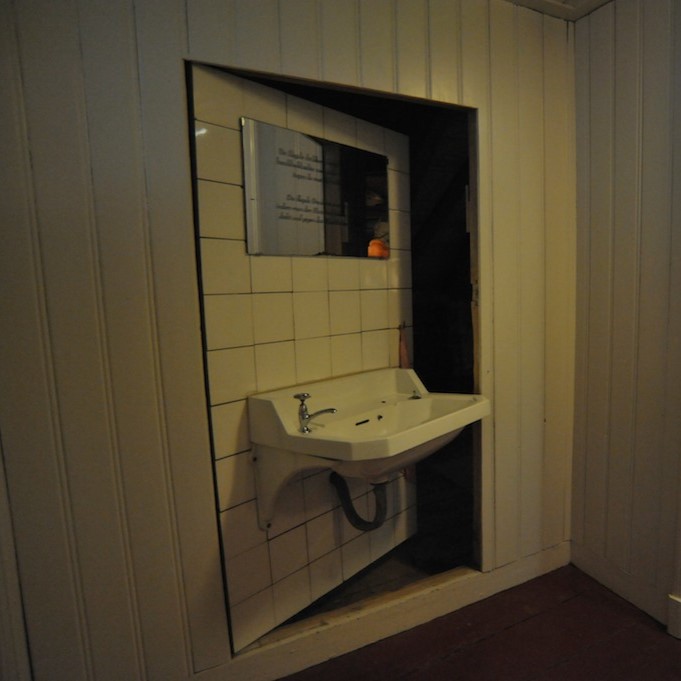
People in hiding were often hidden in attics, in barns, in secret rooms or in remote places in the landscape. Although there was always a risk of betrayal and arrest, relatively few people in hiding in Aalten were discovered by the German occupiers. The local population had a strong mutual solidarity and the resistance was well organized. Moreover, there was an active network that helped people in hiding to cross the border to safer areas abroad.
In 1947, former people in hiding presented the people of Aalten with a monument as a token of gratitude for their hospitality and to the resistance fighters who were the driving force in accommodating the people in hiding. The monument is located in the Stationsstraat, opposite the train station.
On June 9, 1945, Dagblad Trouw wrote:
Aalten a record?
Most probably the beautiful village in the Gelderschen Achterhoek Aalten was the place that housed proportionally the most people in hiding during the war. The village has only 11,000 inhabitants and no less than 2500 people were placed in hiding. For the time being, we will be able to assume that this is a record in the Netherlands.
Aalten’s task is not finished with this. Above this number, there have been hundreds of children, especially from Rotterdam and the surrounding area, who have spent their summer holidays there. We are not exaggerating that thousands in the country have benefited from the hundreds of thousands of rye bread, bags of flour and oatmeal, bacon and eggs, which have been sent into the country from this village. The director of the Aalten post office bore the name among his colleagues of rye bread director.
We will remain grateful to Aalten for this war activity. The 2500 people in hiding are too. They sent a request to H.M. the Queen and asked her to visit Aalten during a trip through the liberated Netherlands. We sincerely hope that it will happen. Aalten deserves it.
Almost a quarter of a century after the liberation, on March 14, 1970, the newspaper Trouw wrote in an article about a planned reunion of former people in hiding and former combatants:
In the years that the Germans occupied the Netherlands, in the small, agricultural town of Aalten, there was hardly a house in which there were no people in hiding. The people who live there are closed by nature. The Hague resident and the Amsterdammer, who went under water, had to get used to it. The Germans too, by the way, and once an SD officer spoke in anger of ‘abscheuliche Leute’ and he added: ‘Wir sind Luft, Luft!’ However, the silence of the Aaltenaar has benefited many people in hiding.
During the war years, Rev. J. Klijn (of De Open Deur), Rev. P. Kuyper and Rev. J. van Dijken respectively as a reformed, reformed and christian-reformed minister. One evening, two farmers, who had made a long bike ride for it, arrived at one of the three rectories. It matters little which one. They told the preacher about a naober, who was unwilling to take in people in hiding. In some houses there are eight, why doesn’t he want to accommodate one? Can’t the pastor go and talk to that man and point out his responsibility? They get the promise from the pastor that he will exchange a hearty word with the brother in question. It turned out not to be necessary. On the day that the Allied tanks thunder into Aalten, the farmer, who has been complained about, stands in front of his stee, laughing and waving. He is there with his wife and his family, but also with a bunch of Jews. He accommodated them, without the nearest neighbors having any suspicion of it.
Not all Jews who were given shelter in Aalten survived the years of occupation. A number of them were discovered, sent to Poland and liquidated there.
Church services
Aalten would not be Aalten if it had only provided the people in hiding with equipment. The churches held special church services for people in hiding, usually on remote farms, where people met in smaller groups. The congregation of God started to function here as a hidden church, in the summer the services were held on the deel, in the winter in the large Achterhoek kitchen. People did not ‘go’ in large numbers, but came with two or three people at a time. Guard posts were often posted to be alert to danger. There were also special catechisms for people in hiding. Even separate Jewish catechisms. A number of Jews came to believe in the Messiah.
At the beginning of ’44, during a regular service in the Reformed Westerkerk, the Germans surrounded the church. One young man who left the church in Scheveningen women’s clothes escaped. How did that boy get that Scheveningen robe? In passing, Aalten had also hospitably welcomed a large group of Scheveningers who had to leave the coastal region. 48 people in hiding were loaded into a truck and transported to Amersfoort, and from there for a large part to Germany. The Christian Reformed Church was also attacked on a Sunday. A dozen people in hiding were caught.
Some boys did not return. In an issue of De Open Deur, which appeared the following year, Rev. Klijn of a service that was held on Christmas Eve ’44 on a farm in Aalten. We quote a few passages: “The Christmas Gospel was read in many wonderful places last year, in that time of need and misery, of shelters and shelters. But it was robbery in order. Also here in this simple peasant kitchen with its international circle of resistance fighters, herded together from all over the world; Achterhoek farm boys, heavily wanted illegals, navy people in hiding and secretarial staff, and allied pilots from San Francisco and Florida. Brighton and Plato Sask, Canada. It was as quiet as in a church, when the familiar words of Luke 2 were read, first in Dutch and then from the Moffat translation in English. And there was a twilight of emotion over some of those tough faces, when the old Christmas message came to them in their own language, here, so far from home, Christmas after all, the Christmas message: Today you have a Saviour born in the town of David, the Lord Messiah. And in the silence of Christmas night, their hearts, filled with thoughts of war by day and by night, knocked on the door of a different peace from that for which they were fighting, the peace of which the English sang: Glory to God in high heaven, and peace on earth for men whom the favours! By a puzzling achievement, the underground from the Achterhoek had also collected a few English church books and so the Christmas carols were sung bilingually: Honor be to God, Now sijt wellecome and the Silent Night, Holy Night, known all over the world…”
Nationaal Onderduikmuseum
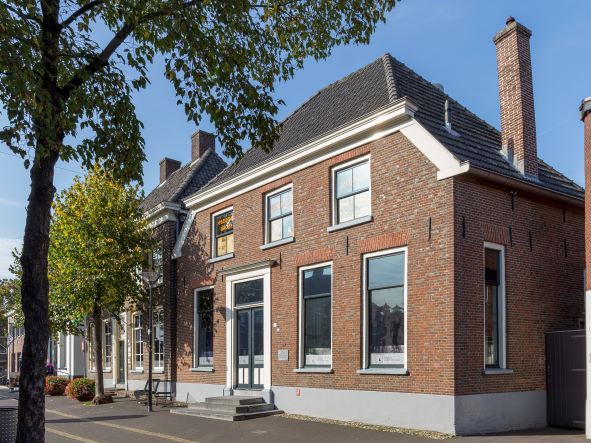
To record the memory of this part of history and to keep it alive, the National Hiding Museum was established in Aalten. The museum focuses on showing and documenting the stories of people in hiding and the people who helped them. It shows how ordinary people can show courage and humanity in extraordinary circumstances.
The museum is partly housed in a building with a special history of hiding: Markt 12. At the time, this was the home of a family with children, but people in hiding were (temporarily) hidden in the attic and the basement was the hiding place for local residents during bombings. Extra remarkable: the large living room had been requisitioned by the occupying forces and was used as an ‘Ortskommandatur’.
More information about (a visit to) the Nationaal Onderduikmuseum: nationaalonderduikmuseum.nl
Escape Room
The Nationaal Onderduikmuseum also has an escape room. Players are confronted with issues and dilemmas that everyone will encounter when they have to flee. If you choose to flee from your world, you have to renounce what you know and know. You will have to do everything in your power to keep yourself going in your new situation.
It is now important that you have insight into that new situation, have a sharp vision, so that you can recognize signs, dare to make decisions and distance yourself from what you have known until now. “Can you manage to dive under the radar, become invisible, become inaudible to the enemy?”
More information: escaperoom-aalten.nl