Many 19th-century emigrants from the Achterhoek settled in the vicinity of Sheboygan, Wisconsin (pictured here in a drawing from 1885)
During the 19th century, thousands of people left the Achterhoek region to build a new life in the United States. Many residents departed from Aalten as well. What began as a religiously motivated exodus grew into a broader emigration movement that continued well into the 20th century. In search of freedom, land, and new opportunities, people from Aalten found a new home on the other side of the ocean.
The wave of emigration began around 1844, initially driven by religious motives. Many of the first emigrants belonged to the Afgescheidenen (Seceders): Protestants who broke away from the Dutch Reformed Church and organized their own congregations. In the Netherlands, they were often persecuted or socially excluded, prompting many to seek their fortunes elsewhere.
Economic concerns and lack of space
In addition to religious persecution, the economic situation played a significant role. In the second half of the 19th century, the situation in the rural Achterhoek became increasingly difficult. Crop failures, unemployment, and poverty forced many families to make drastic choices.
Demographic pressure also played a part. The countryside was becoming increasingly crowded. Most of the wasteland had been reclaimed by then, and available farmland had become scarce. Consequently, for many sons of farmers, there was no prospect of owning their own farm. In America, where land became available cheaply or even for free through initiatives like the Homestead Act (1862), an independent life beckoned.
From the Achterhoek alone, six to seven thousand people emigrated within fifty years—nearly a third of the rural population.
From Aalten to Wisconsin – and beyond
A significant portion of the emigrants from Aalten settled in Sheboygan County in the state of Wisconsin. This region attracted many Dutch people due to its fertile soil, employment opportunities in agriculture, and the presence of existing faith communities.
In and around places like Cedar Grove, Oostburg, and Sheboygan, close-knit communities of Dutch-speaking migrants emerged. Over time, some people from Aalten moved further west to states like Iowa, Minnesota, and Nebraska, seeking cheap farmland and more economic opportunities.
In addition to the Midwest, emigrants from Aalten also settled in the states of New York, New Jersey, and Michigan. In cities like Paterson and Grand Rapids, flourishing Dutch neighborhoods arose, often with a strong religious character. Emigrants established their own churches, schools, and social institutions there.
Not all emigrants reached their destination. A tragic example is the disaster involving the steamship Phoenix in 1847 on Lake Michigan, in which an estimated 250 to 300 Dutch emigrants perished—including dozens from Aalten.
A lasting bond
Today, the traces of this emigration are still visible. Surnames from Aalten can still be found in communities in Wisconsin and elsewhere in the US. In genealogical and historical research, these emigration movements form an important link between the Achterhoek and the United States.
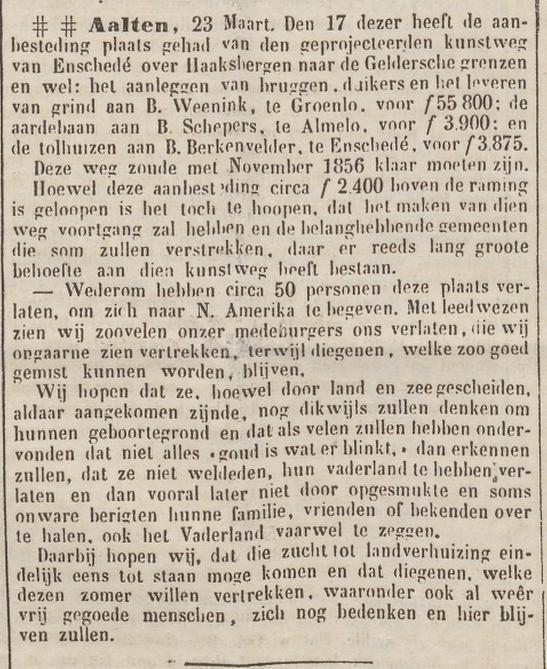
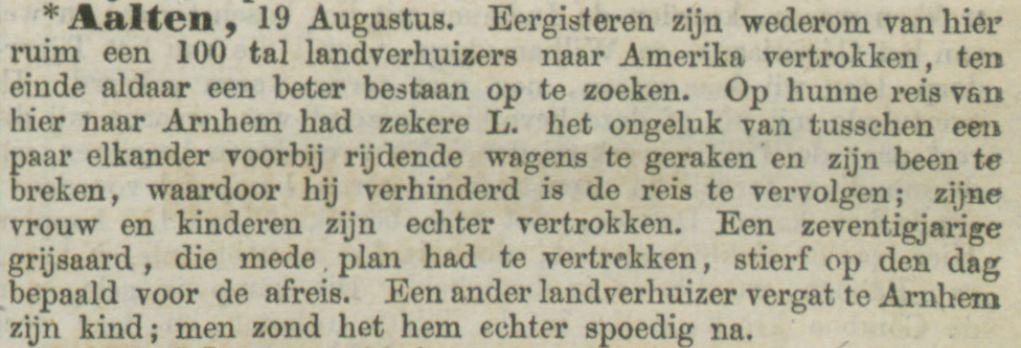
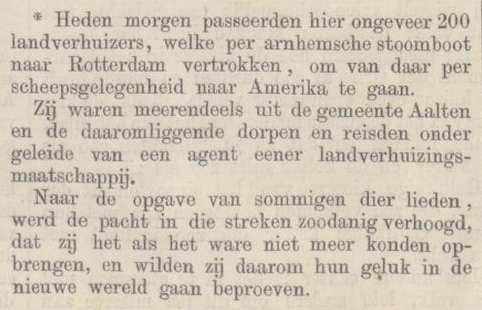
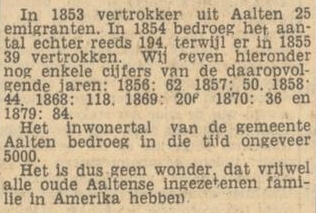
List of emigrants from Aalten
There is a list of over 1,600 emigrants from Aalten and Bredevoort who emigrated to the United States:
More information
For more information on this subject, you can also visit the Euroregional Historical Documentation Center (EHDC) at Prinsenstraat 27 in Aalten.