

Köstersbulte, Aalten
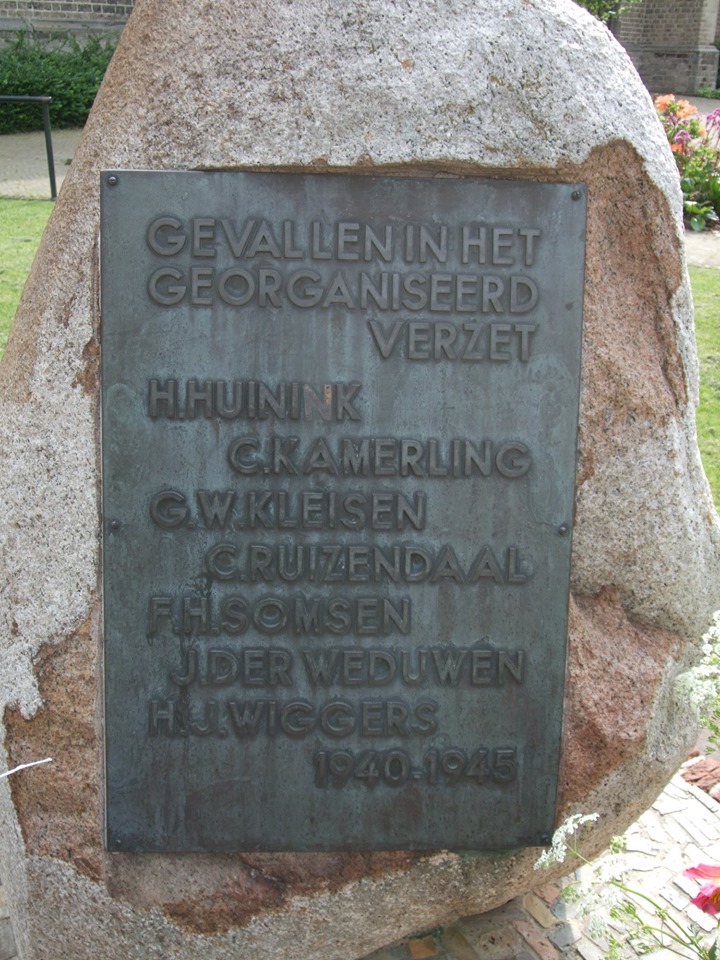
On the lawn of the Old Helena Church on the Markt in Aalten is a special memorial stone. The bronze plaque on the stone mentions the names of seven resistance fighters within the organized resistance in Aalten.
The resistance during the Second World War (1940-1945) only developed in the course of the war. As the measures of the German occupying forces became stricter, small groups arose that resisted the occupation, initially with limited resources. As the war progressed, more and more people got into trouble. The small resistance groups grew in strength due to the increase in the number of members, but also due to the networks that arose between the various resistance groups.
Within the resistance, two main currents could be distinguished. The first group was the National Organization for Help to People in Hiding (LO). This group organized hiding places for Jews, for men who refused to work for the enemy in Germany, and for resistance fighters who had to go into hiding. The LO was dependent on sufficient ration coupons for the food supply to the people in hiding . The second group, the Knokploegen (KP), took care of that. This armed group carried out raids on distribution offices, tried to sabotage the enemy at vital points and in the last phase of the war prepared to assist the Allied troops in the liberation of the Netherlands.
In the Achterhoek, especially in the region of Aalten, Lichtenvoorde and Winterswijk, the resistance was particularly active. Some of the resistance fighters lost their lives during the war. Those who survived the harsh time did not feel like heroes. Many testified to the fear they would carry with them for the rest of their lives. The courageous acts of the resistance are recorded in several books.
The names of the fallen (click on the links for more information):